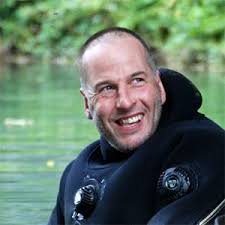
In an era of viral fame and Instagram heroes, Stanton is the anti-hero we didn’t know we needed. The 2018 Tham Luang cave rescue inextricably linked his name to a miracle, but to understand how a bunch of middle-aged enthusiasts succeeded where elite military units failed, you have to understand the “pointless” obsession that forged him .
Table of Contents
ToggleThe “Abhorrent” Pastime and the “Uncool” Kid
Before he was clearing silt-filled passages in Thailand, Rick Stanton was a kid who hated football. With a passion bordering on repulsion. “I just didn’t get it at all,” he told CNN, describing the sport as “abhorrent” and recalling his school days sitting with “the uncool kids who didn’t kick balls around” . For a boy growing up in England—a nation that breathes football—this alienation was profound. He could swim, he could run, but the second a ball came near him, he experienced “complete panic” .
This aversion to conventional competition is the first clue to his psyche. Stanton wasn’t interested in defeating an opponent; he was interested in solving a puzzle. While his peers chased a ball across a green pitch, Stanton was fascinated by the depths. Growing up in the 60s and 70s watching Jacques Cousteau specials, he was drawn to the alien silence of the underwater world .
But the ignition point came in 1979. At 17, he watched a documentary titled The Underground Eiger, which followed explorers completing a world-record cave dive in Yorkshire. “It just focused my thinking,” he recalled . Mountain climbing seemed pedestrian; this was exploration in three dimensions, underground and underwater. He had found his tribe. When he went to university, he immediately joined the caving and diving clubs, bonding over the intense, life-or-death trust required to crawl through the earth’s intestines . He eventually dropped out of college, became a firefighter to pay the bills, and dedicated his life to the abyss .
The Philosophy of Flow and the Inner Tube
To the layperson, cave diving is a nightmare. It is claustrophobia, hypothermia, and drowning rolled into one dark package. To Rick Stanton, it is “flow.”
“You’re aware of the concept of flow, the state of mind when you’re totally in the moment?” he asked National Geographic. “I think when you are cave diving, you are in a bit of sensory deprivation because your vision is limited and all you hear is bubbles, which is sort of like white noise” .
He compares it to flying, or floating through space. It is a meditative state where panic is the only real danger. “If you’ve got adrenaline in a cave, you’re doing it wrong,” he famously said . For Stanton, the goal is to reduce risk through obsessive planning until the terrifying becomes mundane. This is why his equipment looks like it was scrapped together in a shed. While other divers used high-tech gear, Stanton’s signature flotation device was a repurposed motorcycle inner tube . It wasn’t about being cheap; it was about being effective. He is a functionalist, an engineer of the extreme who cares only about results.
His house in England reflects this monastic dedication to his craft. A journalist once described him as “not the most domesticated of men,” finding his home cluttered with homemade diving rigs and little else . He never married. The caves were his partner.
Over four decades, he honed his skills not just in exploration, but in recovery. Cave diving has a grim statistic: when someone dies in an underwater cave, retrieving the body is almost as dangerous as the dive that killed them. Stanton has recovered numerous bodies, including those of close friends . “No one else is going to get a caver apart from another caver,” he states flatly . This exposure to death didn’t harden him into a thrill-seeker; it hardened him into a realist.
“Complete Chaos” and the Wrestling Match
By the time Stanton and his partner John Volanthen arrived at Tham Luang in June 2018, his realism told him they were likely recovering corpses. The boys had been missing for days . The cave system in Northern Thailand was a nightmare of rising monsoon waters, sharp rocks, and zero visibility. To make it worse, the site was already “complete chaos” .
The Thai Navy SEALs were valiant, but they were open-water divers, not cave divers. The cave was filling with water, and desperate attempts to pump it out had littered the narrow passages with dangerous electrical cables and leaking diesel fuel .
In a bizarre twist, Stanton’s first “rescue” in Thailand wasn’t the boys. On their second day, he and Volanthen stumbled upon five Thai pump workers who had been stranded in the rising water. “We manhandled them, put regulators in their mouths and dived only short distances, but they all pretty much panicked,” Stanton recalled. “I describe it as an underwater wrestling match” .
That wrestling match was the genesis of the “miracle.” Stanton realized that even full-grown adults could not hold their composure in those conditions. There was no way a dehydrated, terrified, malnourished 12-year-old could navigate the narrow pinch points without drowning in terror. If the boys were to be saved, they could not be conscious for the journey.
The Morality of the “No Plan B”
The plan that Rick Stanton devised was horrifying in its simplicity: sedate the children into unconsciousness, bind their hands behind their backs, put full-face masks on them, and drag them like luggage through the submerged tunnels for three hours.
When the world heard this after the fact, they were horrified. But Stanton was dispassionate. He knew the alternatives were death. The Thai military wanted to wait for the monsoon to end—a period of four months that the boys would never survive due to rising CO2 levels and lung infections . Drilling through the mountain was impossible. “There was no Plan B,” Stanton admitted .
The one man who could make the plan work was Dr. Richard Harris, an Australian cave diver and anesthetist. When Harris first heard the idea, he gave it a “zero chance of success” . He felt it was akin to “euthanizing” the boys in the cave . Stanton had to convince him otherwise. It was a clash of two analytical minds: the physician trained to preserve life versus the rescuer trained to thread the needle of the impossible.
“The worst bit was after we found them,” Stanton said. “We had no idea how we were going to get them out” . That uncertainty bred a cold, calculated ruthlessness. “We made the plan dispassionately,” he explained. “But that doesn’t prepare you for the time when you sedate a boy, make them unconscious, put a mask on them, tie them up and drag them underwater… That’s when the responsibility of what you’re doing really hit home” .
A Destiny of Pointlessness
The rescue took three days. Thirteen trips. Thirteen scared, sedated boys delivered to the surface. Against all statistical probability, no one died. The world called it a miracle. Rick Stanton, ever the pragmatist, demurs. “I’m not declaring it a miracle,” he told CNN. “Thirteen consecutive positive results have some statistical relevance” .
But the rescue did something profound to Stanton—it retroactively justified his life.
Before the phone rang about Thailand, Stanton was in a rut. He had retired from the fire service and was questioning the very nature of his existence. “I’d devoted my life to reaching the pinnacle in this one activity that was absolutely pointless, it brought nothing to anybody,” he wrote in his autobiography, Aquanaut .
He had spent 40 years mapping holes in the ground, exploring places no one would ever see, and perfecting a skill that had no commercial application. It was the ultimate selfish pursuit. But when the Wild Boars soccer team walked into that cave, Rick Stanton’s “pointless” hobby became the most valuable skillset on the planet.
“It does appear that everything I have done has led in incremental steps to this,” he conceded . Every grim body recovery taught him how to handle stress. Every Mexican cave exploration taught him how to read water flow. Every homemade motorcycle tube taught him that ingenuity beats gear. He had spent a lifetime building a key for a lock that didn’t exist yet.
The Football Fan Finally Gets the Call
There is a final, poetic irony to Rick Stanton’s story. He spent his entire youth despising football, dreading the “uncool kids” who played it. Yet, his legacy is permanently intertwined with a football team.
The boys he saved? They are famous now. They’ve traveled the world, visited Old Trafford, and become celebrities . And Stanton? He finally understands the sport he once loathed. Reflecting on the rescue, he noted that the boys survived because they were a team. They supported their coach and each other in the darkness. “We were dreading that they might challenge us to a game, because we would lose by a huge number of goals. It would be hugely embarrassing!” he joked .
Rick Stanton remains a difficult man to categorize. He is curmudgeonly, brutally honest, and dismissive of emotion. Yet, he is also the man who cradled a drugged child in his arms for three hours in a freezing, black tomb of water—a man who, despite professing to have no affinity for children, refused to let them die.
He is not a saint, and he is not a daredevil. He is a problem-solver. In a world that often prioritizes luck or bravado, Rick Stanton proved that the quiet, obsessive pursuit of a “pointless” skill might just save the world when the lights go out. He went into the cave a retired firefighter wondering what his life meant, and he emerged as the Aquanaut, a man who proved that sometimes, the most extraordinary heroes are the ones who never wanted to be heroes at all.
Conclusion
In the end, Rick Stanton remains an enigma wrapped in a wetsuit. He is not the hero of Hollywood legend—there are no triumphant speeches or swelling orchestral scores in his world. Instead, he is a testament to a quieter, more peculiar kind of greatness: the greatness of the obsessive, the antisocial, and the relentlessly practical.
He spent forty years pursuing a hobby he himself called “pointless,” only to discover that pointlessness was, in fact, a form of preparation. When the monsoon rains fell and the world panicked, Stanton didn’t rise to the occasion—he simply descended into it, carrying the weight of a motorcycle inner tube and an unshakable calm.
The Tham Luang rescue did not change who Rick Stanton is. He remains grumpy, reclusive, and suspicious of sentiment. But it did change what he represents. He stands as proof that value is not always visible in the moment; that the skills we cultivate in the dark, for no other reason than curiosity or compulsion, may one day become the only light the world has left. He went into the cave looking for lost boys and emerged having found his own reluctant purpose. And in that, perhaps, lies the most human miracle of all