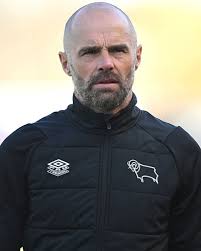
To the casual observer, the image of Warne on the touchline is a familiar one: tracksuit pulled taut over a wiry frame, head covered in his signature headwear, shouting instructions with the urgency of a PE teacher on sports day. He looks the part of the “old-school” British gaffer. But to scratch the surface of his career—from the non-league obscurity to the summit of the Championship—is to find one of the most intelligent, emotionally intelligent, and uniquely qualified leaders in the English game.
This is the story of the “yo-yo” king, the coffee machine repairman, and the manager who proved that you can get promoted by treating players like human beings.
Table of Contents
ToggleThe Unlikely Rise: From the Vase to the Valley
Paul Warne’s origin story is not one of silver spoons or Premier League academy privileges. Born in Norwich in 1973, his journey to the top of the game is arguably the most unconventional in the EFL . While his peers were coming up through youth systems, Warne was toiling in the East Anglian non-league circuit, playing for Great Yarmouth Town and Diss Town.
He was late to the party. He didn’t sign his first professional contract until he was 23, joining Wigan Athletic. But this late start forged something in him: a distinct lack of entitlement and a profound respect for the “journeyman” experience. He wasn’t a prodigy; he was a grinder. A 477-appearance career followed, largely at Rotherham United and Oldham Athletic, where he built a reputation as a tireless midfielder .
However, the seeds of his managerial genius were planted during his playing days. Unlike many of his contemporaries who rely solely on instinct, Warne is a qualified teacher. He holds a degree in Sports Science and Business, and he used his time as a player to observe the managerial styles of the men in charge, vowing to remember the good and, more importantly, to erase the bad .
The Rotherham Renaissance: The King of the Yo-Yo
When Paul Warne took over as caretaker manager of Rotherham United in November 2016, the club was a sinking ship. Kenny Jackett had resigned, and the Millers were rooted to the bottom of the Championship. It was a poison chalice, and Warne’s initial spell ended in inevitable relegation .
But rather than fire him, Rotherham’s hierarchy saw something.
Between 2017 and 2022, Warne turned Rotherham into the most fascinating anomaly in the Football League: a club that lost its best players every season, operated on a shoestring budget, yet refused to disappear. During his tenure, Warne achieved something that few in history have matched. He became a master of League One, securing three promotions from England’s third tier .
The world called them “yo-yo” club. Warne called it survival.
The statistics are staggering. In 2018, he won the play-off final. In 2020, he finished second. In 2022, he finished second again, accumulating 90 points and adding the EFL Trophy to the cabinet .
How did he do it with a club that was perpetually outspent? The answer lies in his transfer policy. Speaking after his move to Derby, Warne revealed his obsession with “the human being.” At Rotherham, he refused to sign a player based on a highlight reel alone. He needed to meet them. If a player walked into a meeting drinking a bottle of pop or scrolling on his phone, Warne was out .
“We try and cope with all the learning outcomes,” he once said, referencing his teaching background. “Sometimes we get the lads to take the meetings, because it’s a more reinforced way of learning” . This wasn’t just management; it was pedagogy.
The Derby County Project: Fixing More Than a Coffee Machine
When Warne left Rotherham for Derby County in September 2022, he walked into a club with a massive heartbeat but a broken soul. The Rams were still bleeding from the wounds of administration, points deductions, and the traumatic departure of Wayne Rooney. The expectation was overwhelming, and the budget was crippling .
In a brilliant interview with The Telegraph, Warne encapsulated the state of Derby upon his arrival. He walked into the training ground canteen and saw a beautiful, expensive coffee machine sitting dormant. “It drove me insane,” he admitted. “My argument was either mend it… or get rid of it. Don’t leave it there” .
He fixed the coffee machine.
It became a metaphor for his tenure. While the fans demanded silky football and instant promotion, Warne was dealing with “PTSD” among the staff—cooks, physios, and administrators who had gone months without knowing if they would have a job the next week . Before he could fix the league table, he had to fix the culture.
Warne’s methods at Derby were quirky but effective. He introduced the “Win Wall” and the “Clean Sheet Wall.” He gave players a personalized mug when they scored their first goal for the club. He plastered the dressing room with a “Family Why Wall”—photos of players’ wives, kids, and parents to remind them why they run the extra mile . He communicated via WhatsApp GIFs, admitting, “I love a clapping GIF” .
In the 2023/24 season, the payoff arrived. Despite operating under transfer restrictions, Warne dragged Derby County out of the League One mud. He delivered the club’s first promotion in 17 years, finishing as runners-up with a club-record number of away wins and the best defensive record in the division . For a fanbase starved of success, those memories were priceless.
The Tragedy of the Championship and the Cruel Hand
If Warne is a master of League One, the Championship has been his Sisyphean mountain. Throughout his career, he has been a victim of the financial gulf that exists between the second tier and the rest. His Rotherham sides always fought, but gravity eventually pulled them back down.
His Derby story, however, had a more tragic arc. In the 2024/25 season, the wheels fell off. A terrible run of seven straight league defeats left Derby in the relegation zone. The fans—who had adored him just months prior—began to turn. Chants aimed at his style of play echoed around Pride Park .
On February 7, 2025, the axe fell. Warne was sacked .
The grief in the city was palpable. It wasn’t just a manager leaving; it was the departure of a man who had genuinely connected with the community. He was known for responding to fan emails personally, for tearing up when a young player suffered a season-ending injury, for wearing his heart on his tattered, bobble-hatted sleeve .
As one Derbyshire Live columnist noted: “He was never afraid to give Derby fans a personal touch… when it comes to football managers, he just about breaks every norm” . He had created “memories to last a lifetime,” but a cruel run of injuries to key players and a loss of form among his forwards sealed his fate.
The Philosophy: “Chandler from Friends” Meets Mike Tomlin
So, what is a Paul Warne team? Tactically, he has often been pigeonholed as a “direct” manager. Critics argue he relies too heavily on crosses and physicality. He addresses this with a startling lack of ego.
In one of his most candid interviews, shortly after taking the interim job at Rotherham, he explained why he stands on the touchline instead of the press box. “Up top, the game looks really slow and easy,” he said. “You think ‘Why didn’t he pass it over there?’ But when you’re down there, you realise he can’t see that bloke because there are three people in the way and another one coming to snap him in half” .
This empathy defines him.
He suffers from “imposter syndrome,” admitting he worried about managing Derby because he felt unworthy of standing in the same tunnel as Brian Clough. He compares his interview style to Chandler from Friends because he gets nervous and makes jokes . He isn’t the alpha-male, chest-puffing dictator. He is the “straight shooter” who tells you why you aren’t playing, not because he enjoys it, but because he respects you enough to be honest .
The Legacy
As of April 2025, Paul Warne isn’t finished. He has since resurfaced at Milton Keynes Dons, taking the helm in League Two with four games remaining in the season . It is a step down the pyramid, but for a man who has spent his entire career climbing and rebuilding, it is just another challenge.
When evaluating Paul Warne’s legacy, the statistics are solid: Four promotions from League One (three as a manager, one as a player). A 477-game playing career. A 100% record in fixing broken coffee machines.
But the numbers don’t capture the man. In an era where players are treated as assets and managers are replaced by algorithms, Paul Warne represented the messy, beautiful, human element of the sport. He was the manager who bought you a mug for scoring, who cried when you got hurt, and who judged your character by whether you put your phone down during an interview.
He is the bobble-hatted teacher who proved that kindness—when paired with relentless hard work—can still win you a promotion. Long may he manage.
Conclusion
Paul Warne may never be remembered as a tactical revolutionary or a silverware-hoarding dynasty builder. His name won’t sit alongside Guardiola or Klopp in the pantheon of footballing genius. But in the gritty, relentless trenches of the English Football League, he is something arguably more valuable: a proof of concept.
He proved that you don’t need a multi-million pound budget to compete. He proved that vulnerability—admitting fear, cracking a nervous joke, shedding a tear—is not a weakness but a leadership strength. Most importantly, he proved that treating players like people first and athletes second can still yield promotions, clean sheets, and unforgettable nights under the lights.
Whether he is grinding out results at Rotherham, rebuilding Derby’s soul, or starting anew at MK Dons, the core remains the same: the bobble hat, the tracksuit, and the unshakeable belief that football, at its heart, is a people business. Paul Warne didn’t just manage clubs; he fixed the coffee machine. And in a broken sport, that might just be the rarest skill of all