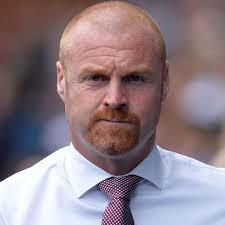
Yet, to dismiss Sean Dyche as merely a purveyor of “route one” football or a dinosaur in an era of analytics is to miss the point entirely. He is, perhaps, the most misunderstood genius of English football’s modern era.
As of the 2025/26 season, Dyche’s career has taken him back to where it all began: Nottingham Forest . It is a poetic, almost cinematic full circle. From a forgotten youth at the City Ground under the legendary Brian Clough, to stabilizing crises at Burnley and Everton, and now returning to the banks of the Trent, the 54-year-old manager is writing a fascinating final chapter. But to understand where he is going, we must first dismantle the caricature of who he is.
Table of Contents
ToggleThe Education of a Hard Man
Long before he was bellowing instructions from the technical area, Sean Dyche was learning the art of management not on a Pro License course, but around a dinner table in Northamptonshire. His father worked for British Steel, a job that involved handing out wages. But the senior Dyche also played the role of unofficial debt collector and marriage counsellor. If a worker spent his pay too quickly, leaving his family in the lurch, Dyche Sr. would visit the house, ensure the money went to the wife, and educate the spendthrift on responsibility .
Young Sean absorbed this lesson. Man-management, he learned, was not about shouting; it was about listening, understanding the human condition, and distributing resources (whether wages or praise) fairly.
This foundation was reinforced at Nottingham Forest. Though Dyche never made a first-team appearance for the club, he was a reserve during the twilight of Brian Clough’s reign. For a young player trying to find his way, Clough’s shadow was a curriculum in itself. Clough was a genius of psychology, a man who could make average players feel like world-beaters. Dyche took notes. “He was a genius,” Dyche later said, absorbing the aura of the man who built miracles on the Trent .
The Burnley Alchemy
When Dyche took over at Turf Moor in 2012, Burnley were a conventional Championship side. When he left a decade later, they were a bonafide Premier League institution. This was not a magic trick; it was structural engineering.
The lazy critique of Dyche’s Burnley was that they were “direct.” And they were. But directness is not a synonym for stupidity. Dyche realized early on that possession for possession’s sake is a vanity metric. As his long-time assistant Ian Woan noted, “We’re not saying, ‘We need 500 passes.’ Normally we’re at our most successful when it’s under 300 passes” .
This pragmatic philosophy was born from financial necessity. In the brutal economics of the Premier League, Burnley could not compete for the silky technicians that Manchester City or Liverpool hoarded. So, Dyche changed the battlefield. He focused on “the V”—the dangerous area directly in front of the goal . While others tried to tiki-taka their way through a maze, Dyche’s side sought to create chaos in the box and capitalize on it.
He turned the percentage game into an art form. Set pieces weren’t just dead balls; they were primary scoring opportunities. He drilled his sides to defend the “V” with their lives, making Turf Moor a fortress of frustration where flair went to die. He led them to Europe. He turned a perennial yo-yo club into a stable top-flight presence for six consecutive years .
The Goodison Exodus: Survival Against the Tide
If Burnley was a testament to building something from nothing, his stint at Everton was a masterclass in firefighting. By the time Dyche arrived at Goodison Park in January 2023, the club was in a state of existential decay. The culture was broken, the finances were dire, and the threat of relegation loomed like a shadow.
Dyche did what Dyche does. He stripped it back to basics. “Minimum requirement is maximum effort,” he told his players .
In his first session, he reintroduced the bleep test—a psychological and physical shock designed to weed out the weak. He banned gloves and snoods. He demanded shin pads be worn in training . It sounds archaic, but it was symbolic: it was about removing the softness.
And it worked. He kept Everton up against impossible odds, navigating points deductions and off-field turmoil that would have sunk lesser managers . For a time, Abdoulaye Doucoure—a player left for dead by previous regimes—became a wrecking ball in midfield, the personification of the Dyche ethos: hard yards, high press, and zero ego .
However, the Dyche method has a shelf life. By 2025, the “heavy rope” had worn thin. Players began to question the methods. The gruffness that was refreshing in a crisis became grating in a mid-table drift. He was dismissed, but he left behind a blueprint of how to survive a modern Premier League hurricane .
The Nottingham Forest Reboot: Coming Home
When Nottingham Forest came calling in October 2025, it felt inevitable. Ange Postecoglou’s brief, chaotic reign had left the squad confused and hovering near the relegation zone. The club needed an exorcism of complexity. They needed Dyche .
The romanticism of the move is thick. Dyche rejoins a club where he owns a home, bringing trusted lieutenants Ian Woan and Steve Stone—both former Forest men—with him . He returns to a squad featuring Chris Wood, a striker who had the most prolific spell of his career under Dyche at Burnley.
Early results vindicated the appointment. A 3-0 demolition of Liverpool at Anfield proved that Dyche-ball is not just about survival; when executed correctly, it is a wrecking ball against fragile possession-based systems . He immediately shored up the defensive trident of Matz Sels, Nikola Milenkovic, and Murillo, turning the City Ground into a difficult place to visit .
But as his history shows, the marriage between Sean Dyche and a football club is passionate but volatile. He is the ultimate fixer, but rarely the long-term visionary. By February 2026, the familiar pattern emerged: defensive solidity gave way to a lack of goals. The hard-running physicality began to take its toll. Despite having a higher win percentage at Forest (40%) than at any other Premier League club, the relationship fractured. Players began to question the system, and the goals dried up in Chris Wood’s absence .
The Tactical Blueprint: More Than Just Route One
To understand why Dyche keeps getting jobs—and why he keeps almost succeeding—one must respect the tactical rigor he demands.
1. The “Dyche Zone” and Set-Piece Science
Dyche does not leave set pieces to chance. At Everton, the combination of Dwight McNeil’s inswinging delivery and James Tarkowski’s aerial dominance was as reliable as a Swiss watch. He views set pieces as “free shots” and allocates significant training ground time to them—time that other managers spend on intricate passing patterns .
2. The False Low Block
Dyche’s teams do not just sit deep; they sit deep and wide to block crosses before defending the “V” centrally. They invite the opposition to pass sideways, knowing that modern teams lack the patience to break down a structured 4-4-2 block. The moment a pass goes astray, the trigger is pulled: a direct ball to a target man (Wood or Calvert-Lewin) with wingers sprinting into the vacated channels .
3. The Psychological Gaffer’s Day
Dyche is famous for “Gaffer’s Day”—a pre-season ritual where the footballs are locked away and the players run. And run. And run. It is a bonding exercise in shared suffering. Michael Keane once noted it was “just as important mentally as it is physically” . It weeds out the players who don’t have the stomach for the fight. In Dyche’s world, fitness is a non-negotiable currency.
The Verdict: The Last of the Dinosaurs or the Future of Pragmatism?
As his career enters the autumn phase at Nottingham Forest (a tenure that ultimately concluded in February 2026), the debate surrounding Sean Dyche will not fade. To his detractors, he represents the boring, industrial side of English football—the long ball, the physical foul, the time-wasting. To his admirers, he is a brilliant analyst of resource allocation.
In a sport increasingly dominated by AI-driven tactics and sterile possession, Sean Dyche is a humanist. He understands that football is not about aesthetic purity; it is about impact. He knows that a cross whipped into the box at 100 mph is just as valuable as a 50-pass sequence ending in a cutback.
He has his flaws. His stubbornness can alienate creative players (Patrick Bamford once complained of being told he had a “silver spoon” in his mouth) . His focus on physicality can lead to injury crises. But as he surveys his career—a Championship title, multiple Premier League survivals, European qualification—he has earned the right to be heard.
Sean Dyche is not a dinosaur. He is a pragmatist who recognized that the Premier League is a league of haves and have-nots. Until the financial playing field is leveled, the Dyche method of efficiency, set-piece brutality, and sheer force of will remains the most effective weapon for the underdog. He may not win the league, but he will make sure you fight for every single point.
And in the boardrooms of clubs battling relegation, that gravelly voice sounds less like noise and more like music.
Conclusion
Sean Dyche will never be accused of coaching “heavy metal football” or tiki-taka elegance. But in an era where football romanticizes the genius of the possession-based purist, Dyche stands as the ultimate antidote to fantasy. He is the manager you call when the walls are caving in, when the flair has failed, and when the squad has forgotten how to sweat for the shirt. His legacy is not written in highlight reels of 30-pass moves, but in the desperate, gritty survival acts—the improbable clean sheets, the last-ditch tackles, and the set-piece goals that feel less like art and more like a jailbreak.
Whether at Burnley, Everton, or his homecoming at Nottingham Forest, Dyche has proven that pragmatism, physicality, and psychological steel are not relics of a bygone era. They are timeless currencies in the fight for Premier League existence. He may never be beloved by neutrals, but for the clubs he has saved from the abyss, the Ginger Pragmatist remains nothing short of a miracle worker. And in the cold, hard business of survival, that is the only legacy that matters