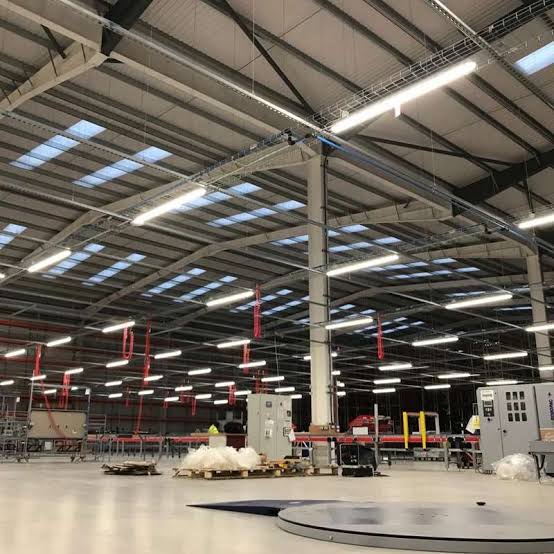
Why Warehouse Lighting Needs Careful Planning Warehouses and industrial units need reliable lighting for picking, packing, loading, maintenance and safe movement. Poor coverage can make labels difficult to read, hide floor hazards and create sharp changes in brightness between aisles. Lighting also represents a regular operating cost, especially in buildings used for long shifts or extended opening hours.LED battens are widely used in lower-ceiling warehouses, workshops, production areas, stockrooms and service corridors.
They provide a broad spread of light and can replace fluorescent fittings that require regular tube changes. For high-bay areas, dedicated high-bay luminaires may be more suitable, so the building height and layout must guide the design.A successful upgrade considers much more than the number of existing fittings. Racking, work tasks, vehicle routes, emergency requirements and future changes all affect the result.
Selecting Battens for Industrial Conditions
Commercial buyers can compare Batten Lights at Light Hub Direct by length, output, IP rating, emergency function and sensor type. Non-corrosive IP65 battens are often chosen where dust, moisture or regular cleaning make an open fitting unsuitable.
The environment should be assessed before products are ordered. A dry stockroom may need a different fitting to a food preparation area, workshop or loading bay. Temperature, airborne dust, humidity and the risk of impact all matter. Product specifications should be checked against the actual conditions rather than relying on a general description such as industrial lighting.
Maintenance access is another consideration. Fittings above racking or machinery may require access equipment, so longer-life integrated LED products can reduce routine lamp changes. Drivers and batteries can still fail, so products should be positioned and selected with future servicing in mind.
Use Lumen Output and Layout Together
Replacing each fluorescent fitting with an LED batten in the same position may be convenient, but it does not guarantee a good result. Old layouts may have been designed around different racking or work processes. Some areas may have too many fittings, while others remain poorly lit.
A lighting design should consider the required illuminance, mounting height, spacing and reflectance of the building surfaces. Tall racking can block sideways light, so battens need to align with aisles rather than sit above the tops of racks. Packing benches, inspection points and machine areas may need additional task lighting.
High-lumen battens can reduce the number of fittings in some spaces, but fewer powerful units may create glare or uneven coverage. A competent lighting designer or electrical contractor can use photometric information to plan a balanced scheme.
Sensors Can Support Energy Control
Many warehouse areas are occupied intermittently. Store aisles, back rooms, plant spaces and service corridors may remain empty for long periods even when the main building is open. Sensor-controlled battens can reduce hours of unnecessary operation.
Microwave sensors are often used because they can cover wide areas and can be built into sealed fittings. On-off control suits spaces that do not need background light. Corridor-function products can hold the light at a low level and increase output when movement is detected, which may be preferable where staff move frequently between adjacent areas.
Settings must be commissioned properly. Excessive sensitivity can cause lights to activate across several aisles, while a short time delay may switch them off while someone is working with limited movement. Daylight control can also reduce output near rooflights or windows, although the expected savings depend on the building.
Include Emergency Lighting in the Wider Design
Warehouse lighting upgrades should not overlook emergency provision. Escape routes, open areas, final exits, changes of level and certain high-risk task areas may need emergency coverage if the normal supply fails. Tall racking and new partitions can affect existing emergency light distribution.
Emergency batten versions can combine normal and emergency operation in one fitting. Other locations may be better served by bulkheads, twin spots, exit signs or dedicated emergency downlights. The fire risk assessment and emergency lighting design should determine the mix.
Emergency products require regular testing and recorded maintenance. Self-test versions can help across larger sites, but faults still need to be reviewed and repaired. The electrical design should also ensure the fittings respond correctly to failure of the relevant normal lighting circuit.
Manage the Upgrade as an Operational Project
Installation work may affect picking areas, vehicle routes and production schedules. Divide the project into zones and agree isolation periods in advance. Temporary lighting may be needed if work takes place during operating hours. Contractors should coordinate with site managers so access equipment does not obstruct emergency routes or loading activity.
Before ordering in volume, review samples or complete a trial area. This allows the business to check brightness, glare, sensor settings and colour temperature under real conditions. It can also reveal differences in mounting brackets, cable entries and installation time.
Light Hub Direct supplies commercial LED battens in standard, sensor and emergency configurations, including IP20 and IP65 models. Its qualifying orders over £50 include free next-day UK shipping under current terms. Product availability is useful, but the largest gains come through combining suitable fittings with a layout designed around the way the warehouse actually operates.




3 Comments on “LED Batten Lights for Warehouses and Industrial Units”