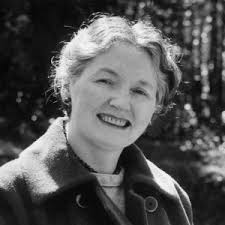
To say Cookson was popular is a dramatic understatement. With over 130 million copies of her books sold worldwide and translations into more than 20 languages, she remains one of the most widely read British novelists in history . For an astonishing 18 years, even after her death, she remained the most borrowed author from UK public libraries .
Yet, for decades, the critical establishment treated her with the same dismissive sniff they reserved for a second-hand coat. How did the illegitimate daughter of a South Shields labourer become a Dame of the British Empire, and why, a quarter of a century after her death, does her work demand a second look?
Table of Contents
ToggleThe Forging of a Voice: From Tyne Dock to Hastings
You cannot separate Catherine Cookson from her origins, because she never did. Born Catherine Ann McMullen on June 20, 1906, in Tyne Dock, South Shields, her entrance into the world was shrouded in the shame of illegitimacy—a social death sentence in Edwardian England . Raised by her grandparents in a two-bedroom house, she grew up believing her biological mother, Kate, was actually her older sister. This secret, combined with the grinding poverty of the Tyneside industrial landscape, planted a seed of anxiety and resilience that would fuel her fiction for six decades.
Her early life reads like the synopsis of one of her own novels. She left school at 13, entering domestic service before moving to the grim environment of a laundry in a workhouse . It was a world of “electric tram cars, gas lamps, corner-end pubs, and the smoke and clamour of heavy industry” . Yet, within that harsh environment, Cookson found her escape: the public library. Denied a formal higher education, she called the library her “substitute university” . At 20, seeking a different life, she moved to Hastings on the south coast, where she eventually met and married Tom Cookson, a grammar school master .
It was tragedy that unlocked the novelist. After suffering several miscarriages and discovering she had a rare hereditary blood disorder (hereditary haemorrhagic telangiectasia), Cookson sank into a deep depression . On the advice of a doctor, or perhaps out of sheer necessity for survival, she began to write. “I took up writing to save my sanity,” she later said. Starting at the age of 44, she turned the pain of loss and the memories of her past into prose.
The 1950s Gamble: Kate Hannigan and the Birth of a Genre
The publication of Kate Hannigan in 1950 was a revolutionary act disguised as a romance novel. The book tells the story of a working-class girl pregnant by an upper-middle-class man . It was semi-autobiographical, honest, and raw. But what set Cookson apart immediately was her refusal to aestheticize poverty. She did not write about the working class from the condescending perspective of the manor house; she wrote from the inside.
While the London literary scene was obsessed with post-war angst or the drawing-room comedies of the upper crust, Cookson was writing about the “Fifteen Streets”—a real neighbourhood of back-to-back housing where survival depended on community, sheer grit, and a sense of humour in the face of despair . She chafed violently against the “romance” label.
“Her books were, she said, historical novels about people and conditions she knew,” her biography notes . She wasn’t writing about knights in shining armour; she was writing about coal miners, shipwrights, factory girls, and agricultural labourers fighting for a shilling.
Her genius lay in her ability to weaponize the plot mechanics of the popular novel. Yes, there is love. Yes, there are handsome men and spirited women. But these elements are the Trojan horse. Inside, Cookson smuggled heavy cargo: domestic abuse, systemic injustice, rape, incest, and the brutal reality of a society split down the middle by class . The “happy ending” in a Cookson novel is rarely just about marriage; it is about survival, economic independence, or the reclaiming of a stolen identity.
The Landscape as Character: “Cookson Country”
Any discussion of Cookson’s uniqueness must address geography. Her work is so deeply embedded in the North East of England that the region has been unofficially christened “Cookson Country” . This is not the picturesque Yorkshire Dales of James Herriot, nor the windswept moors of Emily Brontë. Cookson’s terrain is industrial: the shipyards of Jarrow, the coal mines of Durham, the gritty streets of South Shields.
In the academic collection Catherine Cookson Country: On the Borders of Legitimacy, Fiction, and History, scholars argue that her work provides a specific “fantasy of class” that allows readers to navigate social mobility . Cookson knew the price of that mobility. She left the North for Sussex in 1929 and spent decades in self-imposed exile, only returning permanently in 1976 . This distance gave her perspective. She romanticized the people of the North East but never romanticized the poverty. Her descriptions of slums, hunger, and the humiliation of “service” are too precise to be fantasy.
The novelist Maeve Binchy, upon Cookson’s death, perhaps summed up her historical importance best: “Her strength was that she took the popular novel out of the salon and the aristocracy and gave it to the working people, where it has remained ever since” . Before Cookson, the “historical novel” was largely the province of the upper classes. Cookson democratized history.
The Hidden Depths: Taboo Subjects in Bestsellers
Because her covers often featured soft-focus period imagery, many critics assumed the content was equally soft. This was a catastrophic misreading. Catherine Cookson was a hard-edged writer. The academic Deborah Denenholz Morse highlights how Cookson used the narrative of The Black Velvet Gown to explore “narrative and tolerance” regarding prejudice . Another critical essay in the Taddeo collection notes her persistent focus on illegitimacy—not just as a plot point, but as a systemic trauma affecting generations .
Cookson wrote about the “fallen woman” with a moral complexity that was rare for the mid-20th century. She refused to punish her heroines for the sins of the men who abused them. In The Dwelling Place and The Wingless Bird, the female protagonists are not passive victims; they are furious, resourceful survivors who often break the law or social convention to protect their families.
Furthermore, her “Bill Bailey” trilogy—staring a scruffy, lovable, but morally upright docker—pushed back against the idea that a working-class man was defined solely by his labour . She gave interiority to the working man, depicting his fears, his tenderness, and his frustration. This was radical territory for a woman writing in the 1950s and 60s.
The Visual Legacy: The ITV Golden Age
For many, the name Catherine Cookson is synonymous with the “Sunday night drama.” Between the 1980s and the late 1990s, ITV adapted a significant chunk of her work, creating a golden age of period television . From The Mallens (1979-1980) to The Rag Nymph (1997), these adaptations were massive ratings winners.
They were also a launchpad for acting talent. Look at the cast lists: Sean Bean in The Fifteen Streets (1989), a young Catherine Zeta-Jones in The Cinder Path (1994), Emily Mortimer in The Glass Virgin (1995), and Ray Stevenson in The Dwelling Place (1994) . Unlike the lavish, glossy productions of Downton Abbey or Bridgerton, the Cookson adaptations were gritty. The mud stayed on the boots. The faces were dirty. The lighting was often dark, reflecting the soot-choked skies of the industrial revolution.
The Black Velvet Gown (1991), starring Bob Peck and Janet McTeer, won an International Emmy Award for best drama . This was a validation not just of the production values, but of the source material. It proved that a story about a widow in the 1830s North East dealing with class prejudice and a secret inheritance could resonate globally.
The Woman and the Myth
To understand the uniqueness of the article you are reading now, one must understand the duality of Dame Catherine. In her later years, she became a recluse. The rare blood disorder that caused her miscarriages eventually made it impossible for her to leave her home. She was bedridden but dictating novels . She was also, paradoxically, a savvy businesswoman and a secret philanthropist.
Upon her death, it was revealed that she had given away hundreds of thousands of pounds to charities, particularly those focused on children and cultural projects in the North East . She never forgot the workhouse or the laundry. When she was made a Dame in 1993, the ceremony did not take place in Buckingham Palace; she was too ill to travel.
Instead, the Queen’s representative travelled to her home in Jesmond to pin the medal on her . It was a fitting end for a woman who had always refused to bow to the expectations of the establishment.
She also had a sharp tongue for the critics who sneered at her success. In an era where “bestseller” was often a pejorative term implying a lack of literary merit, Cookson didn’t flinch. She knew she was an artist. She wrote her first story at age 11 and sent it to the Shields Gazette. They rejected it because it was too long . She spent the next 80 years proving that her voice was never meant to be cut short.
Why She Still Matters
In the 2020s, the literary landscape is fractured. Genre lines are blurring. “Working class literature” is having a renaissance, with authors like Douglas Stuart and Ocean Vuong winning Pulitzers for stories about poverty and queer identity. In many ways, they are walking a path Catherine Cookson cleared decades ago.
Her books are not just “period pieces.” They are historical documents. Bridget Fowler, in her academic analysis, uses the sociology of Pierre Bourdieu to argue that Cookson occupies a unique space in the “literary field”—rejected by the high priests of criticism but adored by the people . She is the people’s aristocrat.
Cookson’s plots often hinge on a “secret” (illegitimacy) or an “inheritance” (money). But in her world, the true inheritance is not gold; it is the resilience of the body and the spirit. When you close a Cookson novel, you do not remember the bonnets or the carriages. You remember the smell of the shipyard, the ache of hunger, and the iron will of a woman who refused to be beaten.
She once told an interviewer that she wrote for the “common people.” It was not a marketing slogan; it was a manifesto. Catherine Cookson took the pain of her childhood—the shame of the illegitimate tag, the loneliness of the workhouse, the agony of the miscarriages—and transmuted it into a billion words. She gave a voice to the voiceless streets of Tyneside, and in doing so, she ensured that the world would never look at a miner or a maid the same way again. She did not just write stories; she built a monument to the forgotten.
Key Milestones of a Remarkable Life
| Date | Event | Significance |
|---|---|---|
| 1906 | Born Catherine Ann McMullen in Tyne Dock, South Shields . | Born illegitimate into extreme poverty in industrial North East England. |
| 1920s | Left school at 13; worked as a maid and laundry worker . | The gritty realism of these jobs would later infuse her historical novels. |
| 1929 | Moved to Hastings, Sussex . | A self-imposed exile from the North that lasted nearly 50 years. |
| 1940 | Married Tom Cookson, a schoolmaster . | A stable, supportive marriage that survived four devastating miscarriages. |
| 1950 | Published her first novel, Kate Hannigan, at age 44 . | A late start that proved therapeutic, helping her combat depression. |
| 1993 | Appointed Dame Commander of the Order of the British Empire . | Formal recognition from the establishment she had long been ignored by. |
| 1998 | Died in Jesmond, Newcastle upon Tyne . | Left a legacy of over 100 books and 130 million copies sold. |
Conclusion.
Catherine Cookson was far more than a purveyor of romantic fiction; she was a literary insurgent who broke the genteel mold of the historical novel. By refusing to sanitize the struggle of the working class and by smuggling taboo subjects like illegitimacy, abuse, and systemic poverty into the bestseller lists, she democratized the act of reading. She gave a voice to the shipyards and the back-to-back streets, proving that the lives of the “common people” were worthy of epic storytelling.
While the critical establishment initially dismissed her, the millions who borrowed her books from libraries recognized a truth teller. Today, as we re-evaluate popular fiction and champion working-class narratives, Cookson stands not as a guilty pleasure, but as a pioneering giant—a Dame forged in the coal dust of Tyneside whose words remain as resilient and unflinching as the heroines she created