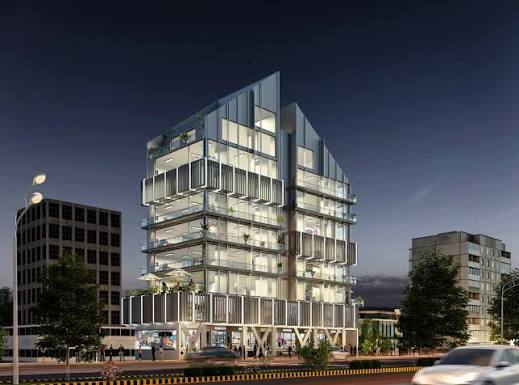
From street level, a modern commercial building can look remarkably simple. Glass, steel and brickwork create a carefully designed exterior, while the roof often disappears completely from view.
Above the offices, shops, hospitals and industrial spaces we use every day, however, is another world. Commercial rooftops can be filled with ventilation equipment, pipework, cables, drainage systems and access routes, all helping the building function behind the scenes.
Heating, Cooling and Ventilation
Some of the largest features on commercial roofs are heating, ventilation and air-conditioning systems.
Air-handling units, condensers, fans and ductwork can occupy substantial amounts of space. Positioning equipment on the roof keeps bulky machinery away from valuable internal areas while making it accessible for servicing.
That accessibility creates another consideration: engineers need practical ways to reach equipment. Pipes, ducts and machinery can turn an apparently simple roof into an obstacle course.
Purpose-designed solutions such as keesafety.co.uk can help create routes over rooftop obstacles, allowing workers to move between different areas without having to improvise their way around equipment.
Pipes, Cables and Building Services
Much of a building’s infrastructure has to travel somewhere. Commercial rooftops can contain pipes carrying water or refrigerant alongside electrical conduits, cable trays and communications infrastructure. Individually, these components may appear minor, but together they can create a surprisingly complicated landscape.
This is why rooftop planning is about more than simply finding somewhere to position machinery. Designers also need to consider how equipment will eventually be inspected, repaired or replaced.
Managing Rainwater
Commercial roofs also have the important job of dealing with the British weather. Gutters, outlets, channels and drainage systems direct rainwater away from the roof. On large flat-roofed buildings, carefully planned falls help move water towards drainage points and reduce unwanted pooling.
These systems require maintenance too. Blocked outlets or damaged drainage components can cause standing water and potentially contribute to wider roofing problems.
Solar Panels Change the Landscape
Commercial roofs are increasingly becoming part of a building’s energy infrastructure. Solar photovoltaic installations can transform previously unused roof space into a source of electricity. However, panels must share the available area with ventilation equipment, drainage routes, access points and other building services.
Technicians may also need to reach panels and electrical equipment for inspection and maintenance, adding another layer to rooftop access planning.
Rooflights and Fragile Areas
Not everything on the roof is machinery. Warehouses, factories and other large commercial buildings often use rooflights to bring natural light into the spaces below.
From inside, they can improve the working environment. From above, they become features that must be considered when planning movement around the roof.
Roof surfaces should never simply be assumed to offer the same conditions everywhere. Materials, openings, equipment and changes in level can all influence how maintenance work is approached.
The Safety Infrastructure Above Us
Some rooftop structures exist specifically because people need to work there. Depending on the property, this could include guardrails, walkways, access platforms, and systems for crossing obstacles. These features may look like relatively minor additions beside large HVAC units, but they can play an important role in creating clearer routes around complicated rooftop environments.
The safest commercial rooftop is therefore not necessarily the emptiest. Additional infrastructure may be present precisely because somebody has considered how engineers and contractors will move through the space.
A Hidden Workplace
Perhaps the most interesting thing about a commercial roof is how much activity it hides. Downstairs, somebody adjusts the temperature, switches on a light or opens a tap without thinking about the infrastructure involved. Above them, machinery, pipes, electrical equipment and drainage systems quietly help make those everyday actions possible.
For facilities teams and engineers, the roof is not simply the final layer of the building. It can be a working environment containing equipment that requires regular inspection, maintenance and eventual replacement.
The next time you pass a modern office, hospital, shopping center or industrial facility, it is worth imagining what sits beyond the parapet. The polished building visible from the street is only part of the story. Above it is a largely unseen landscape designed around the practical business of keeping everything below running.