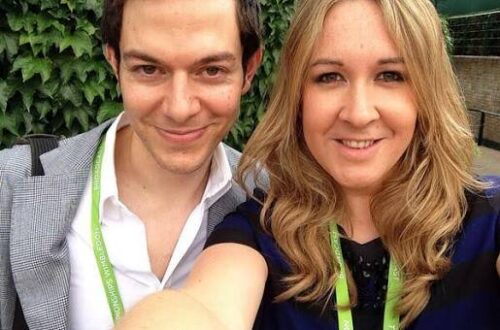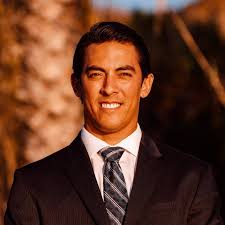
To the casual viewer, the name “Nick Watt” might cause a flicker of confusion. Ask a viewer in London who he is, and they will tell you he is the sharp, energetic Political Editor of the BBC’s flagship program Newsnight. Ask a viewer in Los Angeles, and they will recognize him as the CNN national correspondent with the soft Scottish burr, reporting live from the edge of a mudslide or the chaos of a protest.
This is the story of how one man has mastered two distinct media landscapes, bridging the gap between the hallowed halls of Westminster and the sun-scorched highways of California, all while remaining one of the most grounded and authentic figures in news.
Table of Contents
ToggleA Childhood on the Move (Scotland to the World)
To understand Nick Watt the journalist, you first have to understand Nick Watt the global citizen. Born in Paisley, Scotland, Watt did not have a static upbringing. He was raised across a sprawling tapestry of the British Commonwealth, living in Thailand, Malaysia, Turkey, and South Africa .
This peripatetic childhood is the secret ingredient to his success. In an industry where many reporters struggle to understand cultural nuance, Watt was forced to learn the art of reading a room before he was a teenager. Being the “new kid” in international schools teaches you empathy, observation, and how to listen for the unspoken tensions beneath the surface.
He eventually returned to Scotland to earn a master’s degree in Modern History from the University of St. Andrews, with a specific focus on post-war U.S. foreign policy . It is a niche academic choice that looks prescient now, given his eventual move to the United States. But history, for Watt, was never just about dates; it was about the cause and effect of power—a theme that would dominate his career.
The Print Apprentice (The Times and The Guardian)
Before he ever held a microphone or stood in front of a camera, Nick Watt was a print journalist, learning the trade the “hard way.” He began his career in the 1990s, but his breakout role came as the Ireland Correspondent for The Times .
This was not a glamorous post. It was the mid-1990s, and the Northern Ireland peace process was hanging by a thread. Watt was based in Belfast, covering the final, bloody years of the Troubles and the fragile, often failing, negotiations that would eventually lead to the Good Friday Agreement . This was high-stakes journalism. It required a deep understanding of sectarian divides, the ability to parse ambiguous political language, and the physical courage to be near violence.
Unlike the instantaneous nature of television, print journalism in Belfast taught Watt patience and precision. He learned that a single misplaced word could be inflammatory.
Following Ireland, Watt moved to Westminster, becoming a political correspondent for The Times before a long and distinguished stint at The Guardian. At The Guardian, he rose to Chief Political Correspondent and later took on the role of European Editor based in Brussels . It was here that he became one of the best-connected journalists covering the relationship between the UK and the EU. When the financial crisis hit in 2008 and, later, when the specter of Brexit began to loom, Watt was uniquely positioned to explain the tectonic shifts occurring beneath the surface of European politics.
The Leap to BBC Newsnight
In 2016, Nick Watt made the jump from print to broadcast, taking over as Political Editor of BBC Two’s Newsnight . For many print journalists, the transition to live television is a graveyard of careers. The relentless pressure of the red light, the need for a concise “bite,” and the technical demands of autocues often crush even the best writers.
But Watt took to it like a duck to water. He credits former Newsnight editor Ian Katz (his former deputy at the Guardian) with teaching him the arcane language of broadcast—the “OOVs” (out of vision) and “SOQs” (sound on tape) . Yet, what made him stand out was his refusal to adopt the aggressive, confrontational style of some of his predecessors.
Nick Watt brought the “Westminster village” to the screen not as a drama, but as a chess match. He became famous for his ability to stand in a dimly lit corridor outside the House of Commons and explain complex parliamentary procedures with a boyish enthusiasm that was infectious rather than boring .
During the chaotic Brexit years, Watt became essential viewing. As five Prime Ministers cycled through Downing Street in rapid succession, he was the steady hand on the tiller, translating the madness into plain English. His work gained a cult following; he was described as “always immaculately sourced” and possessing a “deftness” that contrasted with the heavy-handed style of other political interviewers . He brought wit and color to a story that often felt gray and grim.
The American Adventure: ABC and CNN
While he was cementing his legacy in the UK, Watt was simultaneously building a parallel career in the United States. In 1997, he started at ABC’s London bureau as a desk assistant. Over 20 years at ABC, he moved from producer to correspondent, spending 15 years based in London covering the wars in Iraq and Afghanistan .
He was not just a studio anchor. Nick Watt has been there. He reported from Fallujah, Iraq, in 2004. That reporting was so visceral, so essential, that it earned him an Emmy Award for “Outstanding Coverage of a Breaking News Story” . He also earned an Emmy for his work as a producer in Darfur, Sudan, bringing the horrors of that genocide to light .
In 2012, he moved to Los Angeles for ABC, and in 2018, he made the switch to CNN . Now based in California, Nick Watt covers a very different kind of chaos: wildfires consuming entire towns, the drought crisis, the homelessness epidemic in Los Angeles, and the bizarre political battles between the Trump administration and the Golden State .
There is a distinct irony to his career arc. He spent the first half of his life covering the formal, suited-up power of Westminster and Brussels. He now spends his days wearing a flak jacket or a fire-resistant hoodie, covering the raw, physical power of nature and civil unrest.
The Curious Case of “Zito” the Elephant
Perhaps the most delightful detour in Nick Watt’s resume has nothing to do with politics or breaking news.
It turns out the hard-nosed journalist has a second career as a voice actor. If you have young children who watch Disney, you might have heard him without knowing it. Watt is the voice of “Zito,” the elephant, in the Disney series The Lion Guard .
It is a role that says more about Watt than any award. He does not take himself too seriously. In an industry plagued by ego, the ability to step away from the seriousness of war and Westminster to voice a cartoon elephant suggests a man who understands the value of joy and humility.
The Two Nick Watts
As of 2025 and 2026, Nick Watt remains a vital force in journalism. However, it is essential to clarify the current landscape: there are, effectively, two active Nick Watts in high-level media, and their careers are a testament to the globalization of news.
On one side of the pond, you have Nick Watt of CNN. He is the former ABC war correspondent, the Emmy winner, the face of breaking news on the West Coast. He is currently a national correspondent based in Los Angeles, focusing on the intersection of policy and human drama in the Western United States .
On the other side of the pond, you have Nick Watt of BBC Newsnight. He is the political insider, the master of the Brexit briefings, the moderator of high-stakes leadership debates, and the host of The Westminster Hour . According to speaker bureaus and recent profiles, he has covered seven UK general elections and continues to be the go-to voice for understanding the chaos of British politics .
It is rare for one person to maintain such a high profile in two different countries simultaneously. It speaks to an incredible work ethic and a unique brand of intelligence.
What Makes Nick Watt Tick?
So, what is the secret sauce? Why has Nick Watt succeeded where so many others have burned out or become caricatures?
1. The Outsider’s Perspective
Whether in Washington or London, Watt is always a slight outsider. He is Scottish. He was raised globally. He doesn’t have the blind loyalty to a specific party or politician that sometimes clouds British journalists, nor does he have the jingoistic tendencies of some American cable news hosts. He watches the drama unfold with the eyes of a historian.
2. The Voice
Journalism students should study the Nick Watt “delivery.” His Scottish accent is warm but not impenetrable. When reporting live from a wildfire for CNN, his voice carries urgency but not hysteria. When interviewing a Prime Minister for the BBC, his voice carries gravity but not aggression. It is a controlled, human instrument.
3. The Source Whisperer
In political journalism, it is often about who you know. In the Mace Magazine profile, it was noted that Watt is “never more than a few yards away from the big story” . This is not luck. It is the result of decades of relationship building. He is known for being fair, which means MPs and aides trust him with their gossip.
The Legacy of a Scottish Road Warrior
Nick Watt has reported on the fall of Margaret Thatcher (as a trainee, sent to cover her moving out of Downing Street) . He has reported on the siege of Fallujah. He has reported on the COVID-19 pandemic from a Los Angeles overwhelmed by death. He has reported on the resignation of Boris Johnson and the rise of Donald Trump’s border policies.
In an era of “churnalism” (the regurgitation of press releases) and AI-generated content, Nick Watt represents the old guard, but with a modern face. He is a shoe-leather reporter. He goes to the place where the thing is happening. He talks to the people on the ground.
Whether you see him on CNN at 2 PM Pacific time discussing a landslide in Malibu, or on BBC Newsnight at 10:30 PM discussing a landslide in Parliament, you are guaranteed the same thing: authority without arrogance, and insight without spin.
He is, arguably, the most interesting Scottish import to hit American television since Sean Connery, and he is still simultaneously holding down the fort in London. In a fractured media world, Nick Watt is a unifier—proof that real journalism, done with heart and smarts, still works on both sides of the Atlantic.
Follow the Work:
You can catch Nick Watt on CNN reporting on breaking news and major events across the United States. In the UK, you can read his analysis and see his broadcasts on BBC Newsnight and listen to him on BBC Radio 4’s Today program .
Conclusion
In an era where media personalities are often pigeonholed into narrow niches—either a Washington political insider or a California features reporter—Nick Watt has defied categorization. He is the rarest of journalists: a dual citizen of the global news village, equally at home deconstructing a parliamentary procedure in London as he is dodging flames in Los Angeles.
What makes Watt truly unique is not just his résumé, but his authenticity. He carries the humility of a print journalist who learned his craft in the trenches of Belfast, the courage of a war correspondent who saw Fallujah, and the warmth of a man who voices cartoon elephants for his children. He does not shout, he does not posture, and he never confuses opinion with fact.
As the news industry continues to fragment and the line between entertainment and journalism blurs, Nick Watt stands as a reassuring constant. Whether you encounter him on CNN or BBC Newsnight, you know you are getting the same product: rigorous reporting, historical context, and a Scottish everyman who just happens to have a front-row seat to history. In a noisy world, Nick Watt is still worth listening to.