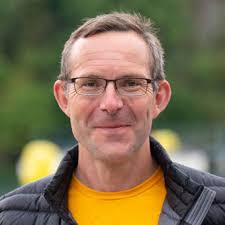
While the world watched the Thai cave rescue unfold as a miracle, John Volanthen saw it as a logistics problem. While the media dubbed the rescuers “heroes,” Volanthen bristled at the label, insisting that the only miracle was the application of process, patience, and the refusal to accept the word “can’t.”
This is the story of the man who found the Wild Boars—not through luck, but through a systematic, almost clinical approach to survival; the man who sedated children to save them; and the reluctant hero who taught the world that courage is often just the willingness to take the next step when you cannot see the path.
Table of Contents
ToggleThe Smell That Meant Life
By the time John Volanthen and his long-time diving partner Richard “Rick” Stanton arrived at the Tham Luang cave complex on June 27, 2018, the situation was grim. Twelve boys from the “Wild Boars” soccer team and their 25-year-old coach had been missing for days. Monsoon rains had turned the winding cave system into a death trap, filling it with silt-laden, rushing water.
The international rescue effort was chaotic. The Thai Navy SEALs were brave, but cave diving is a niche discipline; it requires a level of claustrophilic calm that even elite soldiers struggle to master. When Volanthen and Stanton arrived, they witnessed “a fair bit of chaos” . Volanthen, however, has a gift for ignoring the noise. He is a man who runs ultramarathons so he can “eat more biscuits”—a practical joker with a steel trap for a mind.
On July 1, the water levels finally dropped just enough to allow a push deeper into the cave than anyone had gone before. The journey was horrific. Visibility was measured in inches, not feet—described by Volanthen as swimming through “cold coffee” . They had to squeeze through gaps so tight that their tanks scraped the ceiling.
As they surfaced into a narrow air pocket a mile inside the mountain, Volanthen was hit by a powerful, foul odor. In that moment, his heart sank. He had been on recovery missions before. He had pulled bodies from French caves and Irish sinkholes. To him, that smell signified only one thing: decomposition .
“I imagined bumping into bodies,” he later admitted . He had run visualizations in his head to prepare for the worst—the sight of children’s bodies spinning in the current. But as he lifted his head higher, the smell clarified. It wasn’t death. It was sweat, unwashed skin, and the stench of an improvised toilet. It was the smell of the living.
He flicked on his torch and saw them: thirteen pairs of eyes blinking back at him in the darkness.
The video of that moment is now legendary. While Stanton filmed, Volanthen, ever the pragmatist, asked the most logical question: “How many of you?”
A boy answered, “Thirteen.”
Volanthen replied, “Brilliant.”
It wasn’t a prayer of thanks or a shout of joy. It was a status check. The target was acquired. The mission had entered its second phase.
The Impossible Physics of Fear
Finding the boys was the end of the beginning. Volanthen knew that survival was not guaranteed merely because they were breathing. He understood the cruel math of cave diving: They were beyond help.
“We’ve always known that in cave diving explorations, you can be beyond a long, flooded section of cave and you can be alive there, but you’re slowly dying,” he explained . The oxygen in the pocket was depleting, and the boys were too weak to swim. But the real enemy wasn’t the water; it was panic.
Volanthen’s decades of experience told him that a panicking diver is a dead diver. An untrained person, placed in zero-visibility water with a mask over their face, will instinctively rip the regulator out of their mouth to scream. They will claw at the ceiling. They will drown themselves and take the rescuer down with them.
This is the central thesis of Volanthen’s philosophy: You cannot negotiate with physics, but you must manage the human mind.
The rescuers had already tested the waters by escorting four Thai water workers out of the cave. Even as adults, the workers had thrashed and struggled, nearly losing the guide rope. Volanthen knew that if they tried to take the children out conscious, it would be a massacre .
The solution was radical, risky, and ethically fraught: sedation.
The plan was to drug the children with a cocktail of ketamine, Xanax, and atropine, rendering them completely unconscious. They would then be zipped into “hug” harnesses, fitted with full-face masks, and essentially treated as human luggage being towed through a submerged tunnel.
“When we put the children’s faces underwater they stopped breathing for a period of time,” Volanthen recounted . For a parent, this is a nightmare. For a rescuer, it is a test of nerve.
Volanthen, assigned to escort three of the boys, faced a terrifying moment when one of his charges stopped breathing entirely due to the shock of the cold water. “It’s not a good situation to be in,” he said dryly. “You’ve got a healthy-ish child and because you’re so far from help, you’re on your own” .
He didn’t panic. He waited. He adjusted the mask. The bubbles started again. He moved on.
The “Ordinary” IT Consultant
To understand how John Volanthen kept his cool while a child stopped breathing in his arms, one must look at his life before the fame. Volanthen is not a thrill-seeker in the traditional sense. He is a puzzle-solver.
He grew up in Brighton, England, discovering caving as a Scout—an organization he still volunteers for as a leader . He studied electronics at De Montfort University, and this technical background bleeds into every aspect of his hobby. He doesn’t just buy gear; he builds it . He designs his own rebreathers to make them more compact and efficient. He created a specialized mapping device to survey submerged caves where traditional compasses fail .
He holds world records for cave diving, including the longest cave penetration dive in 2010 in the Pozo Azul system in Spain, where he, Stanton, and others pushed nearly 9,000 meters into the earth . These aren’t vacations; they are expeditions that require camping underground for days, navigating sumps where the ceiling is the water and the floor is an abyss.
Volanthen sees rescue work as merely the application of exploration skills. “I can see it was a first, how’s that?” he quipped when a BBC interviewer asked if he realized his actions were remarkable . This detachment is his superpower. He views a flooded cave not as a tomb, but as a line to be followed, a checklist to be completed.
This is why he was awarded the George Medal by Queen Elizabeth II in 2019, the second-highest civilian award for gallantry . Yet, when you ask him about it, he talks about the logistics, the biscuits, the wire snags, and the other divers. He deflects praise with the efficiency of a shield.
The Elon Musk Distraction and the Reality of Teamwork
No article about Volanthen is complete without addressing the bizarre circus that surrounded the rescue. While the divers were planning the ketamine sedation, the world’s richest man, Elon Musk, descended upon the scene (at least via Twitter), offering a miniature submarine.
Volanthen, ever the diplomat, initially welcomed the help. “I said to Rick, ‘This is a person with almost limitless resources. We would be foolish to turn down this assistance,'” he recalled . However, the submarine was ultimately deemed impractical for navigating the narrow, twisting passages of Tham Luang.
When the rescuers declined the offer, Musk infamously lashed out, calling fellow British diver Vern Unsworth a “pedo guy.” Volanthen distanced himself from the drama. “I wasn’t involved in the name calling… It was a shame really as it detracted from the whole rescue mission” .
This episode highlighted Volanthen’s professionalism. In a world of egos and spectacle, he remained a grey man in the background, focused solely on the seal pups (as the divers nicknamed the boys) waiting in the dark. He has no time for the “comedy version” of the story, though he once joked that Rowan Atkinson could play him .
The Thirteen Lessons
In 2021, Volanthen authored a book titled Thirteen Lessons That Saved Thirteen Lives . It is not just a memoir of the rescue; it is a manual for living. The book posits that the skills used in the cave are transferable to the boardroom and the living room: breaking down insurmountable problems into small chunks, visualizing failure to avoid it, and the ruthless prioritization of the task at hand.
One of his mantras, repeated throughout his speaking engagements, is the reframing of “I can’t” to “I can.” The boys in the cave said they couldn’t dive. Volanthen didn’t hear an inability; he heard a condition that needed a fix. The fix was sedation.
He lectures now on “Managing Risk – Keeping Calm in a Crisis” . He draws parallels between the zero-visibility waters of Thailand and the fog of a business merger. When you cannot see the future, he argues, you must rely on the line in your hand—the rope of your training and your ethics.
Why He Matters
We live in an age of performative heroism, where social media warriors fight battles with keyboards. John Volanthen is the antithesis of this. He is an analog hero in a digital world.
He doesn’t want a knighthood. “If you could do the same for someone else’s child, you would,” he shrugged after the rescue, brushing off calls for honors . He returned to Bristol, to his IT consultancy, to his Scout troop, and to designing gadgetry in his garage.
But John Volanthen matters because he proves that the heroic instinct is not about physical strength or wealth. It is about preparation and temperament. He was able to save thirteen lives not because he was the strongest swimmer, but because he had spent 30 years learning to tell the difference between the smell of a toilet and the smell of a corpse. He succeeded because when the water rose and the lights went out, he did not hope for a miracle—he built one.
He is the navigator of the underworld, the man who looks into the abyss and runs a diagnostic check. And in doing so, he reminds us that sometimes, the most extraordinary thing a person can be is devastatingly, rationally, calm.
Conclusion
In the end, the story of John Volanthen is not really about the water, the rocks, or the darkness. It is about the light that exists in the unassuming corners of human nature. We search for heroes in the grand gestures—the fiery speeches and the dramatic sacrifices—but Volanthen teaches us that heroism often wears a wetsuit, carries a flashlight, and speaks in the flat, practical tones of a man checking a box on a list.
He did not see the Wild Boars as “thirteen miracles.” He saw them as thirteen problems to solve, one breath at a time. He did not rely on luck; he relied on decades of disciplined preparation, a refusal to panic, and the quiet belief that “impossible” is just a word used by people who have already given up.
John Volanthen went back to his garage after saving the world’s children. He didn’t write a manifesto or start a foundation (at least, not a loud one). He simply resumed his life, proving that the most profound courage is not a performance—it is a way of being. He is the reminder that when the floods come, you don’t need a superhero. You need a calm, competent, slightly eccentric IT consultant from Bristol who knows how to hold his breath and think. And that is perhaps the most hopeful lesson of all