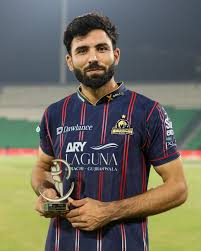
On one side of the world, Irfan Khan Niazi is a 23-year-old with a six-hitting swing and ice in his veins, hailed as the solution to Pakistan’s decades-long middle-order crisis. On the other, Irfan Khan is a 68-year-old visual historian who just walked away from a three-decade career at one of America’s most prestigious newspapers, clutching a Pulitzer Prize and a lifetime of images that defined the South Asian immigrant experience.
To confuse them would be a disservice. To compare them, however, reveals a profound narrative about Pakistan—one rooted in the dusty soil of Mianwali, the fierce independence of the Pashtun belt, and the relentless pursuit of excellence on the global stage.
Table of Contents
TogglePart I: The Finisher (The Cricketer)
A Prince of Mianwali
To understand Mohammad Irfan Khan Niazi, the cricketer born on December 28, 2002, one must first understand the brutal ecology of Pakistani cricket. For decades, the nation has produced generational pace bowlers like a factory line, but batters who can “finish” a game—those who thrive in the death overs—have been a rarity.
Hailing from Mianwali, Irfan walks on storied ground. This is the same soil that produced the legendary Imran Khan and the stoic Misbah-ul-Haq . But unlike the polished aristocrats of Lahore’s cricket academies, Irfan’s journey is rooted in the raw, unforgiving world of tape-ball cricket.
Switching from tape-ball to the hard leather ball in 2015 was a baptism by fire . His rise was not linear; it was a grind through the dusty pitches of the Ikram Shaheed Cricket Club, district matches for Mianwali in 2016, and regional battles for Faisalabad . Yet, the “Niazi” trait—a fierce, almost stubborn pride—became evident early. He wasn’t just playing cricket; he was hunting for a legacy.
The PSL Breakthrough: “I will take care of your problems”
While he represented Pakistan in the 2020 and 2022 Under-19 World Cups, it was the gladiatorial arena of the Pakistan Super League (PSL) that forged him . Playing for the Karachi Kings, Irfan did not just enter the league; he announced himself.
The moment that changed his life came against the Lahore Qalandars. The Kings were choking in a run chase. The required rate had climbed into the danger zone. Walking out to bat, the 21-year-old found himself alongside the veteran Shoaib Malik, a man who has seen three eras of cricket.
What happened next has become folklore. In a conversation captured by the stump mic, Malik was likely trying to calm the youngster. Irfan’s reply was startlingly confident: “I will take care of your problems” .
He didn’t just talk. He smashed 35 runs off 16 balls, a blistering innings punctuated by six boundaries, dragging his team over the line in a last-ball thriller . That wasn’t just a win; it was a changing of the guard. It signaled the arrival of a batter who fears nothing. For his efforts in PSL 2024, he was adjudged the Emerging Player of the Tournament and, perhaps more tellingly, the Best Fielder—a testament to his athleticism in an era where every run saved matters .
The International Baptism
The step up to the national jersey came swiftly. He made his T20I debut against New Zealand in April 2024 and his ODI debut against Australia in November 2024 . The raw statistics of his early career—a strike rate hovering around 135 in T20Is and a first-class average just shy of 46—tell a story of a man who prioritizes impact over accumulation .
He is a right-handed middle-order batter and a handy right-arm medium-fast bowler . But his real weapon is psychological. In an interview following his selection, Irfan spoke of sharing the dressing room with icons like Kieron Pollard and Shoaib Malik, stating that his goal was to play for Pakistan as long as Malik has . That is the audacity of youth meeting the work ethic of a Niazi. He doesn’t just want to visit the international stage; he wants to own a franchise there.
Part II: The Historian (The Photojournalist)
From Dubai to the Pulitzer
Across the globe, a different Irfan Khan was finishing a different kind of innings. This Irfan Khan, born in Pakistan in the mid-1950s, began his career as a commercial photographer in Karachi in 1973 . However, the stifling constraints of the local industry pushed him toward Dubai, and eventually, to the United States.
He joined the Los Angeles Times as a freelancer in 1989, earning a full-time staff position in 1996 . For 28 years, Irfan Khan did not just take pictures; he bore witness.
His lens captured the terrifying beauty of fighter jets slicing through Rainbow Canyon in Death Valley—a shot so difficult that fellow photographers said it was impossible, yet he waited hours on a mountain to nail it for the front page . He documented the horror of the San Bernardino terrorist attack in 2015, a story for which his team was awarded the Pulitzer Prize .
A Bridge Between Worlds
What makes this Irfan Khan unique is his duality. He was a Muslim journalist in post-9/11 America, navigating the suspicion and the sorrow. He was one of the few American photographers granted access to cover Hajj in Makkah, bringing the spiritual magnitude of Islam to a global, secular audience .
He traversed the war zones of the Pakistan-Afghanistan border, and he walked the intensive care units of the COVID-19 pandemic . Yet, he never detached. In 2021, the Society of Professional Journalists honored him with the Distinguished Journalist Award . When he retired in 2024, the LA Times newsroom didn’t just lose a photographer; they lost a conscience.
His colleague, Brittny Mejia, described him as “a constant source of inspiration” who used his “ingenuity and persistence” to get into places no one else could .
The Shared Thread: The Niazi DNA
It would be reductive to suggest that sharing a name is destiny. However, the parallels between the two Irfan Khans are striking and instructive.
1. The Mianwali Grit:
The cricketer Irfan Khan Niazi is often mentioned in the same breath as Imran Khan because of their shared hometown. But the photojournalist also shares that lineage. The region is known for producing people who are stubborn, resourceful, and resilient. Whether it is facing a 150 kph yorker or facing the chaos of a riot scene, the ability to stay calm originates from this cultural bedrock.
2. The Immigrant Mindset vs. The Local Hero:
The cricketer represents the “local hero” archetype—he fights for the star on the chest, for the roar of the crowd in Gaddafi Stadium. The photojournalist represents the immigrant mindset—the feeling of being an outsider looking in, of having to work twice as hard for half the recognition, of building a life from zero in a new country . Both are valid expressions of the Pakistani spirit.
3. Timing and Pressure:
Cricket has the “death over.” Photography has the “decisive moment.” The younger Irfan must calculate risk versus reward in milliseconds—whether to launch a six over long-on. The elder Irfan spent a lifetime calculating light, shadow, and geometry to capture a tragedy or a triumph in 1/4000th of a second. Both professions are art forms masquerading as reflexes.
The Legacy They Are Building
It is March 2026. The cricketer, Irfan Khan Niazi, is in the middle of another PSL season, playing for the Hyderabad Kingsmen (formerly of Karachi Kings). He tells the media, “My sole focus is to perform for the team… only when the team succeeds will there be a chance to secure a spot in the national squad” . He is still just 23. If he fulfills his potential, he will be the backbone of Pakistan’s 2026 T20 World Cup campaign. His story is unwritten, filled with the potential for glory or the tragedy of wasted talent.
The photojournalist, Irfan Khan, is now retired. His story is a closed book, but it is a book filled with Pulitzer Prizes and front pages. He is currently being celebrated by the Pakistani-American community as a pioneer who proved that a Muslim kid from Mianwali could shape the visual history of California .
Conclusion
In a world obsessed with identity, the name Irfan Khan Niazi serves as a fascinating anomaly.
If you search for the name, you might find a statistic about a 48* run chase, or you might find a haunting black-and-white image of a forest fire or a refugee tent. One represents the future of Pakistan—athletic, brash, and viral. The other represents the maturity of the diaspora—hardworking, observant, and historic.
One swings the bat; the other held the camera. But both, in their own way, are still fighting to frame the perfect picture of Pakistani excellence for the rest of the world to see