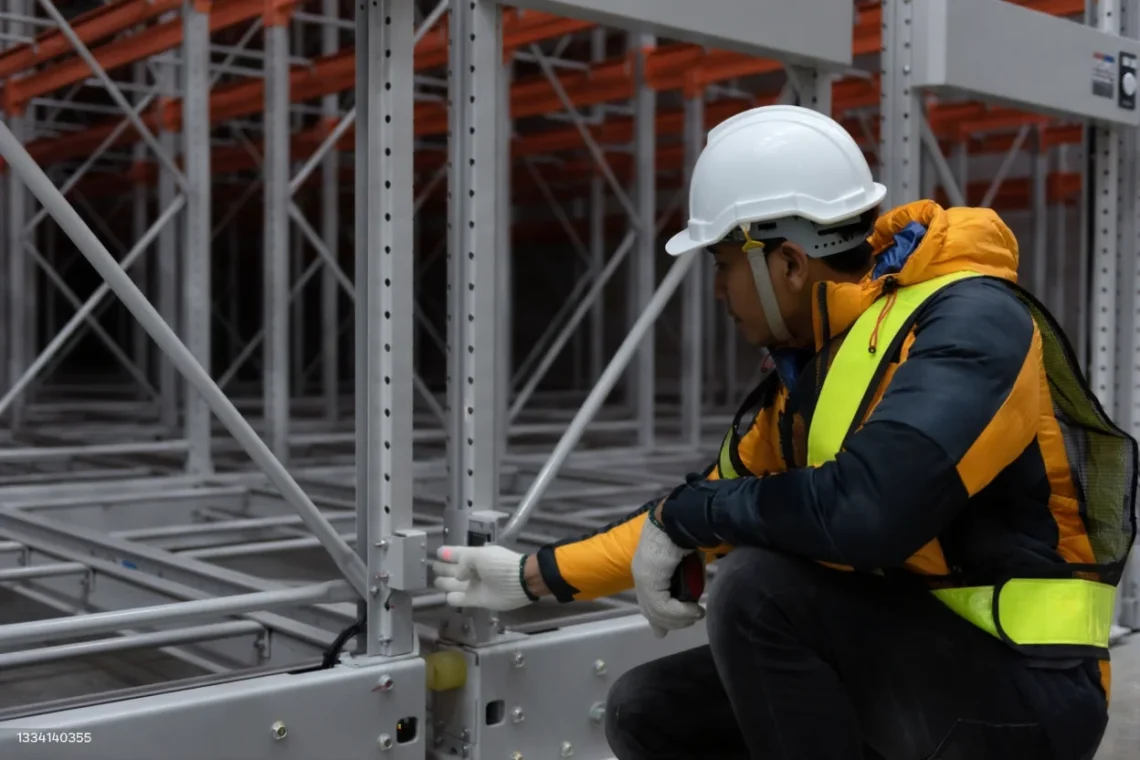
Not Every Damaged Racking System Needs Replacing Discovering damaged pallet racking often leads to the same question: should it be repaired or replaced? While replacing damaged sections may seem like the safest option, it is not always the most practical or cost-effective solution.Modern warehouse racking is built to last, and many types of damage can be repaired successfully by experienced specialists. The right decision depends on the extent of the damage, the condition of the surrounding structure, and whether the racking can safely return to service after repairs have been completed.Making an informed decision helps businesses control costs while maintaining high safety standards.
When Professional Racking Repairs Are the Best Option
In many situations, racking repairs provide a faster and more economical solution than replacing complete sections of storage equipment. Professional racking repairs focus on restoring the damaged components while allowing the rest of the installation to remain in place, helping businesses minimise disruption and avoid unnecessary replacement costs.
Experienced repair specialists will first assess the condition of the affected area before recommending the most suitable course of action. If the damage is localised and the remaining structure is sound, repairs can often restore the racking safely and efficiently.
Companies such as DC Direct work with warehouses across the UK to assess damage, carry out repairs and help businesses keep their storage systems operating safely.
Understanding the Different Types of Damage
Not every impact causes the same level of structural concern. Some damage can be repaired relatively quickly, while other situations require more extensive work.
Common issues include:
- Bent uprights caused by forklift impacts
- Damaged beams
- Twisted bracing
- Missing beam locking pins
- Loose floor fixings
- Damaged base plates
Professional assessment is important because damage is not always obvious. Components that appear only slightly bent may have experienced significant structural weakening.
When Replacement May Be Necessary
Although repairs are suitable in many cases, there are situations where replacement is the safer option.
Replacement may be recommended if:
- Multiple structural components have been severely damaged
- The racking has suffered repeated impacts over many years
- Corrosion has significantly weakened the steel
- The layout is no longer suitable for current warehouse operations
- The system no longer meets operational requirements
Replacing ageing or heavily damaged installations can improve both safety and warehouse efficiency over the long term.
Why Quick Action Matters
Regardless of whether repair or replacement is required, delaying action increases risk.
Damaged racking continues to carry loads unless removed from service. Every day that damaged components remain in use increases the possibility of further deterioration or structural failure.
Prompt action helps businesses:
- Reduce safety risks
- Protect warehouse staff
- Prevent additional damage
- Maintain storage capacity
- Avoid larger repair costs
Acting quickly also reduces disruption by allowing work to be planned before problems become more serious.
The Financial Benefits of Repair
For many businesses, repairing damaged racking offers significant financial advantages.
Rather than replacing complete frames or entire bays, targeted repairs allow companies to restore the affected area while retaining the majority of the existing installation.
This can reduce:
- Material costs
- Labour costs
- Installation time
- Warehouse downtime
- Stock relocation costs
Repairing suitable damage also extends the working life of the racking, providing better value from the original investment.
The Importance of Professional Assessment
Warehouse staff should always report damaged racking, but deciding whether repair or replacement is appropriate requires specialist knowledge.
Qualified engineers understand how different types of damage affect structural performance. They can assess whether repairs will restore the system safely or whether replacement is necessary.
Working with experienced companies such as DC Direct provides reassurance that decisions are based on technical expertise rather than assumptions.
Professional assessments also provide documented recommendations that support health and safety compliance.
Preventing Future Damage
While repairs restore damaged areas, preventing future impacts should remain a priority.
Businesses can reduce damage by:
- Providing regular forklift driver training
- Clearly marking traffic routes
- Installing rack protection where appropriate
- Carrying out regular visual inspections
- Reporting damage immediately
- Scheduling annual professional inspections
Small improvements in warehouse management often lead to fewer impacts and lower maintenance costs over time.
Final Thoughts
Every warehouse will experience occasional racking damage, but replacing entire systems is not always necessary. In many cases, professional repairs provide a practical, safe and cost-effective solution that restores structural integrity while keeping disruption to a minimum.
The key is ensuring that damage is assessed quickly by experienced specialists who can recommend the right course of action. By investing in professional racking repairs, UK businesses can maintain safe storage systems, extend the life of their equipment and keep warehouse operations running efficiently.