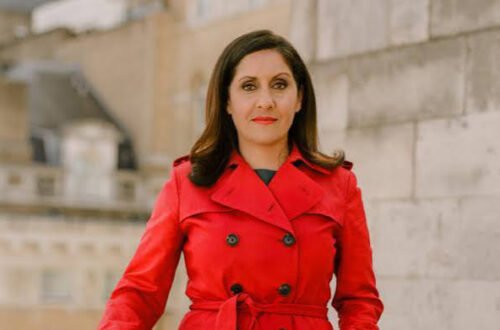
In an era where political discourse often descends into noise and outrage, Amanda Akass stands as a reminder of what journalism is meant to be: precise, principled, and relentlessly focused on the facts. As a political correspondent for Sky News, she has carved out a reputation that transcends the typical boundaries of broadcast journalism, earning respect from colleagues and viewers alike for her ability to make sense of the most complex political landscapes .
But who is Amanda Akass beyond the television screen? Her journey from local radio to the national stage is a story of persistence, intellectual rigor, and an unwavering commitment to telling stories that matter. In an industry increasingly defined by rapid turnover and fleeting attention spans, Akass represents something increasingly rare: a journalist who built her career the old-fashioned way, one story at a time.
Table of Contents
ToggleFrom Local Radio to National Recognition
Amanda Akass’s entry into journalism was not marked by glamour or instant fame. Instead, it began in the trenches of local radio, where she first discovered the power of broadcast journalism during the 2008 London mayoral campaign . Those early days covering local politics taught her something that would become the foundation of her career: that politics is not an abstract game played by distant figures, but something that affects real people in tangible ways.
Before her name became familiar to Sky News viewers, Akass spent a decade honing her craft at the BBC, primarily working for BBC South East Today . This period was formative in ways that shaped her entire approach to journalism. Unlike national correspondents who parachute into stories for brief moments, regional journalists must build relationships, understand local contexts, and earn trust over time. Akass did all of this and more, rising through the ranks to become the regional political editor for BBC South East .
The BBC years were not merely about career advancement. During this time, Akass developed expertise in areas that would set her apart from many of her peers. Her specialization in crime and court reporting demanded a particular kind of discipline—the ability to navigate complex legal proceedings, handle sensitive subject matter with appropriate gravity, and communicate intricate details clearly to the public . These are skills that cannot be learned overnight, and they would prove invaluable throughout her career.
The Shoreham Air Crash Trial: A Defining Moment
Every journalist has a story that defines them, a piece of reporting that demonstrates the full measure of their abilities. For Amanda Akass, that moment came with her coverage of the Shoreham air crash trial at the Old Bailey.
The Shoreham air disaster, which occurred on August 22, 2015, was a tragedy that shook the United Kingdom. An Hawker Hunter jet crashed onto the A27 road during the Shoreham Airshow, killing 11 men and injuring more than a dozen others. The subsequent trial was a complex, emotionally charged legal proceeding that required not only journalistic skill but also profound sensitivity.
Akass’s coverage of this trial earned her a Royal Television Society (RTS) Award, recognition from the highest echelons of British broadcasting . But the significance of this achievement goes beyond the accolade itself. Court reporting, particularly of major disaster trials, demands an almost surgical precision. Every word matters. Every detail must be verified. The families of victims deserve reporting that honors their loss while serving the public’s legitimate interest in understanding what happened and why.
The RTS award was not just validation of Akass’s skills as a reporter; it was recognition of her ability to balance competing demands that lie at the heart of ethical journalism: the pursuit of truth alongside compassion for those affected by tragedy. It is a balance that many journalists struggle to achieve, but one that Akass has consistently demonstrated throughout her career.
The Cambridge Education and Academic Foundation
Understanding Amanda Akass’s approach to journalism requires appreciating her intellectual foundation. She is a graduate of the University of Cambridge, an institution that has produced some of Britain’s finest political minds across generations .
Cambridge does not simply educate; it shapes the way its students approach problems, question assumptions, and construct arguments. The university’s emphasis on rigorous analysis and evidence-based reasoning is evident in Akass’s reporting style. She does not traffic in speculation or opinion dressed as fact. Instead, her work is characterized by a methodical approach to understanding political developments, breaking them down into their constituent parts, and explaining them in ways that illuminate rather than obscure.
This academic foundation has served her well in an era when political journalism often seems to prioritize speed over accuracy. Akass represents an older tradition of political reporting, one that values understanding over simply being first, and clarity over cleverness.
The Move to Sky News
In May 2022, Amanda Akass made a significant career transition, leaving the BBC after more than a decade to join Sky News as a politics and business correspondent . This move marked her arrival on the national stage, but it also represented something more: a recognition that her particular combination of skills and experience was exactly what a major news organization needed.
At Sky News, Akass became a key part of “The Early Rundown,” a breakfast program designed to provide viewers with the most important political and business updates of the day . This role requires a specific kind of versatility. Morning news programs demand correspondents who can process information quickly, distill complex developments into clear explanations, and do so with the energy and clarity that early morning viewers require.
But Akass’s role at Sky extends far beyond morning programming. She covers parliamentary debates, national elections, government policies, and the intersection of politics with business and economics . This breadth of coverage reflects her versatility as a journalist, but also her understanding that in the modern world, politics cannot be understood in isolation from the economic forces that shape it.
A Reporter Who Interviews Prime Ministers
One measure of a political correspondent’s standing is their access to the highest levels of government. By this measure, Amanda Akass has clearly established herself among the elite of British journalism. During her time at the BBC, she interviewed Prime Minister Boris Johnson and Labour leader Sir Keir Starmer .
These interviews are not simply opportunities for journalists to appear important; they are tests of preparation, knowledge, and the ability to hold powerful figures accountable. Interviewing a prime minister requires understanding not just the policy details of the day, but the broader political context, the historical precedents, and the unspoken dynamics that shape political decision-making.
Akass’s ability to conduct such interviews successfully speaks to the depth of her political knowledge and the respect she has earned from political figures across the spectrum. In an age when many political interviews have become scripted exchanges of talking points, Akass has maintained the ability to press for real answers while maintaining the professional relationships that make such interviews possible.
The Brexit Referendum: Reporting Through Division
Perhaps no event in modern British political history tested journalists more than the 2016 Brexit referendum. The campaign and its aftermath exposed deep divisions within British society, created unprecedented political instability, and demanded that journalists navigate a landscape of competing claims, misinformation, and genuine uncertainty.
Amanda Akass covered the Brexit referendum and its consequences extensively . This required not just reporting on events as they happened, but explaining the underlying dynamics: the economic arguments, the constitutional questions, the tensions between different parts of the United Kingdom, and the human impact of political decisions.
Her coverage of Brexit exemplified her approach to journalism. Rather than taking sides in a debate that had become bitterly polarized, Akass focused on explaining what was actually happening, what different proposals would actually mean, and how viewers could understand developments that were often deliberately obscured by political rhetoric. In an era when many journalists were accused of abandoning objectivity in favor of advocacy, Akass maintained a commitment to clarity over ideology.
The Art of Long-Form Investigation
Beyond the daily news cycle, Amanda Akass has distinguished herself through long-form investigative reporting . These investigations represent a different kind of journalism, one that requires patience, persistence, and the willingness to pursue stories over weeks or months rather than hours.
Investigative journalism has become increasingly difficult in the modern media environment. News organizations facing financial pressure have reduced investment in the kind of deep reporting that defined an earlier era of journalism. Yet Akass has maintained this commitment, understanding that the most important stories are often those that require time to uncover.
Her investigations have covered a range of topics, from crime and corruption to political accountability. Each represents the kind of journalism that makes a difference: reporting that holds powerful institutions accountable, gives voice to those who might otherwise be ignored, and serves the public interest in ways that daily news coverage cannot.
Business and Politics: A Dual Focus
One of the distinguishing features of Amanda Akass’s career at Sky News has been her dual focus on politics and business . This combination is increasingly important in an era when the boundaries between political decisions and economic outcomes have become blurred.
Understanding modern politics requires understanding business. Trade agreements affect industries and workers. Tax policies shape investment decisions. Regulatory frameworks determine which businesses succeed and which fail. By covering both politics and business, Akass provides viewers with a more complete picture of how decisions made in Westminster affect the economic realities of their lives.
This dual expertise also positions her to cover stories that might elude journalists focused on only one domain. When political controversies have economic dimensions, or when business developments have political implications, Akass can provide analysis that draws on both areas of expertise. In an increasingly complex world, such versatility is invaluable.
The Person Behind the Journalist
While Amanda Akass maintains professional boundaries that prevent her personal life from overshadowing her work, certain details help illuminate the person behind the journalism. Born in London in 1984 or 1985, she grew up in a family that valued journalism; both her parents worked for newspapers . This background likely contributed to her understanding of the profession’s importance and her commitment to its principles.
According to publicly available information, Akass is married to Chris Rhodes, a fellow journalist and author, and the couple has two children . They reside in London, maintaining a family life alongside demanding professional careers. This personal context matters because it speaks to something essential about Akass’s approach to journalism: she understands that the political decisions she covers affect real families, real communities, and real lives.
Criticism and Respect: The Two Sides of Impactful Journalism
No journalist who covers politics with seriousness and independence can expect universal acclaim. Amanda Akass has faced criticism throughout her career, as any impactful journalist must . Some critics argue that her delivery can be overly analytical, while others question the intensity of her reporting on particular subjects.
But these criticisms, viewed in context, may actually be evidence of her effectiveness. Journalism that challenges assumptions, holds power accountable, and provides clarity on complex issues will inevitably provoke responses from those who prefer simplicity or who feel threatened by scrutiny. The fact that Akass generates both admiration and criticism suggests that she is doing something important: journalism that matters.
Her admirers point to precisely the qualities that critics sometimes question: her attention to detail, her refusal to simplify complex issues for the sake of easy consumption, her commitment to accuracy over speed, and her ability to maintain professionalism even when covering deeply contentious subjects . These are not weaknesses but strengths, evidence of a journalist who takes her responsibilities seriously.
A Legacy Still in Progress
At an age when many journalists are beginning to look toward the later stages of their careers, Amanda Akass remains actively engaged in the work that has defined her professional life. Her legacy in British journalism is already substantial: an RTS award, a decade at the BBC, a prominent role at Sky News, and a reputation for integrity that few correspondents achieve .
But her legacy is not just about awards and titles. It is about the example she sets for younger journalists entering the profession. In an era when journalism faces unprecedented challenges—economic pressures, political attacks, technological disruption—Akass demonstrates that serious, principled reporting remains possible. Her career shows that persistence, skill, and commitment to truth can still lead to meaningful work, even in a difficult environment.
For young journalists, Akass’s path offers lessons worth studying. She did not achieve prominence overnight but built her career step by step, from local radio to regional television to national broadcasting. She developed expertise in multiple areas—politics, business, crime, court reporting—rather than specializing too narrowly too quickly. And she maintained professional standards even when doing so was difficult.
Conclusion: Why Amanda Akass Matters
In a media landscape often characterized by superficiality, sensationalism, and ideological polarization, Amanda Akass represents something valuable: the possibility of journalism that is both serious and accessible, both rigorous and engaging, both principled and fair.
Her work at Sky News, her years at the BBC, and her early days in local radio add up to a career that embodies the best traditions of British journalism. She covers politics not as entertainment or as a tribal conflict, but as the essential process by which societies make decisions about their collective future. She explains complex issues not by dumbing them down, but by making them intelligible through clarity and context. And she holds power accountable not through grandstanding, but through persistent, informed questioning.
The challenges facing journalism today are substantial, but journalists like Amanda Akass demonstrate that the profession remains vital. In her reporting, viewers find not just information, but understanding. Not just facts, but context. Not just news, but insight.
As she continues her work at Sky News, Amanda Akass carries forward a tradition of British political journalism that has served democracy well. In an age of uncertainty and division, that tradition—and the journalists who uphold it—matters more than ever