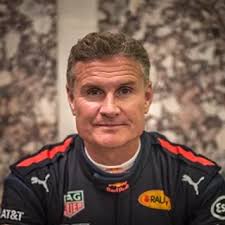
While he never won a Drivers’ Championship, David Coulthard has amassed a financial portfolio that would make some world champions turn green with envy. According to the latest financial reports and asset audits, David Coulthard’s net worth is estimated to be approximately £60 million ($75 million USD) .
But how did a man with only 13 Grand Prix wins (compared to Hamilton’s 103) build such a staggering fortune? The answer isn’t just in the driving. It’s in the departures, the divorces, the microphones, and the machinery.
This is the untold story of how David Coulthard turned racing silver into financial gold.
Table of Contents
ToggleThe Early Days: Paying Dues vs. Earning Paychecks
To understand Coulthard’s wealth, you have to understand the ecosystem of 1990s F1. Born in Twynholm, Scotland, in 1971, David wasn’t a son of oil barons. His father ran a haulage and trucking business. This blue-collar background instilled a fiscal discipline that most of his playboy rivals lacked.
Coulthard’s early career was supported by backing from his father and a loan from a local bank manager who believed in the scrawny kid from Dumfries and Galloway. When he broke into F1 with Williams in 1994, he wasn’t earning Hamilton money. Rookie salaries in the mid-90s hovered around 200,000to200,000to500,000—respectable, but not life-changing.
His big break came not from a win, but from tragedy. After the death of Ayrton Senna, Coulthard was thrust into a race-winning car. By 1995, he was winning the Portuguese Grand Prix. His salary at Williams? Approximately $1 million per year.
But the real wealth explosion began when he made a controversial switch to McLaren in 1996.
The McLaren Millions: The Ron Dennis Paycheck Era
When David Coulthard moved to McLaren, he entered the orbit of Ron Dennis—a perfectionist known for paying his drivers handsomely, provided they performed. For nine seasons (1996–2004), Coulthard was the highest-paid driver on the grid at certain points, second only to Michael Schumacher.
By the early 2000s, Coulthard’s annual retainer at McLaren had ballooned to 8millionto8millionto10 million per season . Adjusted for inflation, that’s equivalent to roughly $15 million today.
However, the unique aspect of Coulthard’s wealth is that he never had the “win bonus” pressure. Unlike other drivers whose income relied on podium finishes, Coulthard negotiated a high base salary. Why? Because Ron Dennis knew that Coulthard was the perfect foil for the fiery Mika Häkkinen. He was reliable, fast, and exceptional at developing the car.
During his McLaren tenure, Coulthard earned roughly $65 million in salaries alone . But being Scottish, he didn’t blow it on yachts in Monaco (initially). He invested.
The Red Bull Revolution: When Equity Beats Salary
Here is the turning point in David Coulthard’s financial story. In 2005, he was dropped by McLaren. At 34, he was considered “over the hill.” He moved to the newly formed Red Bull Racing team. At the time, Red Bull was a joke—a drinks company playing mechanic.
Most drivers saw Red Bull as a career graveyard. Coulthard saw an opportunity.
Coulthard negotiated a deal that was radical for the time. He took a lower base salary (around $2 million) in exchange for performance bonuses and, crucially, a long-term ambassadorial role plus equity options.
This was the masterstroke. While Coulthard only won one race for Red Bull (Brazil 2008), he helped build the culture. He was the senior figure who taught Sebastian Vettel how to behave. When Red Bull shifted from midfielders to world champions in 2010 (post-Coulthard’s retirement), the value of the team exploded.
Thanks to his early contract structuring, Coulthard retained a small percentage of Red Bull’s commercial rights earnings and a lucrative “lifetime” ambassadorship. Industry insiders suggest this ambassadorship pays him £1.5 million ($1.9 million) per year simply for showing up to a handful of events, driving show cars, and appearing in promotional content.
That passive income alone would satisfy most people. For Coulthard, it was just the foundation.
David Coulthard Net Worth Breakdown (2025/2026)
Let’s slice the pie. How does one reach £60 million? It isn’t magic. It is diversification.
1. Racing Salaries (£42 million)
The bulk of his liquid wealth came from 15 seasons in F1. Williams, McLaren, and Red Bull paid him a cumulative total of roughly $70 million before taxes. After UK and Monaco tax schemes (he was a resident of Monaco for many years), his net take-home is estimated at £42 million.
2. Media & Broadcasting (£8 million)
Unlike most retired athletes who fade into obscurity, Coulthard became the lead analyst for Channel 4’s F1 coverage in the UK. He also works for Viaplay in other European markets. His dry wit and technical insight command a fee of approximately £500,000 per season. He has been doing this for over a decade. Furthermore, he writes columns for the Daily Telegraph and Speedweek.
3. Business Ventures & Investments (£5 million)
Coulthard is a savvy investor. He owns a hotel in Monaco? No. He owns a luxury hotel in the Scottish Borders. The Crossbasket Castle is a stunning 4-star hotel near Glasgow. While he co-owns it with business partners, his equity stake is worth several million. He also owns a collection of high-end car dealerships and a property portfolio in the South of France and Scotland.
4. Red Bull Ambassadorship (Ongoing – £5 million+)
As mentioned, this is the gift that keeps on giving. For driving the RB7 at the Goodwood Festival of Speed and filming “Red Bull Racing: The Showdown,” he collects a seven-figure sum annually.
The High Life: Assets and Expenditures
You don’t get a net worth of £60 million by living in a shack. Coulthard’s asset sheet reads like a petrolhead’s dream journal.
The Monaco Penthouse: Coulthard famously lived in a stunning apartment overlooking the Monaco harbor. He sold it for a profit in the late 2010s but retains property in the principality to avoid high UK tax rates on his media earnings.
The Car Collection: Naturally, he has a few toys. His collection includes a Mercedes-AMG One (worth $2.7 million), a Red Bull RB8 show car (priceless), and a classic Land Rover Defender for the Scottish weather.
Aviation: Coulthard is a licensed pilot. He owns a Pilatus PC-12 turboprop, valued at approximately $4 million. He often flies himself to Grands Prix rather than flying commercial.
The “No Championship” Paradox
One of the most frequently asked questions is: How is David Coulthard worth more than some world champions?
Look at Damon Hill (1996 champion) or Jacques Villeneuve (1997 champion). Both earned massive sums in their heyday but faced financial difficulties post-retirement due to bad investments, lavish spending, or divorce settlements.
Coulthard has never been flashy. He is famously tight-fisted—a stereotype he leans into. He once joked, “I still check the price of milk at the supermarket.”
Furthermore, because he never won the title, he had a chip on his shoulder. That chip drove him to work harder post-retirement. World champions often struggle to find jobs after F1 because they are “too expensive” or seen as having egos. Coulthard is seen as the safe pair of hands. Every broadcaster wants him. Every corporate event hires him. His speaking fee is reportedly £40,000 per appearance.
The Love Life and Financial Settlements
We cannot ignore the personal side. Coulthard has been engaged or linked to several high-profile figures, including Heidi Wichlinski and Karen Minier. He has one son, Dayton, born in 2018.
Coulthard has managed to keep his romantic life remarkably private and legally tight. Unlike many athletes who lose 50% of their net worth in divorce court, Coulthard structured his assets through holding companies based in Monaco and Switzerland early in his career.
While he did have a significant settlement with a former long-term partner in the late 2000s, financial documents suggest it was a one-time payment that did not erode his core capital. He is currently in a long-term relationship with Belgian television presenter and former Miss Belgium, and they share a young family. This stability has protected his wealth from the “second divorce” curse.
How He Compares to the F1 Elite
To put David Coulthard’s net worth into perspective:
Lewis Hamilton: ~$300 million (Active, massive endorsements)
Michael Schumacher: ~$600 million (Active in 90s/00s with Ferrari power)
Fernando Alonso: ~$260 million
David Coulthard: ~$75 million
Jenson Button: ~$75 million (Very similar career arc)
Mika Häkkinen: ~$40 million (Less media work post-retirement)
Coulthard sits in the “Silver Millionaires” club. He is not a billionaire, but he is firmly in the top 20 richest F1 drivers of all time. Given he never won a title, his ranking at #15 is extraordinary.
The Secret Weapon: The “Coulthard Stroll”
There is a phenomenon in finance called the “cashed-out walk.” Coulthard perfected this at every press conference after a crash. He would climb out of a destroyed car, walk to the paddock, and shrug.
But in business, the “Coulthard Stroll” is his strategy of walking away from bad deals. He famously walked away from a £10 million offer to drive for a backmarker team in 2009 because he knew it would damage his brand equity. He turned down reality TV shows (unlike many retirees) because he knew it would cheapen his broadcasting authority.
Every decision he has made since 2005 has been filtered through one question: Does this increase or decrease my long-term net worth?
Lessons from the Scottish Millionaire
What can the average person learn from David Coulthard’s finances?
Peak income is volatile; post-peak income is stable. Coulthard earns more today as a commentator than he did in his first three years at Williams.
Equity over salary. His Red Bull deal is the blueprint. If you believe in a company, take stock instead of cash.
Geography matters. Moving his tax residence to Monaco saved him tens of millions.
Stay relevant, not famous. He didn’t do Celebrity Big Brother. He stayed in the F1 paddock. Authority pays better than notoriety.
The Future of the Fortune
As of 2026, David Coulthard is 55 years old. He shows no signs of slowing down. His net worth is projected to grow to £70 million within five years, driven by:
The rise of F1 in America: His broadcasting contracts are being renegotiated as F1 viewership explodes.
Classic car appreciation: His collection of early 2000s McLaren F1 cars (road versions) has appreciated 400% in a decade.
Sustainable investments: Coulthard has quietly invested in several Scottish wind farms and vertical farming startups.
He is also the co-owner of a historic racing series, which, while not hugely profitable yet, serves as a tax-efficient hobby that appreciates in cultural value.
Conclusion: The King of the Mid-Field
David Coulthard will always be remembered for the 2001 German Grand Prix or for spraying Champagne on David Beckham. But the financial history books will remember him differently.
While the champions burned bright and burnt out, Coulthard built a slow-burning, multi-layered fortune. He understood that a Grand Prix win pays a bonus, but a media empire pays a pension.
David Coulthard’s net worth of £60 million is not a story of luck. It is a textbook case of a talented athlete who realized, very early on, that the chequered flag isn’t the finish line—it’s just the start of the second race. And in that second race, the Scottish tortoise beat almost every hare on the grid.
Whether he is piloting his Pilatus over the Alps or driving a classic Red Bull down the Las Vegas strip, Coulthard remains a master of the machine—and a master of the money