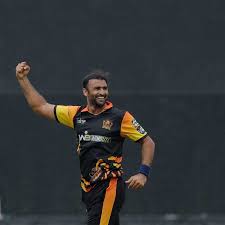
When Sohail Khan announced his retirement from international and first-class cricket in September 2023, the news did not break the internet. There were no lavish press conferences or montages set to sad music. Instead, the 39-year-old posted a simple message on social media, closing the chapter on a career that spanned 15 years . But for those who know the brutal history of Pakistan’s domestic circuit and the emotional toil of representing the Green Shirts, Sohail’s farewell was a moment to salute one of the hardest men ever to lace up a pair of spikes.
This is the story of the boy who threw stones down mountains to become a World Cup star, the man who broke a 50-year-old record, and the journeyman who refused to fade away.
Table of Contents
TogglePart 1: The Hard Road from Malakand
To understand Sohail Khan the cricketer, you must first understand the geography of Malakand. Located in the Khyber Pakhtunkhwa province, this is not a place where cricket academies grow on trees. It is rugged, mountainous, and unforgiving. Born there on March 6, 1984, Sohail’s childhood was far removed from the manicured lawns of Lords .
His father, Syed Nawab Khan, was not a fan of cricket. In fact, he was actively hostile to it. In a typical South Asian household, a father breaking his son’s bats is the ultimate symbol of discouragement. But Sohail was stubborn. Deprived of proper nets or gymnasiums, he got creative.
To build the strength required to bowl fast, he turned to the environment itself. He would lift heavy oil cans filled with cement and swim upstream against the strong currents of local rivers to build endurance. But his most unique training method was throwing stones. Young Sohail would hurl rocks down the mountainsides of Malakand, trying to outdo his previous distance . This primitive, brutal workout turned his body into a solid block of granite, setting the foundation for a pace bowler who could run in all day.
Realizing that his village could not fuel his ambition, Sohail made the decision that changed his life: he moved to the chaotic, sprawling metropolis of Karachi .
Part 2: The Karachi Struggle and The Academy
Karachi in the mid-2000s was the heartbeat of Pakistani cricket, but it was also a graveyard for dreams. For every success story, there were thousands of talented players who got chewed up by the politics of the Karachi City Cricket Association (KCCA).
Sohail experienced the cruel side of the sport immediately. Despite boasting raw pace—timed as the third-fastest in the country at one point—he was ignored. He was deemed not good enough even for the Grade-II team, let alone the first-class side. “I was never considered,” he later revealed, a slight bitterness still evident in his tone .
His fate changed during a club match against Malir Gymkhana. In the opposition was Rashid Latif, the former Pakistan captain known for his sharp, no-nonsense attitude. Sohail bowled with fire that day, and Latif, impressed by the “Pathan” with the smooth run-up, invited him to the Rashid Latif Cricket Academy (RLCA).
It was a turning point. Latif didn’t just coach Sohail; he mentored him. He told the raw fast bowler to stop focusing on heavy bodybuilding and instead focus on swinging the ball and bowling long spells .
There was even a bizarre detour when a mentor suggested Sohail try modeling. After a few fashion shows, Sohail realized he was more comfortable with sweat on his brow than makeup on his face. He walked off the ramp and back to the pitch, much to the relief of Pakistani cricket .
Part 3: The Greatest Domestic Season Ever (2007/08)
If you look at the statistics of the 2007-08 Quaid-e-Azam Trophy, one name stands out like a beacon in the dark: Sohail Khan.
Playing for the Sui Southern Gas Corporation (SSGC), Sohail did not just have a good season; he had one of the most destructive debut seasons in the history of first-class cricket. He took a staggering 65 wickets in just 9 matches .
To put that into perspective: most fast bowlers break down after 40 wickets in a season. Sohail took 65, with eight five-wicket hauls. In a match against WAPDA, he produced figures of 16 for 189. This shattered a long-standing national record held by Fazal Mahmood, a legend of Pakistan’s golden era, who had taken 15 wickets in a match decades earlier .
That performance was the stuff of folklore. Suddenly, the boy who couldn’t get a game for Karachi Grade-II was the deadliest bowler in the country.
Part 4: The Stop-Start International Career
His international debut came in January 2008 against Zimbabwe . The expectations were high, but the reality of international cricket is a harsh teacher. The early years were a blur of injuries and being in and out of the squad.
He played a Test against Sri Lanka in 2009, but a wicketless debut on a flat deck left him on the fringes . For the next five years, Sohail became a “domestic bully”—a term often used dismissively for players who dominate the local circuit but can’t crack the international code. He would take truckloads of wickets for Sindh, Sui Southern Gas, and Port Qasim Authority, but the selectors kept looking the other way.
By 2013, many had written him off. He was 29 years old, his prime years seemingly wasted.
But Sohail Khan is not a man who listens to noise. In the 2013-14 season, he once again finished as the highest wicket-taker in the Quaid-e-Azam Trophy . The selectors, under new leadership, could no longer ignore the mountain of runs saved and wickets taken.
The 2015 World Cup: The Defining Moment
The announcement of Pakistan’s squad for the 2015 Cricket World Cup in Australia and New Zealand was a shocker. Sohail Khan was included. He hadn’t played an ODI for Pakistan since 2011. He wasn’t even in the initial provisional list of 30 players. It was the ultimate gate-crash .
Rashid Latif summed it up best: “He has gate-crashed into the World Cup squad” .
The world got to see why on February 15, 2015, at the Adelaide Oval. Pakistan was facing India in a high-octane World Cup group match. The pressure was immense. India, powered by a young Virat Kohli and a captain in MS Dhoni, was setting a massive total.
Enter Sohail Khan.
With the new ball, he generated pace and bounce that surprised the Indians. He ended the innings with figures of 5 for 55 . It was the first five-wicket haul by a Pakistani against India in a World Cup. He dismissed Shikhar Dhawan, Suresh Raina, and then produced a moment of magic: he bowled MS Dhoni and then trapped Ajinkya Rahane LBW in the same over, putting him on a hat-trick.
Pakistan lost that match, but Sohail Khan won the respect of every cricket fan on the planet. He finished the tournament as Pakistan’s second-highest wicket-taker, with 12 scalps .
Part 5: The Test Reboot and The Swing of ’16
While the World Cup brought him fame, injuries brought him back to earth. He missed the next year of cricket, and many assumed that the 2015 World Cup was his swan song.
But Sohail returned in 2016 for the Test series in England—the ultimate challenge for any fast bowler. He had not played a Test for five years. At 32, his body was held together by tape and determination.
The third Test at Edgbaston was his comeback. He bowled with hostility, claiming his first five-wicket haul in Test cricket, finishing with 5 for 96 . He followed this up with another five-for in the final Test at The Oval, helping Pakistan draw the series 2-2 against a strong English side.
For a brief, glorious window in 2016-17, Sohail Khan was Pakistan’s go-to wicket-taker. He scored a stunning 65 against Australia in Brisbane—hammering the fast bowlers with a grin on his face—and looked like a genuine all-rounder .
Part 6: Stats, Style, and Legacy
On paper, Sohail Khan’s international numbers are modest: 27 Test wickets, 19 ODI wickets, and 9 Tests played over a decade . He has often been labeled an “underachiever” relative to his domestic dominance (516 first-class wickets ).
But stats have never told the whole story with Sohail.
The Style:
Standing at 6 feet 4 inches, Sohail was an upright, hit-the-deck bowler . He wasn’t just fast; he was heavy. The ball hit the bat with a thud that was audible on the broadcast. Unlike the slingy action of Waqar or the whippy wrist of Wasim, Sohail’s action was high and loaded. He relied on seam movement and bounce, making him particularly effective in conditions that offered assistance, like England and Australia.
The Batting:
He was a genuine tail-end slogger but with a brain. He has a Test match fifty to his name (65 off 65 balls vs Australia) and a first-class average of 15, which is gold dust for a number 10 or 11 .
The Franchise Globe-Trotter:
Even after retiring from internationals, Sohail continued to cash in on his fitness. He became a T20 mercenary, playing for the Karachi Kings, Quetta Gladiators, and Peshawar Zalmi in the PSL. He even crossed oceans to play for the New York Warriors and in the legends leagues, proving that even in his 40s, the fire to compete was still there .
Part 7: The Final Over
In September 2023, Sohail Khan “bade adieu” to the game. He confirmed he would still play franchise cricket, keeping the door open for one more six in a T20 league somewhere in the world .
When we look back at the era of Pakistan cricket between 2008 and 2017, the narrative is dominated by spot-fixing scandals, political instability, and the emergence of the modern “fitness culture” under Mickey Arthur. Sohail Khan existed in the margins of that narrative, but he was an essential character.
He represents the “Tough Times” school of cricket—the idea that hardship builds character. He didn’t have the silver spoon of an academy pedigree; he had the iron will of a mountain tribesman.
Critics will point to his fragility or his high average (41 in Tests). But supporters will remember the sight of him running in at Adelaide, sending Dhoni’s middle stump cartwheeling, or roaring in celebration in England with the Dukes ball hooping around corners.
Sohail Khan’s story is not one of statistical perfection. It is a story of relevance. He refused to be irrelevant for over a decade. Every time they pushed him out the door, he would knock it down with a 5-wicket haul in domestic cricket.
He is a reminder that behind the glamour of the IPL and the six-hitting contests of T20, there is a bedrock of first-class grinders—men who lift cement cans, swim rivers, and throw stones down mountains just for the chance to wear the national jersey.
For that alone, Sohail “Pathan” Khan deserves a standing ovation. It wasn’t always pretty, but it was always Pakistan fast bowling in its purest, grittiest form.
**Career Snapshot
Born: March 6, 1984, Malakand, Pakistan
Role: Right-arm fast-medium bowler
Tests: 9 Matches, 27 Wickets (Best: 5/68)
ODIs: 13 Matches, 19 Wickets (Best: 5/55 vs India, WC 2015)
First-Class: 121 Matches, 516 Wickets (Best: 9/109)
Franchises: Karachi Kings, Quetta Gladiators, Peshawar Zalmi, New York Warriors
Conclusion: The Unbroken Pathan
Sohail Khan’s career was never defined by silver platters or smooth sailing. It was defined by mountains—the ones he climbed in Malakand, the ones he threw stones down as a boy, and the metaphorical ones he had to scale every time the selectors ignored him. He was not Pakistan’s most famous fast bowler, nor its most successful. But he was arguably its toughest.
In an era where careers are often defined by social media followers and million-dollar contracts, Sohail remained a throwback: a man who solely let the ball do the talking. His 516 first-class wickets and that unforgettable five-wicket haul against India at the 2015 World Cup are not just stats; they are monuments to resilience.
When he finally hung up his spikes in 2023, he didn’t just retire from cricket. He closed the book on a journey that proved raw pace, stubborn pride, and an unbreakable will can still beat the system. For every young fast bowler nursing a dream in a small village, Sohail Khan is the proof that the hardest road often leads to the greatest glory. He was, and remains, the Unbroken Pathan