Table of Contents
ToggleOrigins Far From Aristocracy
Unlike many who orbit the royal constellation, Penelope Knatchbull was not born into the aristocracy. Her story begins on April 16, 1953, in London, as the only daughter of Reginald Wray Frank Eastwood, a butcher who transformed his trade into the founding of the Angus Steakhouse restaurant chain, and Marian Elizabeth Hood . This entrepreneurial background—decidedly middle-class by the standards of the British class system—makes her eventual ascent into the highest echelons of titled society all the more remarkable.
Her early years were spent largely in Switzerland, where she received her education, cultivating the cosmopolitan polish that would later serve her well in royal circles. Upon returning to London, she enrolled at the prestigious London School of Economics, graduating in 1976 with credentials that signaled both intellectual substance and social ambition . Unlike the archetypal debutante whose path to influence runs through ancestral lineage, Penny Eastwood possessed something arguably more valuable in the rapidly modernizing Britain of the 1970s: she was self-made, articulate, and possessed of a natural grace that would disarm even the most entrenched guardians of aristocratic propriety.
A Wedding Under the Shadow of Tragedy
The trajectory of Penny’s life changed irrevocably when she met Norton Louis Philip Knatchbull, Lord Romsey, son and heir of the 2nd Countess Mountbatten of Burma. Norton’s pedigree could scarcely have been more illustrious—or more intertwined with the House of Windsor. His grandfather was Louis Mountbatten, 1st Earl Mountbatten of Burma, the beloved “Uncle Dickie” who served as mentor and father figure to both Prince Philip and a young Prince Charles. Through this connection, Norton was not only Prince Philip’s godson but also second cousin to Charles, with whom he had bonded during their shared years at Gordonstoun School .
The couple’s wedding was scheduled for October 20, 1979, at Romsey Abbey in Hampshire, with Prince Charles himself agreeing to serve as best man. But two months before the ceremony, catastrophe struck the Mountbatten family with devastating force. On August 27, 1979, Lord Mountbatten was assassinated when the Provisional IRA detonated a bomb aboard his fishing boat, the Shadow V, off the coast of Mullaghmore, County Sligo, Ireland. The explosion also killed Norton’s younger brother Nicholas, his grandmother Doreen, Dowager Lady Brabourne, and a teenage boat hand named Paul Maxwell .
The wedding proceeded in October as planned, but the occasion was inevitably shadowed by grief. Photographs from the day capture a couple poised between joy and mourning, beginning their married life even as the family laid its patriarch to rest. For Penelope, this baptism by tragedy would prove to be the first of several devastating losses that would paradoxically deepen her bonds with the royal family—and particularly with Prince Philip, who understood better than most the precarious nature of life lived in the public eye while bearing private pain .
Broadlands: A Home Steeped in Royal History
Upon her marriage, Penelope assumed the title Lady Romsey (later The Lady Brabourne, and eventually Countess Mountbatten of Burma) and took up residence at Broadlands, the Mountbatten family estate nestled in Romsey Extra, Hampshire. This magnificent English country house, built in 1767 and designated a Grade II listed manor, carries within its walls a remarkable concentration of royal history .
It was at Broadlands that Princess Elizabeth and Prince Philip spent part of their honeymoon in 1947, beginning their married life in the estate’s tranquil surroundings. Three decades later, Prince Charles and Princess Diana would follow the same tradition, choosing Broadlands for their own honeymoon retreat in 1981 . That Penelope would become chatelaine of a property so intimately woven into Windsor family lore speaks to the extraordinary trust and affection the Mountbattens commanded—and that she, as a relative newcomer, would successfully steward.
Today, Broadlands opens its doors to the public during summer months, offering guided tours that reveal the grandeur of a home that has witnessed both coronations and quiet family weekends, state occasions and private grief. For Penelope, managing this estate has been both privilege and responsibility, one she has shouldered largely alone since her husband’s diagnosis with Alzheimer’s disease .
A Mother’s Unimaginable Loss
If the assassination of Lord Mountbatten represented Penelope’s initiation into the family’s legacy of public tragedy, the loss that followed twelve years later would prove far more personal and devastating. Between 1981 and 1986, Penelope and Norton welcomed three children: Nicholas, Alexandra, and Leonora. The youngest, Leonora Louise Marie Elizabeth Knatchbull, arrived on June 25, 1986, and by all accounts radiated the particular brightness that seems reserved for the baby of any family .
In 1991, five-year-old Leonora was diagnosed with a kidney tumor. Despite aggressive treatment, the cancer proved unrelenting, and on October 22, 1991, Leonora died at the family home. She was buried in the grounds of Broadlands, her grave a permanent presence on the estate where her mother continues to live .
It was in the aftermath of this shattering loss that Penelope Knatchbull’s relationship with Prince Philip transformed from cordial family connection to something far deeper and more consequential. The Duke of Edinburgh, then in his early seventies, reached out to his godson’s grieving wife with an offer of practical solace. Recognizing that Penelope needed a focus to anchor herself amid the disorienting fog of bereavement, Philip proposed teaching her carriage driving—the exhilarating and technically demanding equestrian sport he had embraced after retiring from polo in 1971 .
What began as therapeutic distraction blossomed into genuine shared passion. Philip, a pioneer in modern competitive carriage driving who had helped draft the sport’s international rulebook, found in Penelope an apt and enthusiastic pupil. By 1994, they were competing together, and photographs from the Royal Windsor Horse Show throughout the 1990s and 2000s frequently captured the pair side by side—sometimes in formal carriage-driving attire, other times zipping around the course on mini motorcycles as they inspected the terrain .
The Friendship That Defied Convention
The friendship between a prince in his eighth decade and a countess thirty years his junior inevitably attracted speculation. Their visible closeness, their shared laughter, the hours spent together at competitions and during Philip’s retirement at Wood Farm on the Sandringham estate—all of it provided fertile ground for whispered conjecture .
When Netflix’s The Crown dramatized this relationship in its fifth season, it walked a careful line, implying an emotional intimacy that some viewers interpreted as evidence of a romantic affair. In one fictionalized scene, Philip tells the Queen, “If people were more considerate, more mature, more discreet… it can actually be the glue that binds it all together”—a line that seemed to suggest he viewed his connection with Penelope as something that existed in parallel to, rather than in competition with, his marriage .
The reality, by all credible accounts, was both more complex and more innocent than tabloid speculation suggested. Biographer Ingrid Seward, who has written extensively about the Duke of Edinburgh, described witnessing Philip and Penelope dancing together openly at a ball—behavior she interpreted as evidence that they had nothing to hide. “It was totally innocent,” Seward observed, noting that genuine secrecy would have precluded such public ease .
Dickie Arbiter, the late Queen’s former press secretary, was characteristically blunt in his assessment, calling affair speculation “rubbish” . Philip himself, when once confronted by a reporter questioning his fidelity, responded with exasperated pragmatism: “Good God, woman. Have you ever stopped to think that for years, I have never moved anywhere without a policeman accompanying me? So how the hell could I get away with anything like that?”
What seems clear is that Penelope provided something Philip craved in his later years: undemanding companionship with someone who shared his irreverent humor and outdoor enthusiasms, but who neither deferred to his rank nor required the emotional labor that his position normally demanded. She was, in the argot of palace insiders, his “keeper of secrets”—a confidante with whom he could speak freely without fear that his words would leak to the press or be minutely parsed for political significance .
Trials of Marriage and Resilience
While Penelope’s friendship with Prince Philip flourished, her marriage to Norton Knatchbull underwent severe strain. In 2010, after 31 years of marriage, Norton left Penelope for Jeannie Nuttall, a Bahamian fashion designer, relocating to the Caribbean for what was described euphemistically as an “amorous adventure” .
The abandonment could have unmoored a less resilient woman. Instead, Penelope responded with characteristic composure, insisting that life at Broadlands should continue with as much normalcy as circumstances allowed. She assumed her husband’s honorary position as High Steward of Romsey, a role previously held by the 1st Earl Mountbatten, and was formally inaugurated on March 2, 2011 . She also took over the management of the Broadlands estate, a responsibility that expanded when Norton was later diagnosed with Alzheimer’s disease .
The Queen and Prince Philip reportedly admired Penelope’s dignified handling of her marital crisis immensely. Her refusal to descend into recrimination or self-pity, her commitment to preserving the Mountbatten legacy, and her unwavering discretion aligned perfectly with Windsor values. Far from distancing herself during this period of personal humiliation, Penelope became an even more frequent presence at royal gatherings .
In an unexpected turn, Norton returned to Broadlands in 2014—initially residing in a stable block before eventually moving back into the main house in 2017. The couple resumed living together, though the precise nature of their reconciled relationship remains, in keeping with Penelope’s lifelong discretion, a private matter .
“And Also”: A Nickname That Says Everything
Perhaps no detail better illuminates Penelope Knatchbull’s unique position within the royal ecosystem than the nickname palace staff conferred upon her: “and also.” The moniker originated from Prince Philip’s habit, when reviewing guest lists for royal events, of concluding with “and also Penny”—a reflexive addendum that became so predictable that staff simply began referring to her by the phrase itself .
The nickname captures something essential about her role. She was not, strictly speaking, a principal. She was not a royal by blood or marriage. Yet her presence was assumed, expected, required. She was the necessary appendix, the person without whom the gathering felt incomplete. This status—simultaneously central and peripheral, essential yet unofficial—allowed her a freedom of movement and relationship that more formally designated courtiers could never enjoy.
After Philip’s retirement from public duties in 2017, Penelope became a regular visitor to Wood Farm, the modest cottage on the Sandringham estate where the Duke chose to spend his final years. While the Queen remained primarily at Windsor and Buckingham Palace, attending to the unceasing demands of monarchy, Penelope kept Philip company through long Norfolk afternoons. They discussed horses, carriage driving, family matters, and presumably much else that will never be recorded in any official history .
The Funeral: Thirty Guests, One Outsider
When Prince Philip died on April 9, 2021, at the age of 99, the United Kingdom was still operating under stringent COVID-19 restrictions. Government regulations limited funeral attendance to just 30 mourners—a constraint that forced the royal family to make excruciating decisions about who would be present to honor the Duke of Edinburgh and support the newly widowed Queen.
The guest list comprised the Queen herself, the couple’s four children and their spouses, their eight grandchildren and respective partners, several great-grandchildren, and a small number of extended family members. And then there was Penelope Knatchbull—the only person among the 30 without a blood or marital tie to the Windsors .
Her inclusion was not merely symbolic; it was declarative. In choosing Penelope to stand among the intimate circle of grievers at St. George’s Chapel, the Queen acknowledged what everyone in the family already knew: that this woman had been her husband’s dearest friend and most trusted confidante in the final decades of his life. The photographs from that day show Penelope, masked and visibly heartbroken, occupying a place of honor that no protocol could have predicted and no title could have guaranteed .
Beyond Philip: Continuing Bonds with the Crown
Penelope’s relationship with the royal family did not end with Philip’s death. She maintained her close friendship with Queen Elizabeth II, frequently accompanying the monarch to the Royal Windsor Horse Show in 2021 and 2022. The shared love of horses that had initially connected the three of them continued to bind Penelope to the Queen in widowhood .
When Queen Elizabeth II died on September 8, 2022, Penelope and her daughter Lady Alexandra Hooper were among the mourners at the state funeral, their presence a quiet testament to the endurance of a family friendship that had spanned nearly half a century .
The bond extends to the next generation as well. In 2016, when Penelope’s daughter Alexandra married Thomas Hooper at Romsey Abbey, it was Prince Charles—by then the longest-serving Prince of Wales in British history—who walked the bride down the aisle. The gesture echoed his role as best man at Penelope and Norton’s wedding 37 years earlier, closing a generational circle with elegant symmetry .
Philanthropy and Legacy
Away from the royal enclave, Penelope Knatchbull has built a substantive legacy through charitable work. Following Leonora’s death, she established the Leonora Children’s Cancer Fund to support research into pediatric oncology and provide assistance to families navigating childhood cancer diagnoses. In 2010, this organization merged with The Edwina Mountbatten Trust, creating The Edwina Mountbatten and Leonora Children’s Foundation, which continues to operate today .
The foundation represents perhaps the most authentic expression of Penelope’s character: a private grief transformed into public good, managed with the same quiet competence she has brought to every aspect of her extraordinary life. While tabloids have chased speculation about her relationship with Prince Philip, Penelope has simply continued the work of honoring her daughter’s memory and supporting families facing the same devastating journey she once walked.
The Enigma Endures
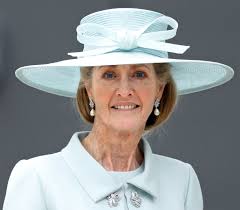
What are we to make of Penelope Knatchbull, Countess Mountbatten of Burma? She remains, in many respects, an enigma—and that is almost certainly by design. In an age of relentless self-disclosure, when even royalty broadcasts its intimacies through memoirs and interviews, Penelope has maintained an almost Edwardian reserve. She gives no interviews. She publishes no autobiographies. When she appears in public, it is typically in the background of royal photographs, her expression composed, her role supportive.
This discretion is not merely personal preference; it is the essential qualification for the position she has occupied. The “keeper of secrets” cannot be a raconteur. The confidante who knows where the bodies are buried must demonstrate, through decades of silence, that she can be trusted with the shovel. Penelope Knatchbull has never betrayed that trust.
What we can discern from the available evidence is a woman of remarkable resilience—a butcher’s daughter who became a countess, a mother who endured the unendurable and channeled her grief into service, a wife who weathered public abandonment with private dignity, and a friend who provided companionship to a prince who had everything except someone with whom he could simply be himself.
Her story reminds us that influence in royal circles operates according to its own mysterious calculus. It cannot be inherited like a title or acquired like a fortune. It must be earned through the slow accumulation of trust, demonstrated discretion, and the ineffable quality of being someone others want to have around. Penelope Knatchbull became indispensable not because of who she was, but because of how she made others feel in her presence—understood, unjudged, and utterly at ease.
As King Charles III navigates his reign and the Windsor saga continues to unfold into a new generation, Penelope Knatchbull will likely remain what she has always been: present but not prominent, essential but not official, the “and also” whose name appears at the end of every list, quietly anchoring the whole enterprise.
The Countess Mountbatten of Burma may never command headlines, but she has secured something far rarer: a permanent place in the affections of Britain’s most scrutinized family, and the enduring respect of anyone who understands that true loyalty is not proclaimed but practiced, day by day, decade by decade, without expectation of recognition or reward.
Conclusion
Penelope Knatchbull’s life defies easy categorization. Neither royal by blood nor celebrity by inclination, she carved a singular niche within Britain’s most private public family through qualities that resist tabloid reduction: unwavering discretion, quiet resilience, and a companionship so genuine that a prince found in her what palaces could not provide.
From the butcher’s daughter who married into aristocracy, to the grieving mother who channeled loss into philanthropy, to the “and also” whose presence became essential, her story reminds us that influence in the rarefied world of monarchy flows not from titles but from trust—earned slowly, guarded fiercely, and never betrayed. In an institution built on spectacle and symbolism, Penelope Knatchbull stands as testament to the enduring power of simply being there, steadfast and silent, when it matters most