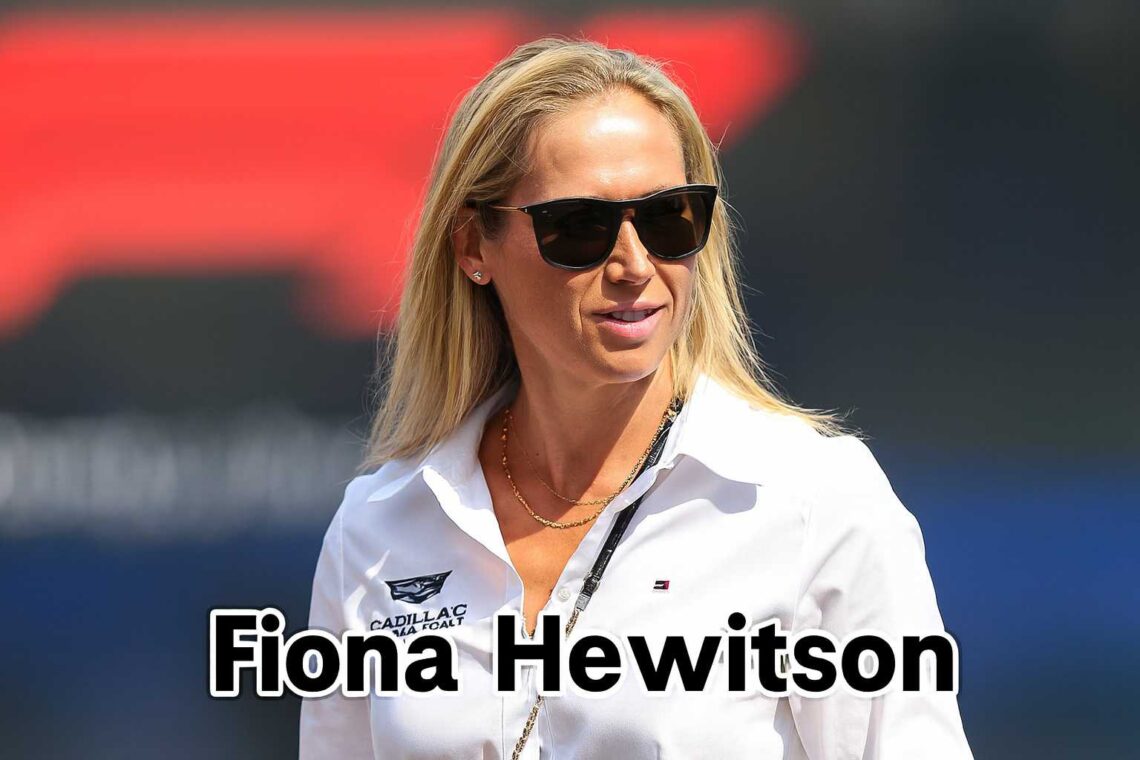
In the pantheon of tech titans and digital disruptors, where names like Musk, Zuckerberg, and Huang dominate headlines, influence often operates in the shadows. It is in these less-charted territories that we find figures wh ccose impact is profound yet understated, whose work scaffolds our daily digital experiences without demanding celebrity. Fiona Hewitson stands as a paradigm of this quiet force. To the general public, her name may not ring with immediate familiarity, but within the intricate realms of cybersecurity, digital forensics, and ethical technology governance, Hewitson is a seminal thinker and practitioner. Her journey—from the nascent days of commercial internet to the current era of AI and ubiquitous data—offers a critical lens through which to understand the evolution of our digital society, its vulnerabilities, and the ethical architecture required to sustain it.
Table of Contents
ToggleThe Formative Crucible: From Academia to the Digital Frontier
Fiona Hewitson’s professional origins are rooted in a time when the internet was transitioning from an academic and military network to a commercial and social phenomenon. Unlike many of her contemporaries who emerged purely from computer science or engineering, Hewitson’s background often reflected an interdisciplinary approach, blending technical rigor with an acute awareness of legal, social, and human factors. Early in her career, she was drawn not just to how systems worked, but to how they failed, how they were exploited, and, crucially, how they impacted real people.
In the late 1990s and early 2000s, as e-commerce and digital communication boomed, so did digital crime and insecurity. Hewitson positioned herself at this volatile intersection. She became a pioneer in the field of digital forensics and incident response (DFIR), a discipline that is part science, part art. Her work wasn’t merely about tracing an IP address; it was about constructing a narrative from digital ephemera—a deleted file, a registry artefact, a network log—to understand the who, what, when, and how of a security breach or a digital crime.
This period was foundational. It instilled in her a core principle that would define her career: technology cannot be understood in a vacuum. A malware variant is not just code; it is a tool with intent, often with a human victim. A data breach is not just a configuration error; it is a failure of governance, ethics, and risk management. This holistic perspective set her apart in an industry often obsessed with technical silos.
Architecting Resilience: Beyond the Technical Fix
As Hewitson’s expertise grew, so did her focus on systemic resilience. She observed that organizations were stuck in a cycle of reaction—plugging holes after breaches, buying new tools after attacks. She became a vocal advocate for a paradigm shift from reactive compliance to proactive cyber resilience.
Her contributions here are multifaceted:
The Human-Centric Security Model: Long before “human error” became a cliché in post-breach reports, Hewitson argued that people are not the weakest link but the most critical layer of defense. She developed frameworks for security awareness that moved beyond mandatory, forgettable training. Her models emphasized behavioral psychology, designing security protocols that were intuitive and aligned with natural workflows, thus making secure practices the path of least resistance. She championed role-based security cultures, where executives, developers, and end-users each have a clear, empowered understanding of their role in protecting organizational integrity.
Forensics as a Feedback Loop: For Hewitson, digital forensics was never just about attribution or legal evidence. She pioneered its use as a critical feedback mechanism for improving system design. Every incident response engagement became a source of data. What vulnerability was exploited? Was it detectable? How long did it take to contain? This forensic intelligence was systematically fed back into security architecture, patch management policies, and monitoring systems, creating a living, learning security posture. She famously described this as “teaching your defenses based on the bruises they receive.”
Bridging the Boardroom Gap: One of her most significant impacts has been translating technical risk into business and governance language. Hewitson developed methodologies to quantify cyber risk in terms of financial exposure, operational downtime, and reputational capital. She became an essential advisor to boards and C-suites, not by scaring them with jargon, but by framing cybersecurity as a core business enabler and a fundamental fiduciary duty. Her work helped elevate the Chief Information Security Officer (CISO) role from a technical manager to a strategic executive.
The Ethical Turn: Navigating the AI and Data Morass
The advent of big data and the AI explosion presented a new frontier of challenges, perfectly aligned with Hewitson’s interdisciplinary outlook. She foresaw that the greatest threats of the 21st century would not only be about stolen credit cards but about manipulated democracies, algorithmic bias, eroded privacy, and the concentration of digital power.
Her focus shifted perceptibly towards the ethics of technology. She began addressing complex questions:
How do we conduct forensic investigations in AI-driven systems where decision-making is opaque?
How can privacy be engineered into systems from the ground up (Privacy by Design) in an age of massive data aggregation?
What does accountability look like when a harmful decision is made by an algorithm trained on biased data?
Hewitson argued that technologists have a moral responsibility that extends beyond functionality. She advocated for Ethical by Design principles, where systems are audited not just for performance and security, but for fairness, transparency, and societal impact. In the realm of AI, she promoted the development of “forensic AI”—tools and techniques to audit AI models for bias, to explain their outputs, and to ensure their actions are traceable and accountable.
This ethical stance brought her into the sphere of policy and regulation. She has served as a consultant to governmental and international bodies, helping to shape regulations like the GDPR and emerging AI governance frameworks. Her input is consistently pragmatic, grounded in technical reality, and aimed at creating rules that protect individuals without stifling innovation.
The Hewitson Legacy: Mentorship and the Future Pipeline
Perhaps the most enduring aspect of Fiona Hewitson’s work is her commitment to mentorship and education. She has consistently dedicated time to teaching, writing, and speaking at conferences, not just to share knowledge but to model a different kind of tech leadership. In an industry with a notorious diversity gap, she has been a quiet but steadfast advocate for women and underrepresented groups in cybersecurity and tech.
She emphasizes that the field needs not just coders, but philosophers, psychologists, lawyers, and ethicists. Her own career is the best advertisement for this multidisciplinary approach. By nurturing the next generation to think broadly, act ethically, and master their craft, she is building a human infrastructure as resilient as the technical systems she helps design.
Conclusion: The Unseen Pillar
Fiona Hewitson does not helm a trillion-dollar company or command a viral social media following. Yet, her influence is woven into the fabric of our digital existence. She represents the essential counterbalance in our technological age—the voice that asks “just because we can, should we?” and the practitioner who knows how to build guardrails when the answer is uncertain.
Her career is a master class in evolving relevance: from digital detective to resilience architect to ethics guardian. In a world loudly debating the perils and promises of technology, Hewitson’s work is a testament to the power of quiet, competent, and deeply principled action. She has shown that the most critical firewalls are not just those made of code, but those built on integrity, foresight, and an unwavering commitment to the human element at the heart of our digital world.
As we stand at the precipice of even greater transformations—with quantum computing, ambient AI, and neural interfaces on the horizon—the Hewitson model of thinking will only become more vital. Understanding her contributions is not merely an academic exercise; it is a guidepost for building a future where technology serves humanity securely, justly, and resiliently. Fiona Hewitson’s legacy is the unseen, intelligent architecture that allows the digital world to be not just powerful, but safe, fair, and ultimately, human