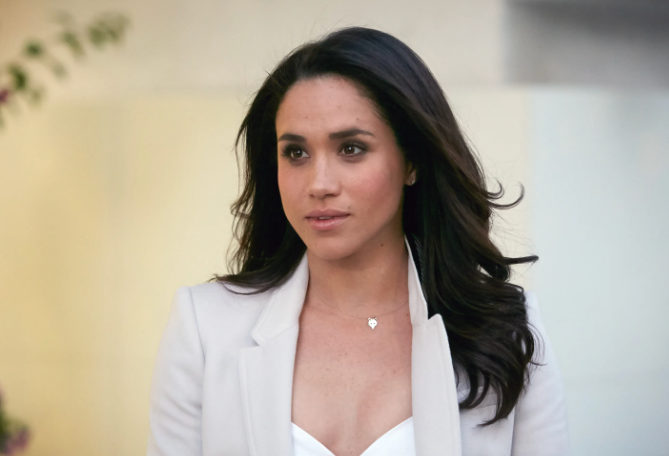
In recent years, however, a new voice has not just entered this garden but has boldly begun to landscape it. That voice belongs to Daniela Elser, a journalist whose incisive, witty, and unflinchingly modern commentary has redefined what it means to write about the British monarchy. For a global audience, particularly one attuned to the nuances of power, media, and popular culture, Elser has become an essential guide to the House of Windsor in the 21st century. She doesn’t just report on the royals; she dissects them, analyzing their triumphs and tribulations through a lens that is part business strategist, part cultural critic, and part astute observer of human nature.
To read a Daniela Elser piece—most prominently featured on news.com.au—is to understand that the monarchy is no longer just a lineage; it is a brand. And like any brand in the modern era, it is subject to market forces, public opinion, and, most critically, the perilous landscape of public relations.
Table of Contents
ToggleFrom Down Under with a Different Perspective
Elser’s unique viewpoint is undoubtedly shaped by her Australian perspective. This is crucial. For Australians, the monarchy is a complex, constitutional reality, but it lacks the visceral, everyday intimacy it holds for many Britons. The relationship is one of formal distance, a historical tether that is regularly debated and questioned. This geographic and cultural distance affords Elser a clarity that is often missing from the London-centric press corps.
She is not beholden to the ingrained social hierarchies or the unspoken rules of the “lobby.” She doesn’t write with the hushed tones of someone who might one day be invited to a palace garden party. Instead, she writes with the confident, critical eye of a journalist reporting on a powerful, and sometimes faltering, global corporation. This outsider status allows her to ask the questions that insiders might find impolite or impossible: Is this working? What is the long-term strategy? What is the return on investment for the taxpayer?
Her writing, therefore, resonates powerfully with a modern, international audience that views the royals not as divinely ordained figures, but as public figures living on the public’s dime, operating in an age of extreme transparency and unforgiving social media.
The Brand Architect’s Critique
The central thesis that runs through much of Elser’s work is the monarchy as a failing brand in need of a radical rebrand. She treats royal engagements not as charming traditions, but as “stakeholder meetings.” She views the carefully curated family photographs not as heartwarming gestures, but as “corporate communications.” And she analyzes the catastrophic PR failures not as unfortunate misunderstandings, but as “brand management crises” that would get any CEO fired.
Consider her coverage of the Prince and Princess of Wales. While much of the media celebrates their every move as a flawless progression towards the throne, Elser often provides a more nuanced, challenging take. She might praise William’s environmental advocacy while questioning the real-world impact against the carbon footprint of his royal travel. She will admire Catherine’s impeccable style and diplomatic grace, while simultaneously probing the carefully constructed, almost-too-perfect image that leaves little room for authentic connection.
Her analysis of Prince Harry and Meghan, the Duke and Duchess of Sussex, has been particularly sharp. Elser has expertly chronicled their tumultuous journey, not by taking sides in the “firm vs. the renegades” narrative, but by analyzing their actions through the lens of modern celebrity and media strategy.
When the Sussexes signed their mega-deals with Netflix and Spotify, Elser didn’t just report the figures; she analyzed the potential for conflict with their royal identities, the challenge of creating “content” that aligns with their stated philanthropic goals, and the immense pressure to deliver a return on that multi-million-dollar investment. She saw them not just as royals in exile, but as start-up founders in an incredibly crowded and competitive market.
The Anatomy of an Elser Piece: Wit, Pace, and Unflinching Honesty
What makes Elser’s writing so compelling, and so shareable, is its distinctive voice. It’s a voice that is at once authoritative and conversational, scholarly and sassy. Her articles are masterclasses in pacing, often opening with a powerful, declarative statement that grabs the reader by the lapels.
She might begin a piece not with “The Queen attended a ceremony today,” but with something far more evocative, like: “If the British monarchy were a public company, its shareholders would be staging a very polite, very British revolt right about now.” This framing immediately reframes the entire discussion, inviting the reader to engage with the story on a different, more critical level.
Her prose is laced with a dry, often wicked wit. She has a talent for the perfectly placed parenthetical aside or the sardonic observation that cuts through the royal fog. When describing a particularly tone-deaf royal outing, she might note the “carefully orchestrated spontaneity” of the event. When analyzing a poorly-worded palace statement, she will dissect it with the glee of a literary critic finding fatal flaws in a freshman’s essay. This wit is never mean-spirited for its own sake; rather, it serves as a tool to highlight the absurdities and contradictions inherent in an ancient institution trying to navigate the digital age.
However, beneath the wit and the branding jargon, there is a profound respect for the human beings at the heart of the story. Elser never forgets that behind the titles and the tiaras are people grappling with immense public pressure, family dysfunction, and the search for purpose. Her critique of the institution is often sharp, but her empathy for the individuals caught within it—from a young Prince William grieving his mother under a media microscope to Meghan Markle navigating a hostile press environment—is palpable. This duality is her greatest strength. She can write a blistering critique of the monarchy’s PR strategy while simultaneously acknowledging the personal toll it takes on the individuals forced to execute it.
The “Meghan Effect” and the Evolution of the Narrative
No discussion of modern royal commentary is complete without addressing the “Meghan effect,” and Elser’s work provides a compelling case study in how the narrative has evolved. In the early days of the Sussex relationship, much of the commentary was polarized: you were either pro-Meghan or anti-Meghan. Elser refused to be pigeonholed.
She wrote critically about the undeniable media pile-on and the ugly, often racist, undertones of some of the coverage directed at Meghan. She recognized the structural sexism and xenophobia within certain tabloid traditions. But she also didn’t shy away from critiquing the Sussexes’ own media strategy, questioning the wisdom of their choices and the sustainability of their business model. This balanced, nuanced approach made her a trusted voice for readers who were exhausted by the tribal warfare of royal fandom. She offered a third way: a space for critical thinking that didn’t require blind allegiance to either “Team Windsor” or “Team Sussex.”
Her coverage of the Oprah interview, the various legal battles, and the subsequent family rifts has been a masterclass in measured analysis. While the world erupted in hot takes, Elser often provided the cooler-headed, longer-view perspective, asking not just “What did they say?” but “What does this mean for the future of the institution, for the family’s relationships, and for the monarchy’s contract with the public?”
A Voice for a New Era
In an age of information overload, where every royal sighting is instantly Instagrammed and every perceived slight is dissected on Twitter, Daniela Elser has carved out a vital space for thoughtful analysis. She represents a new generation of royal commentary that is unafraid to ask difficult questions, to challenge orthodoxies, and to view the House of Windsor not as a fairy tale, but as a fascinating, complex, and often deeply flawed modern institution.
She writes for an audience that is smarter, more skeptical, and more media-literate than ever before. Her readers don’t want the court circular repackaged; they want to understand the power dynamics, the financial implications, and the cultural significance of what they are seeing. They want to know why a particular handshake matters, why a certain fashion choice is being debated, and what a seemingly innocuous phrase in a palace press release really means.
Daniela Elser has become a vital interpreter, translating the arcane language of the monarchy into a vernacular the rest of us can understand. She is the friend at the dinner party who, when the conversation turns to the royals, doesn’t just repeat the headlines but offers a fresh, witty, and surprisingly profound take that makes everyone see the story in a completely new light.
She reminds us that the most interesting stories about power, family, and image are rarely found on the surface. They are found in the subtext, in the strategic missteps, in the quiet desperation behind the smile, and in the relentless, often futile, attempt to manage a narrative that has long since spun out of anyone’s control. In doing so, she has not just found her voice; she has helped an entire generation find a new way to listen.
Conclusion.
In an increasingly crowded field of royal commentary, Daniela Elser has distinguished herself as more than just another voice in the chorus—she has become a necessary one. By viewing the House of Windsor through the dual lenses of corporate strategy and cultural criticism, she has effectively modernized how we engage with an institution that is itself struggling to modernize. Her Australian perspective provides the critical distance that allows for clarity without contempt, while her sharp wit and unflinching honesty ensure that clarity never comes at the expense of readability.
What makes Elser’s work endure is its fundamental humanity. Beneath the branding analyses and the strategic dissections lies a simple, powerful truth: the monarchy is ultimately a story about people—flawed, fascinating, and forever under a microscope. Elser reminds us that we can critique the institution without dehumanizing its members, and we can follow their stories without losing our own critical faculties.
As the British monarchy navigates the uncertain waters of a new reign and an ever-skeptical public, voices like Daniela Elser’s will only become more essential. She doesn’t just tell us what happened; she helps us understand what it means. And in an era of instant information and shallow takes, that willingness to dig deeper, to ask harder questions, and to write with both wit and wisdom is not just refreshing—it’s revolutionary