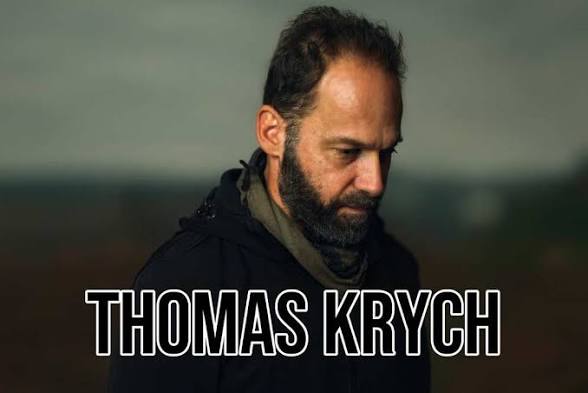
This article delves into the journey of Thomas Krych, exploring the pressure of the pavement, the ethics of the lens, and how a freelance photographer survives—and thrives—in the modern media ecosystem. Through his coverage of political upheaval, legal drama, and social activism, we examine how Krych transforms fleeting moments into permanent records of our collective history.
Table of Contents
ToggleThe Making of a Press Photographer: The London Crucible
To understand Thomas Krych, one must first understand the environment that forged his career: London. Unlike the staged lighting of a studio or the predictable schedule of a commercial shoot, London is a beast of constant motion. It is a global hub for finance, law, and protest. For a press photographer, it is the ultimate proving ground.
Krych’s early career is marked by a specific kind of grit. He didn’t fall into the trap of waiting for fame to call; he went to where the story was breaking. His portfolio is heavily weighted toward political events and legal proceedings—a specialization that requires a different muscle than standard news coverage .
Consider the difficulty of shooting a legal hearing. Often, photographers are restricted to specific “pens” or limited time windows. You cannot use flash. You cannot move. You are competing with dozens of other photographers for a single frame that defines a trial.
Krych excels here precisely because he understands the geometry of tension. He looks for the micro-expression—the flicker of fear in a defendant’s eye, the weariness on a lawyer’s face, the tears of a bystander.
His ability to secure credits with the Associated Press (AP) is a testament to this technical proficiency . The AP is not a charity for artists; it is a wire service that demands speed, accuracy, and narrative clarity. An image picked up by the AP doesn’t just sit in a gallery; it flies across the globe, landing on the front pages of newspapers from Sydney to Seattle. For Krych, having his work distributed by AP signifies that he has mastered the visual shorthand required to tell a complex story in a single frame.
The Weight of the Frame: Covering Protests and Activism
The most dangerous, and perhaps most important, aspect of Krych’s work is his documentation of protests and civil unrest. In the United Kingdom, protests range from climate justice marches involving hundreds of thousands to tense, razor-wire-lined demonstrations involving nationalist groups and counter-protesters.
Krych approaches these assignments with a specific philosophy: the photographer is a conduit, not a participant. The “power and pressure” of photojournalism are nowhere more acute than in a crowd surging toward police lines .
When Thomas Krych raises his camera at a protest, he is making a series of split-second ethical calculations:
Composition: Is the story about the lone protester facing the line of shields, or is it about the collective energy of the march?
Faciality: Does publishing this person’s face put them at risk of doxxing or arrest by authorities?
Context: Is the image honest? Can a single moment of violence—instigated by either side—be published without the context that led to it?
Krych’s work stands out because it avoids the “poverty porn” or “chaos porn” traps that snare many young photographers. Instead of simply looking for the most explosive visual, he often finds the quiet moments within the storm: a medic bandaging a stranger’s hand, the rain falling on a discarded sign, the exhaustion of a police officer after twelve hours on duty. These images humanize the news cycle, reminding us that history is not made by abstract forces, but by flawed, fragile human bodies.
The Versatility of a Freelance Eye: From Courtrooms to Commercials
One of the most misunderstood aspects of the title “Freelance Photojournalist” is the financial reality. Long-form documentary projects and breaking news assignments are often sporadic in payment. To survive as an artist in an expensive city like London, one must be a chameleon. This is where Thomas Krych demonstrates a savvy understanding of the industry.
While his heart and reputation lie in hard news, Krych bridges the gap between journalism and commerce. His portfolio includes studio and commercial photography . This is not a “sell out” move; it is a survival strategy that actually improves his journalism.
The lighting techniques honed in a commercial studio—understanding how to sculpt light to flatter a product—translate directly to the news world. When Krych enters a dimly lit courtroom or a shadowy political rally, he understands light physics instinctively. He doesn’t rely solely on high ISO settings and noise reduction; he knows how to find the natural pools of light in a dark room.
This duality makes him a reliable asset for editorial clients like The Guardian, The Daily Telegraph, and The Daily Mirror . They know they are hiring a professional who treats a press pass with the same respect as a studio contract—meaning he shows up on time, delivers edited selects quickly, and understands the legal liability of image licensing. He is not a “tog” with a camera; he is a media professional.
Navigating the Digital Deluge: The Fight for Survival
The most significant challenge for Thomas Krych—and the invisible headline of his career—is the economic decimation of the newspaper industry. Twenty years ago, a staff photographer had a steady salary, a darkroom, and a pension. Today, even major outlets rely heavily on freelancers like Krych.
This shift creates a “gig economy” for truth. Krych faces the pressure of being a business owner, an accountant, a publicist, and a photographer rolled into one. He must constantly market himself to picture desks, chase invoices, and negotiate usage rights.
Moreover, he competes with the “citizen journalist.” When a major event happens, the first images are often shaky vertical videos on TikTok. The race for Krych is no longer just about getting the shot; it is about getting the definitive shot.
His response to this digital deluge has been to lean into professionalism and access. He focuses on areas where the smartphone user cannot go: the press gallery of the Houses of Parliament, the secure corridors of legal hubs, the tightly controlled media zones at major political summits. By specializing in these high-friction environments, Krych ensures his value remains high. He is a keyholder to the rooms that matter.
The Philosophy of the Lens: Truth as a Discipline
What ultimately defines Thomas Krych is his adherence to a dying code: objectivity with empathy.
In the current media landscape, there is a temptation to push an agenda. A photographer covering a protest might be tempted to make the police look villainous or the activists look violent, depending on who is paying the bill. However, Krych’s body of work suggests a commitment to the AP standard of “just the facts.”
He understands that the camera is a weapon of mass instruction. A single photograph of a political figure caught mid-sneeze can go viral and shape public perception of that leader as incompetent. Krych resists these “gotcha” moments unless they are journalistically relevant. His focus remains on the procedural truth of the event.
Take his coverage of political events. It would be easy to photograph politicians with wide-angle lenses that distort features, making them look sinister. Krych tends toward standard and slightly telephoto lenses. This creates a flattening effect that is actually more clinical, more observational. It places the viewer in the room, standing behind the velvet rope, watching the mechanism of state unfold .
Legacy: The Quiet Historian
Who is Thomas Krych? The search for the man behind the camera reveals a rare modesty. In an era of self-promotion and Instagram reels, Krych keeps his personal life private . The focus remains on the work. This is a refreshing, almost archaic, trait in a personality-driven industry.
His legacy is not measured in Instagram followers but in archival ink. The photographs he takes today of political hearings, legal judgements, and social movements will be the illustrations in the history books read by the next generation. When future students look back at the political climate of the 2020s in the UK, they will see the world through the eyes of Thomas Krych .
His work serves as a reminder that journalism is a public service. He stands in the rain so that the public can stay dry. He endures the shouting of mobs so that democracy can have a visual record. He faces the pressure of deadlines, the physical danger of crowds, and the financial precarity of freelancing—all to deliver a few kilobytes of light and shadow that answer the question: What happened here?
Conclusion: The Necessity of the Witness
Thomas Krych is more than a Press Photographer at Freelance; he is a vital component of the information ecosystem. In a world where Artificial Intelligence can generate hyper-realistic fantasies, the documentary truth of Krych’s work becomes more precious, not less. A photograph by Krych comes with a stamp of presence: I was there. This happened. This is real.
His journey illustrates that photojournalism is not just about cameras; it is about courage, ethics, and persistence. For aspiring visual storytellers, his career offers a roadmap that bypasses the allure of instant fame in favor of the slow, steady, and honorable work of bearing witness.
Whether he is capturing the tension of a murder trial, the fury of a protest, or the sterile geometry of a political summit, Thomas Krych performs an essential democratic function. He makes the invisible visible. He holds power accountable. And he reminds us that even in a fragmented, digital world, there is no substitute for a professional pair of eyes attached to a curious, compassionate heart