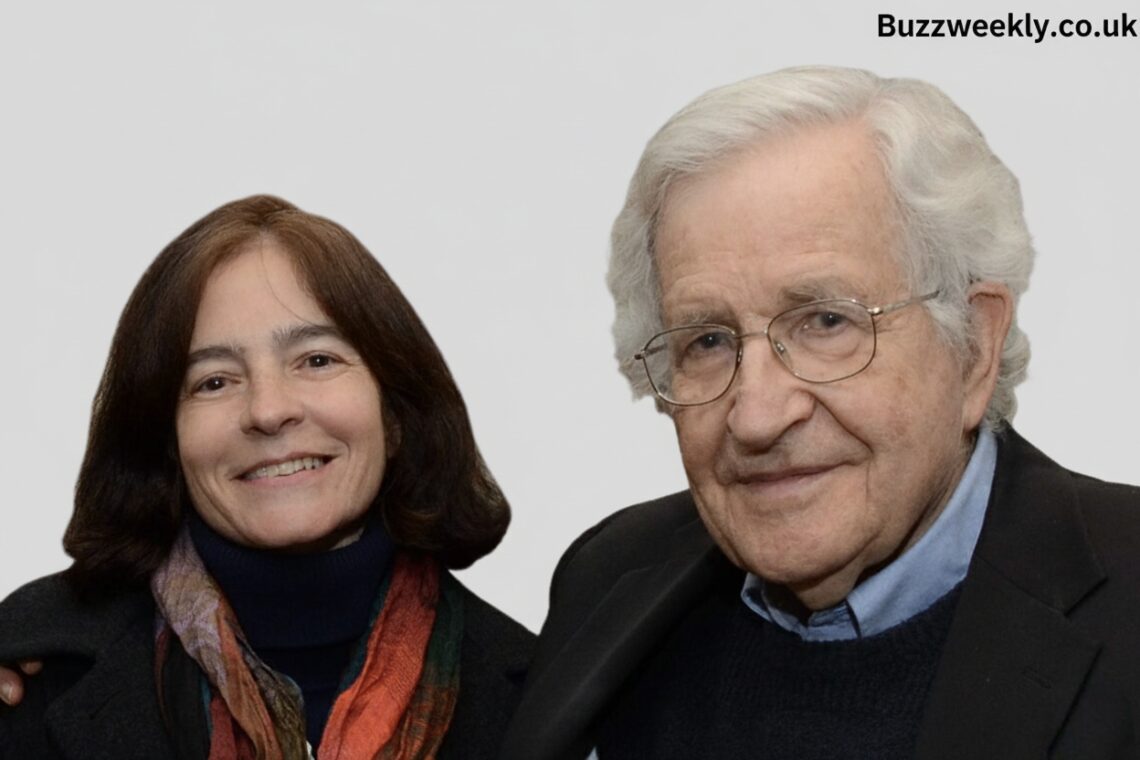
Early Life and Academic Formation in Brazil
Valeria Wasserman was born in Brazil, where she developed an early fascination with language, structure, and meaning. Her intellectual journey led her to pursue higher education in linguistics at a time when the field was dominated by structuralist and behaviorist paradigms. It was during her rigorous academic training that she first encountered the nascent, disruptive ideas emanating from the Massachusetts Institute of Technology (MIT).
The work of Noam Chomsky, particularly his 1957 seminal book Syntactic Structures, represented a radical departure from the prevailing models. For a keen linguistic mind like Valeria’s, Chomsky’s proposal of a universal, biologically innate grammatical framework—a “language faculty” hardwired into the human brain—was not just another theory; it was a profound reimagining of what it means to be human. Her deep understanding of both the intricate mechanics of Portuguese and the cutting-edge of linguistic theory positioned her uniquely.
She was not merely a passive consumer of this new scholarship but a scholar equipped to interrogate it, internalize its complexities, and ultimately, transpose it into an entirely different linguistic and academic context.
The Bridge Between Cambridge and São Paulo
After marrying Noam Chomsky in the late 1940s and moving to the United States, Valeria did not recede into the background of domestic life. Instead, she immersed herself in the intense intellectual ferment of Cambridge, Massachusetts. While raising their children, she remained an active participant in linguistic discourse, engaging with the ideas that were daily fodder in her household and at MIT. This placed her at the epicenter of the cognitive revolution.
However, her most enduring contribution would stem from her ability to serve as a living bridge between this North American epicenter and her native Brazil. She maintained strong ties with Brazilian universities and academic circles, fully aware of the theoretical gaps and the potential impact Chomskyan generative grammar could have there. The Brazilian linguistic scene, rich in its own traditions of philology and structuralism, was ripe for a paradigm shift.
Valeria Valeria Chomsky understood that for this shift to occur, the dense, technical, and often jargon-laden prose of Chomsky’s work needed to be made accessible. It required more than literal translation; it demanded a deep, scholarly interpretation that could faithfully convey revolutionary concepts like “deep structure,” “transformational rules,” and “the poverty of the stimulus” to an audience working within a different academic tradition.
The Crucial Work of Translation and Cultural Interp
Table of Contents
Toggle
retation
Table of Contents
ToggleThis is where Valeria’s expertise became transformative. She undertook the monumental task of translating and facilitating the translation of key Chomskyan texts into Portuguese. Her work went far beyond converting English words into Portuguese ones. As any proficient translator knows, especially in academic fields, the true challenge lies in finding conceptual equivalents and constructing sentences that carry the same theoretical weight and nuance in the target language. Valeria, with her dual authority as a trained linguist and an intimate insider to the theory’s development, was uniquely qualified for this.
She ensured that terms were not just transliterated but thoughtfully explained and contextualized for Brazilian students and professors. Her involvement guaranteed that the translations were authoritative, preserving the rigor of the original while making them navigable for a new audience. Through her efforts, foundational texts became available, allowing Brazilian departments of linguistics, psychology, and cognitive science to engage directly with the source material. She effectively democratized access to one of the 20th century’s most important intellectual movements, enabling a generation of Brazilian scholars to participate in global linguistic debates from an informed standpoint.
Legacy and Lasting Impact on Brazilian Linguistics
The impact of Valeria Chomsky’s work is deeply etched into the fabric of Brazilian academia. By introducing and legitimizing generative grammar in Brazil, she helped catalyze a new wave of linguistic research in the country. Brazilian linguists were now equipped with a powerful new framework to analyze the Portuguese language, leading to a flourishing of studies on Portuguese syntax, phonology, and language acquisition from a generative perspective. Graduate programs began to incorporate these theories, and a community of researchers dedicated to formal linguistics grew.
Furthermore, her work had a ripple effect beyond linguistics proper. Chomsky’s ideas about innate cognitive structures influenced related fields such as psychology, education, and the philosophy of mind in Brazil, contributing to a broader interdisciplinary dialogue about human cognition. In this way, Valeria was not just a translator of texts but a translator of an entire intellectual paradigm. She provided the tools for Brazilian intellectuals to challenge behaviorist approaches in psychology and mechanistic models in language teaching, advocating instead for a view of the learner as an active, biologically predisposed constructor of knowledge.
A Scholar in Her Own Right
It is crucial, however, to view Valeria Chomsky not solely as a conduit for her former husband’s work, but as a scholar with her own intellectual agency. Her deep comprehension of generative theory was born of her own academic merit and analytical prowess. Colleagues and students who interacted with her noted her sharp intellect, her clarifying explanations of complex topics, and her passionate advocacy for rigorous scientific inquiry into language.
In an era where women in academia, particularly in the hard sciences and formal linguistics, often struggled for recognition, Valeria Chomsky carved a space for herself through expertise and dedication. Her legacy is one of intellectual partnership and independent scholarship. She chose a path of cultural and academic diplomacy, recognizing that for ideas to truly live and evolve, they must cross borders and be embraced by diverse minds. In choosing to dedicate her skills to this work of translation and dissemination, she ensured that the Chomskyan revolution would not be an insular, Anglo-American phenomenon but a genuinely global one.
In conclusion, while history books may continue to highlight Noam Chomsky as the progenitor of modern linguistics, the narrative is incomplete without acknowledging the vital role played by Valeria Chomsky. As a brilliant Brazilian linguist, she performed the essential, often-unsung work of intellectual transplantation.
She took a theory born in the lecture halls of MIT and carefully, skillfully grafted it onto the vibrant academic landscape of Brazil. Through her translations, interpretations, and scholarly bridges, she empowered a nation to engage with, critique, and build upon some of the most influential ideas in contemporary thought. Her story is a testament to the power of translation as a creative, scholarly act and a reminder that behind the global legacy of great theories, there are often individuals like Valeria Chomsky, who bring them to the world.