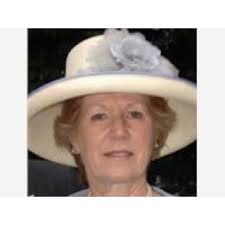
In an age where search queries often assume a singular identity, the story of the Rosemary Pitmans serves as a powerful reminder that history is rarely so simple. This article explores the lives of these extraordinary women—some famous in their own right, others known through their connections, and all deserving of remembrance.
Table of Contents
ToggleRose M. M. Pitman: The Pre-Raphaelite Illustrator (1868–1947)
The first, and perhaps most artistically significant, Rosemary Pitman was born Rose Margaret McLean Pitman in Manchester, England, in 1868 . She emerged from a family already etched into the fabric of Victorian intellectual life. Her uncle was the legendary Sir Isaac Pitman, the inventor of the phonetic shorthand system that would revolutionize clerical work and literacy across the English-speaking world. Her father, Henry Pitman, was also an expert in the field, placing young Rose in an environment where communication, precision, and the power of the written word were paramount .
Yet, Rose chose to communicate through images rather than phonetic symbols. Working under the name Rosie M. M. Pitman, she developed into a painter and illustrator whose brief but brilliant career left an indelible mark on the Golden Age of Illustration.
The Artistry of Undine
Pitman’s artistic career was concentrated into a relatively short period, spanning from approximately 1894 to 1904 . Despite its brevity, her work during this decade demonstrated a mastery that placed her among the notable illustrators of her time. She worked initially in Manchester before moving to the artistic hub of London, where she exhibited at the prestigious Royal Academy of Arts—a significant achievement for a female artist in the late 19th century .
Her crowning achievement came in 1897 with the publication of Undine by Friedrich de la Motte Fouqué, released by Macmillan. The book, a romantic German fairy tale about a water spirit who gains a soul through marriage, provided the perfect canvas for Pitman’s talents. Her illustrations, rendered in the ethereal and romantic Pre-Raphaelite style, were praised for transcending mere representation . A contemporary reviewer in The Magazine of Art captured the essence of her gift, writing, “She is not a mere illustrator; she shows the power of original thought which marks the true artist” .
This distinction is crucial. Unlike illustrators who simply depicted the text, Pitman’s work interpreted it. Her drawings for Undine are imbued with a melancholic beauty and a spiritual depth that reflected the story’s tragic undercurrents. She didn’t just show what the characters looked like; she conveyed the weight of their emotions.
A Place in the Victorian Literary Canon
While Undine remains her most celebrated work, Pitman’s artistic touch graced several other notable children’s books of the era. She illustrated Maurice, Or, the Red Jar by the Countess of Jersey in 1894, followed by The Magic Nuts (1898) and The Ruby Ring (1904), both written by the popular children’s author Mrs. Molesworth . Her style, characterized by delicate lines and a keen sense of composition, was versatile enough to adapt to the whimsical nature of fairy tales while maintaining a distinct artistic identity.
Her reputation was such that in 1903, her work was featured in M. H. Spielmann’s Littledom Castle and Other Tales, a collection that reads like a who’s who of the era’s illustration giants. She appeared alongside luminaries such as Harry Furniss, the beloved Kate Greenaway, the innovative Jessie M. King, the whimsical Phil May, the masterful Arthur Rackham, and the celebrated Hugh Thomson . To be included in such company was a testament to her standing in the field.
In 1905, at the height of her creative powers, Rose married a German immigrant named Frederick Heine . Following the social conventions of the time, she apparently gave up her professional career. It is a poignant turn in her story—a talented artist who, upon marriage, vanished from the public record she had worked so hard to enter. Little is known of her later life, and she died in 1947, her contributions to illustration largely forgotten for decades until art historians began rediscovering the hidden figures of the Victorian era .
Rosemary Dickinson Pitman: The Gardener and Second Wife (1940–2010)
Nearly a century after Rose M. M. Pitman was born in Manchester, another Rosemary Pitman entered the world—this one destined to become a central figure in one of the most scrutinized social circles of modern British history.
Born Rosemary Dickinson on June 17, 1940, in Northumberland, she was the daughter of Robert Dickinson, an acclaimed businessman, lawyer, and Olympic athlete who competed in the high jump at the 1924 Paris Games . Raised in a wealthy family and educated at St Mary’s School in Ascot, Rosemary grew up with a passion for horses and a keen eye for design .
A Life of Service and Divorce
In 1961, at the age of 21, she married Hugh Pitman, a Lieutenant Colonel in the Blues and Royals, a regiment of the British Army . The marriage connected her to the same illustrious lineage as the Victorian illustrator—Hugh was a descendant of Sir Isaac Pitman, the very same shorthand inventor who had been Rose M. M. Pitman’s uncle . This curious historical thread links the two Rosemary Pitmans through a shared family legacy, though they lived in different centuries.
As an army wife, Rosemary split her time between England and Germany, following her husband’s postings. By the mid-1970s, the couple had settled in Foxley, near Malmesbury in Wiltshire . It was here that Rosemary cultivated her professional passion: garden design. She was a qualified and talented designer who worked professionally in London, winning several awards for her work. Her sons later remembered her great passion for gardening, a craft she practiced with professional rigor .
Despite the picture of rural stability, her marriage to Hugh eventually ended in divorce. By the mid-1990s, Rosemary was single—and about to enter a world that would thrust her into the tabloid spotlight.
Marriage to Andrew Parker Bowles
Rosemary’s second marriage connected her to the highest echelons of British society. In 1996, she married Andrew Parker Bowles, a retired Brigadier and a figure already famous as the former husband of Camilla Shand—who would later become Queen Camilla, consort to King Charles III .
The couple had known each other for years; Andrew had been an officer in the same regiment as Rosemary’s first husband, Hugh . Their wedding was a low-key, private affair at the Chelsea Register Office, a stark contrast to the pomp that had surrounded Andrew’s first marriage. As devout Catholics, they later had their union blessed in the church .
For Rosemary, this marriage brought a degree of public fascination she had never experienced. She became the stepmother to Andrew’s children from his first marriage—the renowned food writer Tom Parker Bowles and Laura Lopes—while her own three sons, Henry, William, and Thomas, gained a stepfather in Andrew . Friends and family described the marriage as happy and harmonious, with the couple sharing interests in hunting, gardening, and polo . Remarkably, they maintained a gracious relationship with their former spouses. Rosemary and Andrew even attended the wedding of Prince Charles and Camilla in 2005, demonstrating the complex, modern dynamics of the extended royal circle .
A Courageous End
Tragically, Rosemary’s second chapter was cut short. In the early 2000s, she was diagnosed with breast cancer. For four years, she fought the illness with characteristic determination, undergoing grueling rounds of radiotherapy and chemotherapy .
Her son Henry later spoke of her final days, revealing the strength that defined her. “She was very pleased to have made Christmas and then Andrew’s birthday, his 70th, just after Christmas, and subsequently the birth of his grandchildren,” he told The Telegraph . He described her as “incredibly brave” as she fought the “vigorous cancer for many years” .
Rosemary Pitman died on January 10, 2010, at the age of 68, surrounded by her family at her home in Wiltshire . Her funeral was held at St Aldhelm’s Catholic Church in Malmesbury, a reflection of the deep roots she had put down in the rural community she loved. In a final gesture that spoke to her life’s passion, her ashes were scattered in her garden . Among the mourners was Princess Anne, who had once dated Andrew in the 1970s—a testament to the interconnected world Rosemary had navigated with grace .
Rosemary Pittman: The American Artist and Nurse (1916–2005)
Across the Atlantic, a third woman carried a variation of the name—Rosemary Pittman—and lived a life that embodied the American spirit of reinvention.
Born in 1916, Rosemary Pittman grew up on a Midwestern farm before pursuing a career in nursing. She graduated from the University of Iowa School of Nursing and, during World War II, served in the Army Nurse Corps, a decision that would take her across the Pacific to Australia, New Guinea, and the Philippines . She witnessed the horrors of war firsthand, caring for wounded soldiers in some of the most brutal theaters of the conflict.
After the war, she continued her education, earning master’s degrees in public health and nursing education. She became a professor at the University of Washington School of Nursing in Seattle, where she taught from 1964 to 1984 . There, she was also a founder of the university’s Nurse Practitioner program, helping to shape the future of the profession and elevate the role of nurses in primary care. She was named Professor Emeritus upon her retirement, a recognition of her decades of contribution to medical education .
But Rosemary Pittman’s story takes a fascinating turn. After retiring from nursing at the age of 68, she pursued a second career—in art. She attended the Cornish College of the Arts in Seattle and began painting in a naive, folk-art style that reflected her long and eventful life . Her paintings are characterized by strong narratives; they are visual memoirs of her experiences. She painted scenes from her early life on the farm, as well as vivid recollections of her service during World War II. Her work transforms personal memory into accessible, often charming, folk art.
Rosemary Pittman died in 2005, leaving behind a legacy not just as a nurse or an artist, but as a testament to the idea that it is never too late to reinvent oneself .
A Name, A Legacy
Beyond these three principal figures, the name appears in obituaries and records across the English-speaking world, each representing a life of quiet dedication. There was Rosemary Cannizzaro Pittman, who died in 2025 in Kansas, a nurse for over 56 years who began painting after retirement at 75 . There was Rosa Marye Williams Pittman of Mississippi, a pioneering woman who served as the first female commissioner on the Hinds County Soil and Water Conservation District, championing agriculture and conservation until her later years . There was Rosemary Catherine Pitman English of Indiana, an X-ray technician who spent her retirement quilting blankets for wounded soldiers at Walter Reed Medical Center .
The name “Rosemary Pitman” is not a single story but a collection of them. It represents the Victorian illustrator who gave up her career for marriage; the British garden designer who found love within the royal orbit and faced death with courage; the American nurse who healed soldiers and then painted her memories; and countless other women who lived lives of service, creativity, and resilience.
In remembering them, we are reminded that history is not just the story of kings and queens, but of the women who illustrate our books, design our gardens, heal our sick, and quietly build the world around us.
Conclusion
The name Rosemary Pitman serves as a fascinating lens through which to view the diverse ways women have shaped history—often working quietly, yet leaving lasting impressions. From Rose M. M. Pitman’s ethereal Pre-Raphaelite illustrations that graced Victorian children’s books, to Rosemary Dickinson Pitman’s graceful navigation of British high society and her courageous battle with illness, to Rosemary Pittman’s dual legacy as a military nurse and folk artist, each woman embodied resilience, creativity, and quiet determination.
What unites them is not merely a shared name, but a shared spirit of accomplishment. Whether through art, service, or the cultivation of beauty in gardens and in life, these women contributed meaningfully to their worlds without seeking the spotlight. Their stories remind us that legacy is not always loud; sometimes it lives in the pages of a forgotten book, the design of a beloved garden, or the memory of a nurse who healed the wounded and later painted the scenes that shaped her.
In an age that often seeks singular answers, the story of the Rosemary Pitmans offers a richer truth: that history is woven from countless threads, and that every life—no matter how quietly lived—deserves to be remembered