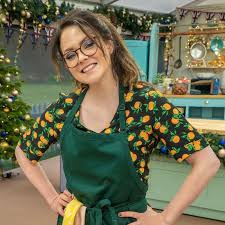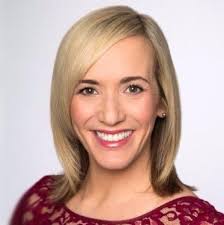
For over a decade, Kay Crewdson has been a fixture on BBC screens across the North of England. To the casual viewer flicking through channels, she is simply the “weather woman”—the person in a bright dress pointing at isobars and telling you to grab an umbrella. But for those who look closer—for those who listen to the radio documentaries or follow the advocacy work she does in the shadows of fame—Kay Crewdson is something far rarer.
She is a broadcaster who turned her deepest emptiness into a lifeline for thousands.
This is the story of how a meteorologist weathered the storms no satellite could predict, breaking the silence on miscarriage, tackling perimenopausal abuse from trolls, and redefining what compassionate leadership looks like in the modern media landscape.
Table of Contents
ToggleThe Journey from the Stage to the Studio
To understand Kay Crewdson’s unique ability to connect with an audience, you have to look at her educational roots. While many science or weather presenters come straight from physics or geography degrees, Crewdson took a different path. She graduated with a First-Class BA (Hons) in Drama and Theatre Arts from Queen Margaret University in Edinburgh .
This theatrical foundation is evident in her presenting style. Meteorology is a science of probabilities; it is imprecise and often frustrating for viewers who want a binary “yes/no” answer for rain. But Crewdson approaches the forecast like a narrative. She has the ability to take complex isobar charts and turn them into a story that resonates emotionally with a farming community in Cumbria or a commuter in Manchester.
Her career trajectory is a masterclass in versatility. She cut her teeth behind the scenes as a producer and journalist, learning the rigors of the BBC Journalism Trainee Scheme before stepping in front of the camera . She has been the energetic voice on BBC Radio York breakfast shows, waking up the region with banter and warmth, and the composed anchor on BBC North West Tonight .
Between 2019 and 2025, she became a household name as the weather presenter for BBC North West Tonight. It was here that she launched the “25 in 25” series—a project that saw her travel across the region to profile the people behind the forecasts . This wasn’t just about temperatures; it was about resilience. It was about the farmer battling floods, the community opening a new hospice, the teenager saving lives. That series was a signal flare that Crewdson was never just interested in the weather; she was interested in the people living through it.
The Silence That Needed Breaking: The Emptiness Within
In 2017, Kay Crewdson’s world stopped. The precise timeline of her broadcast day—the traffic updates, the satellite links, the studio chit-chat—collided with the brutal silence of a sonographer’s room.
Crewdson lost her baby son. She later suffered another miscarriage, losing a second child she and her partner named “Star” . In the immediate aftermath, she did what many high-achieving professionals do: she threw herself back into work. She left the BBC for a period, but not to hide. She left to create.
The result was The Emptiness Within, a radio documentary that aired on BBC Radio York and BBC Radio Sheffield. It is a title that perfectly captures the physical and psychological paradox of miscarriage: the body has carried a life, a future, a set of hopes, and then suddenly, there is nothing but a cavernous void where that future used to be .
At the time, despite the statistics (the NHS estimates 1 in 4 pregnancies end in miscarriage), the subject was a cultural taboo. It was the “whispered” grief. When Crewdson approached this documentary, she didn’t do it as a detached journalist. She did it as a bereaved mother wielding a microphone.
She interviewed other parents, experts, and partners. She dissected not just the physical process, but the social awkwardness—the friends who cross the street to avoid saying the wrong thing, the workplace policies that ignore the existence of early pregnancy loss, the lonely hours spent in hospital waiting rooms.
“We really shouldn’t be a topic that remains shrouded in mystery – almost as if it’s a taboo,” she stated .
The industry took notice. The Emptiness Within wasn’t just “good radio”; it was a surgical strike against silence. It won the Silver trophy at the New York Festivals Radio Awards and a Gold at the International Broadcasting Awards . It became a blueprint for how to handle trauma in media.
From Documentary to Directorship: The CRADLE Revolution
Winning awards is one thing. Changing systems is another. Kay Crewdson took her pain and her professional skill set to CRADLE, a UK charity that supports anyone affected by early pregnancy loss.
She serves as their Media Director and a Trustee . In the corporate and charity world, “Media Director” is often a role that involves press releases and damage control. For Crewdson, it is an extension of her journalism. She works directly with NHS communications teams to ensure that when a parent walks into a hospital for a scan that goes wrong, the language used by staff is consistent, compassionate, and trauma-informed .
In 2022, she launched The CRADLE Podcast . This platform allowed the conversation to continue beyond the documentary. It provides a repository of real-life stories, expert advice, and supportive discussions for those who are navigating the “no man’s land” of grief.
She often speaks at corporate events and healthcare conferences. Unlike many professional speakers who cite case studies, Crewdson brings a reporter’s notebook and a mother’s heart. Her speaking topics include “Miscarriage, baby loss, and breaking the silence” and “Compassionate leadership in moments that matter” . She teaches HR departments how to handle a return-to-work interview after a loss. She teaches managers that silence is not kindness—it is abandonment.
The “Perimenopausal Hair” Rebellion
If you follow British media news, you might have seen Kay Crewdson’s name trending in 2025 for a reason that is both trivial and deeply significant.
In April 2025, she hit back at online trolls who had been sending her “hate mail” criticizing her appearance. The comments were the usual tedious fare of the anonymous internet: her hair was messy, she wore “girly” dresses, she was annoying .
But Crewdson’s response was a masterclass in handling pressure. Instead of ignoring it or crying off-camera, she went on social media and called them out by name. “To the Richards, the Sandras, the Johns, the Lizs… the ones who somehow have time to email me about how bad I look or how annoying I am, thank you,” she wrote .
She then filmed a video addressing the “perimenopausal hair” comments—explaining that hormonal changes had made her hair difficult to manage and grow. “If I was to wax that down, I’d probably get emails saying I look like a slaphead, so I can’t do that,” she laughed .
This moment went viral because it was raw, unpolished, and real. In an industry where female presenters are often discarded when they show signs of aging (grey hair, wrinkles, changing bodies), Kay Crewdson stood her ground. She refused to apologize for her biology. She wore the “girliest” dress she could find as an act of defiance. She turned the lens back on the trolls, highlighting the absurdity of expecting a trained meteorologist to also be a static, ageless mannequin.
The Art of Calm Under Pressure
In an era of “fake news” and screaming cable news heads, Crewdson represents a return to a specific BBC value: calm authority.
When you look at her biography, one phrase appears repeatedly: “calm communication under pressure” . Whether she is standing in a field during a storm warning or discussing the trauma of infant loss on a live panel, her voice stays steady. She has a low, measured cadence that forces the listener to lean in.
This skill is why she is now in high demand as a keynote speaker for corporate leadership events. Businesses are realizing that “weathering the storm” is a metaphor for the modern economy. Kay teaches teams how to communicate clearly when scrutiny is high—how to strip away the jargon and speak with clarity when the stakes are life-and-death or when a brand’s reputation is on the line .
A Legacy of Visibility
As of 2026, Kay Crewdson continues to work as a freelance Senior Weather Presenter for the BBC, but her footprint extends far beyond the studio . She has become a symbol of the “modern” broadcaster—one who does not hide their scars but uses them as credentials.
Her story is compelling because it is not a tragedy. It is a redemption arc written in real-time.
She could have stayed silent about her miscarriages to protect her “brand.” She didn’t.
She could have filtered her Instagram photos to hide her aging hair. She didn’t.
She could have deleted the hate mail and cried in private. She didn’t.
Instead, Kay Crewdson took the ultimate risk: she was herself. In doing so, she gave permission to thousands of women going through perimenopause to stop apologizing for their bodies. She gave permission to bereaved parents to say, “I am not okay,” out loud. And she reminded the media industry that the best story is often the one hiding in plain sight, waiting for someone brave enough to tell it.
The Forecast for Kay Crewdson? If her track record is anything to go by, the future is bright, with a high chance of changing lives.
Key Takeaways from Kay Crewdson’s Career
-
Fearless Storytelling: She turned personal trauma into an award-winning documentary, The Emptiness Within, proving that vulnerability is a strength in journalism .
-
Advocacy in Action: As Media Director for CRADLE, she bridges the gap between media representation and real-world NHS support for baby loss .
-
Resilience against Toxicity: Her public response to “trolls” regarding her appearance redefined how public figures can handle online abuse with humor and dignity .
-
Versatility: From theatre school to breakfast radio, from severe weather warnings to podcast hosting, her skill set is vast and deeply human .
Conclusion
In an industry often criticized for superficiality and polish, Kay Crewdson stands as a defiant testament to the power of authenticity. She could have remained safely behind the forecast map, reciting temperatures and avoiding controversy. Instead, she chose to step into the storm—sharing her deepest grief, laughing in the face of cruel trolls, and using her platform to normalize the unspoken realities of miscarriage and menopause.
Kay Crewdson is more than a weather presenter; she is a storyteller, an advocate, and a quiet revolutionary. She proves that the most compelling broadcast isn’t always the one with the clearest satellite image—it’s the one where a human being looks into the camera and says, “I see you, and I’ve been there too.” Her legacy is not just in the awards on her shelf, but in the thousands of parents who found the courage to speak, the women who stopped apologizing for aging, and the colleagues who learned that compassion is the highest form of professionalism.
The forecast for Kay Crewdson’s future? Whatever it brings, she will face it with calm, courage, and that unmistakable warmth that turns a simple weather report into an act of connection