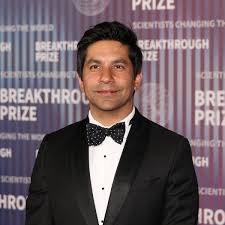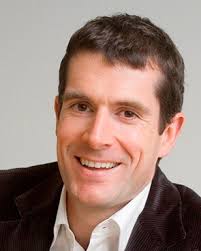
To understand Toby Baxendale is to understand a worldview where profit is a moral good, saving is the engine of growth, and the manipulation of interest rates is the root of modern economic evil. This is the story of the British entrepreneur who became the Austrian School’s most practical warrior.
Table of Contents
ToggleThe Education of a Future Entrepreneur
To understand Baxendale’s rejection of Keynesian economics, one must look at his childhood. Unlike many financiers who studied economics in the sterile confines of a lecture hall, Baxendale learned the “economic facts of life” the hard way . Raised primarily by a single mother following his parents’ divorce, he was introduced to scarcity and value creation long before he encountered the abstract curves of supply and demand.
At the age of sixteen, a chance encounter with an old Polish soldier in London changed the trajectory of his life. The soldier, a refugee from the totalitarian regimes of the 20th century, introduced the teenager to the works of Friedrich Hayek . For a young man trying to make sense of the world, Hayek’s The Road to Serfdom was a revelation. It provided the intellectual framework for what he already suspected: that the political left’s vision of top-down control was not only morally suspect but economically illiterate.
However, Baxendale did not retreat into academia. He paid for his education through hands-on ventures. He part-owned and ran a nightclub, learning the volatile rhythms of the service industry. Later, he moved into food procurement for a restaurant. This role—buying, selling, and managing perishable inventory—became the laboratory for his business philosophy . He saw that the economy was not a machine that could be managed by government statisticians, but a complex, living organism driven by the “dispersed knowledge” of millions of individuals.
From Nightclubs to a Seafood Empire
The practical application of Austrian economics came with the founding of what would become Seafood Holdings Ltd in 1991. Starting from humble beginnings, Baxendale applied a simple, radical idea: trust the people closest to the fish.
In the traditional British corporate structure, management tells labor what to do. Baxendale rejected this as inefficient. He understood the Hayekian concept that local knowledge is paramount. The man driving the truck in the snow knows more about road conditions than the CEO in the boardroom. The filleter on the factory floor knows more about waste reduction than a spreadsheet-wielding accountant.
Consequently, Baxendale implemented a model of profit-sharing and distributed autonomy that was decades ahead of its time. He didn’t want a “do-as-you’re-told” culture, so he refused to create one . By aligning the incentives of his employees with the profitability of the firm, he unleashed a wave of productivity. Why would a worker waste time or product if they directly shared in the upside?
The results were staggering. By the time he sold the business in 2010 to Bidvest, Seafood Holdings had become the largest fresh fish wholesaler to the UK food service sector, turning over approximately £100 million . It was a testament to the Austrian theory of the firm: that decentralized decision-making and entrepreneurial spontaneity outperform bureaucratic command every time.
The Cobden Centre: Theory Meets Policy
Having made his fortune, Baxendale did not retire to a quiet life of leisure. Instead, he doubled down on the war of ideas. In 2009, alongside MP Steve Baker, he co-founded The Cobden Centre .
Named after the 19th-century classical liberal Richard Cobden, the think tank was designed to serve as a British beachhead for the Austrian School of Economics. At a time when the global financial system was in meltdown, the mainstream (Keynesian) response was stimulus, bailouts, and quantitative easing. The Cobden Centre, funded and driven by Baxendale’s entrepreneurial energy, provided the intellectual ammunition for the opposition.
Their primary target was the manipulation of interest rates. Baxendale argued that the “cheap money” policies of central banks like the Bank of England were not a cure for the 2008 crash but the very cause of it .
His logic, rooted in Misesian business cycle theory (ABCT), is devastatingly simple. He uses the analogy of the butcher to illustrate a point that modern macroeconomics ignores: you cannot consume what you do not produce .
Baxendale posits that an economy grows when people save. Savings provide the capital for “lengthened structures of production”—investments in machinery, technology, and efficiency that yield greater future output. However, when central banks artificially lower interest rates, they send a false signal to entrepreneurs. They trick businesses into thinking that society has saved more than it actually has.
The result is a “boom”—a malinvestment of capital into skyscrapers, ghost factories, or unsustainable consumer goods. But because the consumption wasn’t backed by real savings, the bust is inevitable. In Baxendale’s view, the 2008 crash was not a “market failure”; it was a central bank failure resulting from a decade of cheap credit following the dot-com bust.
The Battle Against Fiat Currency
Perhaps Baxendale’s most visceral disdain is reserved for “fiat currency”—money created by government decree out of thin air. He famously illustrated this with a thought experiment involving a “bandit” named Gordon Brown (the former UK Prime Minister) .
In this analogy, a productive butcher (the entrepreneur) has saved cuts of meat (real value). The bandit (the state) prints pieces of paper and forces the butcher to accept them in exchange for the real meat. The bandit gets dinner, and the butcher gets paper. This, Baxendale argues, is the essence of inflation: a hidden wealth transfer from the productive to the unproductive.
This is why he is a proponent of “honest money,” ideally a commodity-backed currency or, in the modern age, decentralized digital currencies like Bitcoin. He sees cryptocurrency not merely as a speculative asset, but as an escape valve from the monetary manipulation that he believes impoverishes the working class by eroding their purchasing power.
The Global Investor and “The Great Grimsby Seafood Village”
Following the sale of Seafood Holdings, Baxendale transitioned into an “angel investor” with a specific thesis: he backs real, tangible production . His portfolio is eclectic, ranging from Mango Bikes (recreational goods) to Ocean Era (aquaculture) .
However, his most ambitious post-exit project is arguably The Great Grimsby Seafood Village . Rather than cashing out and moving to a tax haven, Baxendale reinvested in the industrial heartland of the UK. Grimsby, historically the UK’s fishing capital, has faced decades of decline. Baxendale is attempting to apply his Austrian principles to urban regeneration—building a cluster of seafood-related businesses that can compete globally without reliance on government subsidies.
This move solidifies his philosophical consistency. While many free-market advocates focus solely on finance, Baxendale champions the producer. He understands that a nation that cannot feed itself, or that has outsourced its production, is ultimately not free. His directorship of Ciga Healthcare, a diagnostic business that rose to prominence during the Covid-19 pandemic, further demonstrates his focus on tangible problem-solving over financial engineering .
The Legacy of a Hayekian Warrior
Toby Baxendale is not a man who seeks the spotlight of mainstream media. He is abrasive to the consensus because he believes the consensus is a lie that leads to serfdom. His legacy is multi-faceted:
-
The Practical Proof: He proved that Austrian economics isn’t just theoretical griping. By building a massive business using decentralized, profit-sharing models, he demonstrated that Hayekian principles are operationally superior.
-
The Intellectual Fundraiser: He funded the first Distinguished Hayek Visiting Teaching Fellowship Program at the London School of Economics (LSE) . He literally bought a seat at the table for his ideological heroes in the heart of the Keynesian establishment.
-
The Consistent Voice: In an era of “crony capitalism” where big business begs for bailouts, Baxendale stands as a voice for the genuine free market. He argues that true capitalists should accept losses as readily as they accept profits, and that no business too big to fail should be allowed to exist.
Conclusion: Why He Matters Now
As of 2026, the world is grappling with the hangover of post-pandemic money printing and supply-side inflation. The debates Baxendale was having on his blog in 2009—about the dangers of zero interest rates, the morality of saving, and the necessity of hard money—are no longer fringe ideas; they are mainstream concerns.
Toby Baxendale represents the ideal fusion of the thinker and the doer. He is the fishmonger who read Mises, the CEO who quoted Hayek, and the angel investor who funds the future without asking the state for permission. In a world of increasingly abstract finance and centralized digital control, Baxendale’s message remains the same: Real wealth comes from production, production requires saving, and saving requires liberty.
He is, in the truest sense, a capitalist philosopher—and he is winning the argument, one interest rate hike at a time