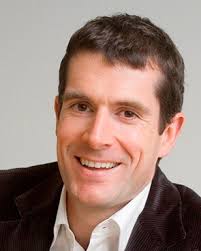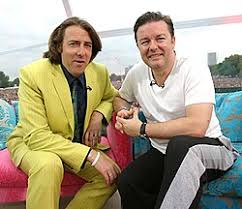
Jonathan Ross is a national institution. With his distinctive speech impediment, flamboyant suits, and razor-sharp wit, he has dominated British screens for nearly four decades. From The Last Resort in 1987 to Friday Night with Jonathan Ross, and now The Masked Singer, he has become one of the highest-paid and most celebrated presenters in British history, with an estimated net worth of £30 million and three BAFTA Awards for Best Entertainment Performance under his belt .
But Jonathan is not the only Ross to have carved out a significant career in the media. His older brother, Paul Ross, has built an equally impressive, if somewhat quieter, career spanning television, radio, and journalism. While Jonathan was winning awards for his chat show, Paul was becoming a familiar face on morning television and a trusted voice on the radio.
This is the story of the Ross brothers—two men from the same working-class London family who both found their way to the top of British media, albeit on very different paths.
Table of Contents
ToggleThe Ross Family: A Creative Upbringing
To understand Jonathan and Paul, you have to understand their mother. Martha Ross was a force of nature. An actress and film extra, she appeared in numerous television shows throughout her career, including a long-running stint as a market stallholder on the BBC soap opera EastEnders . She was determined that her six children would succeed, and she took an unconventional approach to their upbringing.
Martha auditioned all of her children for roles in television advertisements, and young Jonathan got his start at just ten years old, appearing in a commercial for Kellogg’s Rice Krispies . He also featured in an advert for Persil washing powder . Paul, as the eldest, would have had similar experiences, though his path would eventually diverge from the bright lights of acting into the more structured world of journalism.
The Ross children grew up in Leytonstone, East London, where their father, John, worked as a lorry driver . It was a working-class household, but creativity was encouraged. Martha would reportedly share storylines from EastEnders with her children—a habit that would later lead to her dismissal from the show after Paul accidentally leaked a Christmas plot on his radio programme .
Jonathan and Paul are just two of six siblings. Their brothers include Miles and Simon Ross, both television producers, and Adam Ross, who works in the music industry. Their sister, Liza Ross, is an actress . The Ross family, in many ways, is a microcosm of the British media industry itself—a testament to what can happen when talent, ambition, and a supportive (if occasionally indiscreet) family environment converge.
Paul Ross: The Elder Statesman
Jonathan may have the bigger profile, but Paul Ross, born in 1956, was the first to establish himself in the media. While Jonathan studied Modern European History at the School of Slavonic and East European Studies in London, Paul took a more traditional route into journalism, training at the University of Exeter before making his on-screen breakthrough .
Paul’s big moment came in 1993 with Channel 4’s The Big Breakfast. The programme was revolutionary for British morning television—chaotic, unpredictable, and utterly compelling. As a presenter, Paul brought a certain gravitas mixed with genuine warmth that made him a perfect fit for the show’s eclectic format .
From there, Paul’s career diversified. He became a regular showbiz correspondent on ITV’s This Morning, a role he continues to hold to this day. If you’ve ever watched a red carpet event and seen a familiar face interviewing celebrities, there’s a good chance it was Paul Ross. He’s become something of an institution on the programme, offering his insights on television and entertainment with the ease of a man who has been doing it for decades .
His television credits are extensive. He presented the game show Jeopardy! for ITV, hosted Mind The Gap, and contributed regularly to The Alan Titchmarsh Show . For fans of Big Brother, he was a familiar voice on the Channel 5 spin-off Big Brother’s Bit on the Side . In 2011, he demonstrated his quiz show credentials by taking part in a celebrity episode of The Chase, winning £25,000 for Children With Cancer UK .
But perhaps his most unexpected credit came in 2001 with the release of Bridget Jones’s Diary. In the film, Paul appears as “Mr Sit-up Britain”—a minor role, certainly, but one that connects him to one of the most beloved British films of the early 2000s . It’s the kind of quirky footnote that characterises the career of a working actor and presenter who has never been afraid to take on whatever interesting projects come his way.
Jonathan Ross: The Superstar
If Paul’s career is defined by versatility and longevity, Jonathan’s is defined by superstardom. He didn’t just present shows—he defined them.
Jonathan’s breakthrough came in 1987 with The Last Resort with Jonathan Ross on Channel 4. Inspired by David Letterman’s Late Night format, the show was a revelation. Here was a presenter who wasn’t afraid to be irreverent, who spoke to his guests as equals rather than as supplicants, and who brought a genuine fan’s enthusiasm to everything he discussed .
The show made him a star, and from there, his career exploded. He presented the British Comedy Awards annually from 1991 onwards, hosted the BBC’s Film programme after taking over from Barry Norman in 1999, and became a regular voice on BBC Radio 2 with his Saturday morning show .
But it was Friday Night with Jonathan Ross that truly cemented his status as a national treasure. Running from 2001 to 2010 on BBC One, the show became essential viewing. A-list celebrities lined up to be interviewed by him, knowing that a chat with Ross was different from the usual promotional circuit. He asked unexpected questions, teased his guests mercilessly, and created moments of genuine television magic .
The show earned him three BAFTA Awards for Best Entertainment Performance, in 2004, 2006, and 2007 . At his peak, he was the highest-paid television personality in Britain, commanding a reported £18 million contract with the BBC .
When he left the BBC in 2010, he didn’t slow down. He launched The Jonathan Ross Show on ITV in 2011, which continues to this day . He became a judge on The Masked Singer UK in 2020 and its spin-off The Masked Dancer, introducing himself to a new generation of viewers who may have been too young to remember his BBC heyday .
In 2005, he was made an Officer of the Order of the British Empire (OBE) for services to broadcasting—a recognition of his extraordinary contribution to British media .
A Tale of Two Careers
What’s fascinating about the Ross brothers is how their careers, while both successful, have followed such different trajectories. Jonathan became the superstar—the one with the massive contracts, the BAFTAs, the OBE, and the household name status. Paul became the reliable professional—the one who has been a constant presence on British television and radio for just as long, but in roles that are perhaps less glamorous but no less important.
Paul’s career is a testament to the value of consistency. He hasn’t had the highs of Jonathan’s chat show era, but he also hasn’t had the lows. And there have been lows for Jonathan. His career has been marked by controversies, including a notorious incident involving Russell Brand on BBC Radio 2 that led to his suspension and, ultimately, his departure from the corporation . There have been other moments of controversy throughout his career—his interviewing style has sometimes pushed boundaries, and his willingness to ask provocative questions has occasionally landed him in hot water.
Paul, by contrast, has maintained a steadier course. His most notable controversy came in later life, when he confessed to a year-long drug-fuelled affair with a male English teacher he met through dogging . It was a deeply personal revelation that he blamed on the stress of financial pressures, including a significant tax bill. His wife stood by him, and he has continued his career without significant interruption.
Beyond the Brothers: The Wider Ross Clan
The Ross family’s media connections extend well beyond Jonathan and Paul. Their mother, Martha, was a familiar face on EastEnders for years before her dismissal in 2006. Her death in 2019 was a profound loss for the family. Jonathan opened up about his grief on Loose Women, expressing guilt that he hadn’t visited her on the day she died, having suggested that the family spread their visits out across the week .
His siblings have all found their own paths in the industry. Miles and Simon Ross have worked as television producers, while Adam Ross has made his career in the music industry. Liza Ross has followed in their mother’s footsteps as an actress . It’s a family that has, collectively, contributed an enormous amount to British entertainment.
Jonathan’s own family has also become a story in itself. He married Jane Goldman in 1988, when she was just 18 and he was 28. The age gap raised eyebrows at the time, but their marriage has endured for nearly four decades—though not without challenges. In 1999, they briefly separated after Goldman suffered a breakdown and checked into the Priory Clinic for treatment for depression . They reunited quickly and have remained together since.
They have three children: Betty Kitten, Harvey Kirby, and Honey Kinney . The names reflect Jonathan’s love of comic books—Harvey is named after Harvey Kurtzman and Jack Kirby, two legends of the medium .
Their children have faced their own challenges. Betty has been diagnosed with fibromyalgia, chronic fatigue syndrome, and postural tachycardia syndrome (PoTS), a condition that causes her heart rate to spike when she stands up. She now uses an electric wheelchair to get around . Harvey has largely stayed out of the public eye, though he made a rare appearance with his father and sister on Celebrity Gogglebox and was recently revealed to be engaged . Honey has become a model and body positivity activist, and co-hosts a podcast with her father called Reel Talk, where they review films and television programmes .
The Dynamic Between Brothers
What is the relationship like between Jonathan and Paul? By all accounts, it is close and supportive, though the public rarely sees them together. Paul has occasionally appeared on programmes with his brother, and they speak warmly of each other in interviews.
There is no sibling rivalry here—or if there is, it’s well hidden. Perhaps that’s because their careers have occupied such different spaces. Jonathan is the chat show host, the interviewer of Hollywood stars, the man in the flamboyant suit. Paul is the journalist, the red carpet correspondent, the voice of reason on morning television. They have never really competed for the same roles, and they have never had to.
In many ways, they represent two different paths to success in British media. One path is about personality—about being the centre of attention, about building a brand around your own idiosyncrasies. The other path is about professionalism—about showing up, doing the work, and becoming a trusted presence in people’s homes. Both paths lead to success, but they require different skills and produce different kinds of careers.
The Legacy of the Ross Family
As Jonathan Ross approaches his mid-sixties, he shows no signs of slowing down. He continues to host The Jonathan Ross Show on ITV, appears as a judge on The Masked Singer, and has recently taken part in Celebrity Traitors . His podcast with his daughter Honey has introduced him to new audiences, and his comic book writing (he has written series like Turf and America’s Got Powers) demonstrates that his creative interests extend far beyond presenting .
Paul Ross continues his work on This Morning and remains a familiar voice on radio. His career has been one of remarkable longevity, and he has shown no desire to retire. At 68, he is still a working journalist and presenter, still appearing on red carpets, still offering his insights on the day’s television.
Together, the Ross brothers represent something unusual in British media: a genuine family dynasty that isn’t built on inheritance or privilege, but on talent, hard work, and a mother who believed in her children. From Leytonstone to the BAFTAs, from Kellogg’s adverts to The Masked Singer, their story is a very British success story.
It’s also a reminder that fame isn’t a zero-sum game. Jonathan Ross could have been the only famous person in his family—his success was certainly enough to sustain a career. Instead, he has siblings who have built their own careers, who have found their own paths, and who have contributed to the rich tapestry of British media in their own ways.
The next time you see Jonathan Ross on The Masked Singer, or Paul Ross on This Morning, take a moment to appreciate what you’re seeing: two brothers from East London who both made it to the top of their profession, each in their own way. It’s a rare thing in any industry, and it’s worth celebrating.
Conclusion
The story of Jonathan Ross and his brother Paul is more than just a celebrity curiosity. It’s a story about family, about ambition, and about the different shapes a successful career can take. Jonathan may have the bigger profile, but Paul’s career is no less impressive for its quieter consistency. Together, they represent two halves of the British media landscape: the glamorous and the reliable, the superstar and the professional, the man in the flamboyant suit and the man on the red carpet.
Their mother, Martha, would surely be proud. She put them all forward for those Kellogg’s adverts all those years ago, never knowing that she was setting in motion two of the longest and most successful careers in British broadcasting. The Ross family is a dynasty, but it’s a dynasty built on talent and hard work rather than privilege. And that, perhaps, is the most British thing about them