Table of Contents
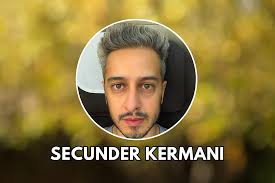
ToggleSecunder Kermani: The Fearless Voice Reporting from the World’s Deadliest War Zones
This article delves deep into the life, career, and professional ethos of Secunder Kermani, exploring his unique background, his most dangerous assignments, the controversies surrounding press freedom, and his philosophy on impartiality in an increasingly polarised media landscape.
Early Life and Education: The Making of a Correspondent
Secunder Kermani was born in London to parents of Pakistani descent. Growing up in the British capital as part of the South Asian diaspora, he occupied a unique cultural intersection—fully British, yet deeply connected to the heritage and languages of the subcontinent. This duality would later become his greatest professional asset, allowing him to navigate complex cultural terrains in Pakistan and Afghanistan with an ease that many of his Western counterparts lacked .
He was educated at Dulwich College, an independent school in London, before reading History and Spanish at the University of Manchester, where he graduated with first-class honours. His academic interest in history is not a trivial footnote in his biography; it is a foundational element of his reporting style. As he later explained, understanding the historical context of a conflict—be it the Soviet invasion of Afghanistan, the carving out of Pakistan, or the 1948 Nakba—is essential to explaining why events are unfolding in the present .
Following his undergraduate degree, Kermani pursued a Master’s in Television Journalism at Goldsmiths, University of London. It was during this time that his dual interests in serious journalism and creative expression began to crystallise. A case study from his time at Goldsmiths, published by the BBC as part of a research project, reveals a young man who was not only interested in hard-hitting current affairs—such as interviewing an anti-Zionist Holocaust survivor at a Palestinian art exhibition—but also in comedy and music.
He presented a radio show blending banter with music and expressed a desire to make Pakistani culture “relevant and cool” to young Britons . This early blend of gravitas and cultural relevance would become a hallmark of his professional career, enabling him to tackle grim subjects without losing the human touch.
Breaking the ISIS Story: The Newsnight Years
Kermani began reporting for the BBC’s flagship current affairs programme, Newsnight, in 2014. It was a tumultuous time globally, with the rise of the Islamic State in Iraq and Syria dominating headlines. While most reporters focused on the geopolitics of the conflict from a safe distance, Kermani took a different, far riskier approach: he focused on the people.
He secured a series of exclusive interviews that would define his early career and demonstrate his unique ability to build trust with otherwise inaccessible subjects. Among his most notable scoops were interviews with British jihadist Omar Hussain and Australian suicide bomber Jake Bilardi . These were not simply “gotcha” interviews; Kermani sought to understand
The radicalization process, exploring why young, Western men would abandon their lives to join a brutal militant group. His 2015 documentary for BBC Radio 1, “ISIS: Young, British and Radicalised”, won Gold at the New York Radio Awards and the Association for International Broadcasting Award for Radio Current Affairs .
This reporting, however, came at a cost. In October 2016, it was revealed that Thames Valley Police’s Counter Terrorism department had used the Terrorism Act to obtain a court order to seize Kermani’s laptop. They wanted to view his communications with a member of ISIS he had interviewed .
The move sparked outrage from press freedom campaigners. Ian Katz, then editor of Newsnight, voiced his concern, stating that using terrorism legislation to access journalist-source communications would make it “very difficult for reporters to cover this issue of critical public interest” . This incident was an early baptism by fire for Kermani in the tension between national security investigations and the media’s duty to inform the public—a tension that would follow him throughout his career.
The BBC’s Man in Islamabad: Covering the Taliban’s Resurgence
In February 2018, Kermani was appointed the BBC’s correspondent for Pakistan and Afghanistan . Based in Islamabad, he was perfectly positioned to cover the rapidly shifting sands of South Asian geopolitics. His fluency in the cultural nuances of the region allowed him access that was often denied to others.
He interviewed a veritable who’s who of regional power players: Nobel laureate Malala Yousafzai, former Prime Minister Nawaz Sharif, and even the chief negotiator of the Afghan Taliban, Abbas Stanikzai . His interview with Imran Khan, conducted just before the 2018 Pakistani elections, showcased his ability to hold powerful figures to account while maintaining a respectful, informed dialogue .
However, the pinnacle of his time at the BBC—and arguably one of the most significant moments in modern journalism—was the fall of Kabul in 2021. As Western forces executed a chaotic and humiliating withdrawal, the Taliban swept back into power, twenty years after they were ousted. Kermani was at the forefront of the BBC’s coverage, reporting from the ground as thousands of Afghans desperately tried to flee .
He witnessed firsthand the fear of the population, the uncertainty of the moment, and the pragmatic, sometimes chilling, communications from the new Taliban leadership. His reporting during this period was later recognised with a Peabody Award nomination for the team’s coverage of “Afghanistan: Documenting A Crucial Year” .
A New Chapter: Joining Channel 4 News
In the summer of 2022, Kermani made the move to Channel 4 News, joining as a Foreign Affairs Correspondent alongside heavyweights like International Editor Lindsey Hilsum and Europe Editor Matt Frei . The move was seen as a major coup for Channel 4. Esme Wren, Editor of Channel 4 News at the time, hailed him as a “rising news star,” and Kermani himself expressed excitement about joining a programme he “grew up watching and admiring” .
The move signalled a broadening of his horizons. While he remained an expert on South and Central Asia, his remit became truly global. Since joining, he has covered major stories in Brazil, Japan, and Myanmar, where he became one of the few foreign journalists to report inside rebel-held territory amidst a brutal civil war .
The Gaza Crucible: Reporting from the Eye of the Storm
If the fall of Kabul was the defining story of 2021, the Israel-Gaza conflict following the Hamas attacks on October 7, 2023, became the defining challenge of 2024. For Kermani, this conflict represented a “big test” for journalists .
The logistical and ethical challenges of reporting from Gaza are immense. Israeli and Egyptian authorities have largely barred international journalists from independent entry into the Gaza Strip during the war, leaving the burden of coverage on brave, but overwhelmed, local Palestinian journalists. Kermani has been vocal in his criticism of this blockade. In early 2024, he signed an open letter alongside 55 other journalists calling for international press access .
In an interview with the Press Gazette, Kermani articulated the frustration felt by many in the industry. He praised the “really brave” and “very talented” Palestinian journalists but insisted they needed support. He directly challenged the Israeli government’s rationale for the ban, suggesting that the official reason—the danger of an active war zone—was insufficient. “The suspicion is really going to be understandable that the real reason they don’t want international journalists there is because they don’t want the world to see in even greater detail what’s unfolding there,” he said .
Faced with a complete ban, Kermani made a controversial but pragmatic decision: he accepted an embed with the Israeli Defense Forces (IDF) to get a limited glimpse into Gaza . He and his team “thought long and hard” about it. While some on social media criticised the move as providing a sanitised, military-controlled view, Kermani defended it as the only way to get any visuals from inside the territory. He stressed that he went in with the explicit intention of “robustly challenging” his hosts and ensured there would be no editorial censorship beyond operational security .
The embed itself was a study in journalistic frustration. From his position, Kermani could see, about 500 metres away, a long line of Palestinian civilians walking with white flags along what the IDF called a “humanitarian corridor.” When he asked to go and speak to them, the military refused. “And that is very unsatisfactory,” he admitted. To mitigate this, his team supplemented the IDF-granted access with footage shot by Palestinian journalists of the same scene, ensuring the civilian perspective was not entirely lost . This incident perfectly illustrates the “unacceptable” compromises forced upon international journalists covering the war.
The Philosophy of Impartiality in a Polarised World
In an age of social media rage and accusations of bias from all sides, Kermani’s approach to impartiality is both nuanced and refreshing. He acknowledges that the Israel-Palestine conflict is uniquely polarising. He notes the toxic dynamic online where grieving Palestinians are dismissed as “crisis actors” by some Israeli supporters, while the atrocities of October 7 are downplayed by some Palestinian supporters .
For Kermani, the solution to the impartiality trap is not false equivalence, but context. He points out a fundamental question in covering the conflict: “How far back do you go?” . Israelis often want the story to start on October 7, focusing on the immediate horror of the Hamas attack. Palestinians want to start decades earlier, with the occupation, settlements, and the Nakba.
Kermani’s philosophy, and one of the reasons he values the hour-long format of Channel 4 News, is that “the more information you can give, the better.” The extended airtime allows for a report on the day’s events in Gaza to be immediately followed by an interview segment delving into the history of settlements or previous rounds of conflict . This layered approach allows the audience to see the immediate destruction while also understanding the long-term grievances that fuel the cycle of violence. It is an intellectually honest approach that refuses to sacrifice complexity for simplicity.
Awards and Recognition
Kermani’s willingness to go where the story is dangerous has not gone unnoticed by his peers. His trophy cabinet is a testament to his versatility across radio, television, and digital media.
-
2016: Gold at the New York Radio Awards and an AIB Award for “ISIS: Young, British and Radicalised” .
-
2018: Human Rights Press Award (Television & Video) for his BBC Our World documentary “Murder on Campus”—an investigation into the horrific lynching of Pakistani student Mashal Khan over blasphemy allegations .
-
2021: Peabody Award nomination for the BBC’s coverage of Afghanistan .
-
2024: Royal Television Society, Network Television Journalist of the Year .
The RTS award in 2024 was particularly significant. It recognised his “fearless reporting” in his first 18 months at Channel 4, covering the Myanmar civil war, the fallout from the Taliban takeover, and his intensive coverage of the Israel-Gaza war . The award cemented his status not just as a specialist in one region, but as a premier global correspondent.
Beyond the Screen: Advocacy and Free Speech
Kermani’s influence extends beyond his television reports. In 2024, he was announced as the speaker for the prestigious Free Word Lecture at the Bradford Literature Festival . The lecture series aims to uphold the ethos of free speech, focusing on the power and politics of words. Following in the footsteps of writers like Ben Okri, Kermani’s selection for this lecture underscores his role as a public intellectual and advocate for the transformative power of journalism.
His advocacy is rooted in lived experience. From having his laptop seized by counter-terrorism police to being stared down the barrel of an IDF soldier’s gun when he forgot to put “PRESS” on his body armour, Kermani understands the physical and legal dangers of the job . He has spoken at events like NewsXchange about protecting frontline journalists, focusing on how to prepare them for trauma and how to support them when they return home .
Conclusion: The Gold Standard of Foreign Correspondence
Secunder Kermani represents a vital artery of information in a world where the truth is often the first casualty of war. He is a journalist who combines the bravery to be in the right place at the right time—be it a Kabul overrun by the Taliban or a tense kibbutz in southern Israel—with the intellectual depth to explain why the world should care.
His British-Pakistani heritage has given him a window into the Muslim world that many Western journalists lack, but his journalistic rigour prevents that insight from becoming advocacy. He holds power to account, whether it is a Western-backed dictator, a Taliban cleric, or a democratic ally like Israel.
As he continues his tenure at Channel 4 News, his challenge—and the industry’s challenge—will be to continue delivering high-impact foreign reporting in a fragmented media landscape. If his track record is anything to go by, Secunder Kermani will not just adapt to the future of journalism; he will define it, one war zone at a time. He is not just a witness to history; he is the scribe ensuring the world has no excuse for ignorance.