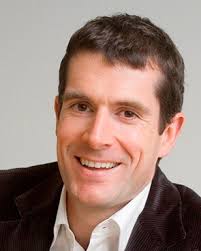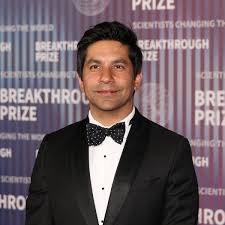
Described by The Spectator as “the most important adviser you’ve never heard of,” Chandra presents a paradox for our times. At just 40 years old, he sits at the right hand of Prime Minister Keir Starmer. He has been dispatched as a Special Envoy to the United States, tasked with protecting a £330 billion trading relationship. He has accompanied the PM to meet Donald Trump, brokered peace between a skeptical Labour government and big business, and is credited with helping to persuade the financial elite that Britain was “open for business” again.
Yet, try to find a photo of him in a magazine. Try to find a quotable quote. Try to find a single scandal. You will come up empty. Varun Chandra has no Wikipedia page. He is not in Who’s Who. He has built a career that spans the collapse of Lehman Brothers, the inner circle of Tony Blair, the secretive world of spy-agency corporate intelligence, and the top of government—all without leaving a footprint.
This is the story of the ultimate insider, the son of Indian immigrants who mastered the art of the British Establishment by refusing to ever look like he was trying to conquer it.
Table of Contents
ToggleThe Geordie Boy from Bihar
To understand Varun Chandra’s success, one must first understand the sheer improbability of his trajectory. He was born in 1984 in South Shields, a small seaside town in the north-east of England. At the time, it was a far cry from the globalist hubs of London or Washington D.C. It was, as Chandra himself has described it, “very poor”.
His parents had arrived from Bihar, a state in India that remains one of the poorest in the country. His father’s origin story reads like a motivational parable: he grew up in a village with no running water and no electricity, walking 12 miles to school, before eventually qualifying as a doctor and being recruited by the NHS. But the reality of immigrant life in 1980s Britain was harsh. Despite being a qualified physician, Chandra’s father “suffered a lot of racism” and struggled to assimilate. “He didn’t know how to go for a drink and talk about the rugby and the football,” Chandra recalled, noting that his father was often “passed over” for opportunities.
Meanwhile, his mother tried to contribute to the family budget by going door-to-door, café to café, trying to sell homemade samosas. She was routinely rebuffed. This was the crucible in which Varun Chandra was forged. He grew up with the weight of parental sacrifice on his shoulders, a feeling of “obligation to make the most of every opportunity.”
His first great escape came via education. Winning a scholarship to the Royal Grammar School in Newcastle, Chandra arrived with a “thick Geordie accent” and a culture shock. In a pivotal moment that shaped his philosophy, he was mocked by peers in his first English lesson. The teacher, Mr. Dickinson, stopped the class. Instead of moving on, he listened to Chandra, validated his answer, and “made what I had said sound clever and sound thoughtful”.
It was a lesson in the power of social validation. From there, he went to Magdalen College, Oxford, to read Philosophy, Politics, and Economics (PPE)—the standard ticket to the British elite. But unlike many of his peers who had been groomed for power since birth, Chandra arrived as an anthropologist. He looked at the world of Eton and Winchester, of old boys’ networks and gentlemen’s clubs, and he was not intimidated—he was “fascinated”. He was learning how the machine worked.
The Lehman Miracle and the Blair Apprenticeship
If Oxford was the theory, the late 2000s was the brutal practice. Chandra joined the investment bank Lehman Brothers. It was a logical step for a bright, ambitious graduate; he wanted the salary to put a deposit on a flat to prove to his parents he had “made it”.
But Chandra displayed an early instinct that would define his career: he looked at the senior people around him and decided he did not want their lives. He resigned. The date was approximately one week before September 15, 2008.
In a twist of fate that reeks of destiny, Lehman Brothers collapsed seven days later, triggering a global financial meltdown. Chandra had jumped from a sinking ship just before it hit the iceberg.
His next move was even stranger and more fortuitous. Through a friend of a friend, he heard that former Prime Minister Tony Blair was looking for a young banker. Blair, fresh out of office, was trying to build a commercial and philanthropic empire. On his first day on the job, as the world burned around Lehman’s corpse, Blair asked the 22-year-old Chandra to “walk me through leverage”—to explain the financial crisis.
For the next five-and-a-half years, Chandra became Blair’s consigliere. He flew around the world meeting presidents, prime ministers, billionaires, and oligarchs. He saw how the global elite operated. This wasn’t just a job; it was a masterclass in the social exercise of power. Blair, for all his controversies, possessed an unparalleled ability to talk to anyone, from a duchess to a cleaning lady. Chandra absorbed that fluidity, learning that competence and charm, when combined, are an unstoppable force.
The Spy Who Came In from the Cold
After his time with Blair, Chandra needed a platform. He found it at a company called Hakluyt & Company. For those who don’t move in intelligence or corporate raiding circles, Hakluyt is a mysterious entity. Founded in 1995 by former MI6 officers, it is a strategic advisory firm often described as a “retirement home for spies”. They don’t do hacking; they do networking. If a multinational corporation needs to know if a foreign minister is corrupt, or if a potential business partner in a dodgy jurisdiction is reliable, they call Hakluyt.
Chandra joined in 2013. By 2019, he was the Global Managing Partner. He was earning millions, advising 40% of the world’s largest corporations, and sitting atop a network of former intelligence officers and diplomats. He denies the “spook” connotations, insisting it was just high-end consulting, but the aura of secrecy suited him perfectly. In a world of loud billionaires, Hakluyt traded on discretion.
And yet, even in this secretive world, politics came calling. A photograph surfaced from the infamous “Partygate” era of Boris Johnson’s government. In it, Varun Chandra is seen in the Downing Street garden drinking wine on May 15, 2020. He insists he was visiting civil servants, but the photo is a testament to his porousness. He is a Labour man, a Blairite, yet he had access to the Johnson administration. He doesn’t burn bridges; he builds them.
The “Business Whisperer” Enters Downing Street
When Keir Starmer led the Labour Party back to power in 2024 after 14 years in opposition, he faced a massive problem: trust. The business community remembered Labour as the party of high taxes and nationalization. The Conservatives had spent years branding Starmer as a left-wing radical.
Enter Varun Chandra.
Before the election, Chandra was deployed as a secret weapon. Using his “innumerable high-level contacts,” he worked the phones, the yachts, and the boardrooms, assuring nervous financiers that Labour was safe, that Starmer was competent, and that Britain would not veer off a cliff. He was so effective that upon winning, Starmer immediately brought him into government as a Special Adviser on Business and Investment.
His impact was immediate. In the US, he was appointed the UK’s Special Envoy for Trade and Investment. When US Commerce Secretary Howard Lutnick wanted to signal that the “special relationship” was intact, he posted a photo with Chandra, calling him “an excellent representative of Great Britain and a trusted friend”.
On the domestic front, he is the man financiers call when they are worried. Whether it is the stability of Thames Water or the nuances of a tech IPO, Chandra is the bridge. As one former fellow pupil told The Spectator, “He’s the kind of bloke you can’t help but like, and he pays full and engaged attention to whoever’s talking to him, so it feels reciprocated”.
The Art of the Invisible Man
Why is Varun Chandra so effective? The answer lies in his background. He is the ultimate “cultural code-switcher.”
Because of his upbringing in South Shields, he can talk to the working-class voter. Because of his time at Lehman Brothers and Hakluyt, he can talk to the billionaire. Because of his Indian heritage, he speaks fluent Hindi and understands the developing world—he was photographed shaking hands with Narendra Modi during the Indian PM’s visit to the UK, standing between him and Keir Starmer. Because of his Oxford education, he fits in at the Garrick Club.
He possesses what sociologists call “double consciousness”—the ability to see the Establishment from both the inside and the outside. He once spoke movingly about a childhood friendship with a girl named Fiona Kelly. In a predominantly white, all-boys school, having a close female friend who was white saved him from being “pigeonholed” as “the brown kid”. It gave him “street cred” and taught him how to navigate social spaces where he didn’t initially belong.
That is the essence of his political role. He is a Labour man in a government that sometimes frightens the markets, yet he speaks the language of the markets. He is an immigrant’s son who advises the King’s government.
The Tightrope Walk
However, the path of the shadowy super-advisor is not without risks. Critics, as noted by The Spectator, argue that Chandra has “never run a proper business” and doesn’t know what it’s like to work on tight margins. There are also the inherent contradictions of his role: he owned a multi-million pound stake in Hakluyt, a firm that advises corporations on how to lobby government, while simultaneously sitting at the government’s right hand.
While government sources insist all protocols were followed and shares were bought back, the proximity of commerce and power is always a source of tension. In an era of populism, where figures like Nigel Farage rail against a “uniparty” of globalist elites, figures like Varun Chandra are easy targets. He represents the technocratic, Davos-managing, Blairite wing of politics that many voters have grown to distrust.
But for now, Keir Starmer needs him. The Labour government’s economic plans hinge on growth, and growth hinges on investment. As long as the money needs to flow, the man from Hakluyt will be whispering in the Prime Minister’s ear.
Varun Chandra has not written a memoir. He does not tweet his opinions. He has no Wikipedia page. He is proof that in the 21st century, the loudest voice in the room is rarely the most powerful. Sometimes, the most powerful person is the one you have to Google to believe exists. And even then, you might not find much.
Conclusion
In an era defined by digital bravado and political chaos, Varun Chandra stands as a relic of a vanishing world—the age of the quiet fixer. He is the ultimate proof that power does not require a podcast, a social media feed, or a Wikipedia page. It merely requires trust, competence, and the ability to speak every language of influence, from the factory floor to the boardroom.
From the working-class streets of South Shields to the oak-paneled offices of Downing Street, Chandra has navigated a path that no blueprint could have predicted. He survived the financial apocalypse, apprenticed under a transformative prime minister, mastered the art of corporate espionage, and returned to government as the indispensable man. His story is not just one of personal ambition, but of a shifting Britain—a country where the son of a Bihari doctor can become the gatekeeper of its economic future.
Yet, his very strength is also his vulnerability. In a populist age that distrusts the “blob” of unelected advisors, men like Varun Chandra operate on borrowed time. They are valued for their results, but resented for their invisibility. For now, however, as Keir Starmer navigates a precarious global economy and a fragile relationship with the United States, one thing is clear: when the world looks at Britain, they may see the Prime Minister. But when the Prime Minister needs a problem solved, he looks for the man who never wanted to be seen.
Varun Chandra has spent a lifetime learning how to pull the levers of power without ever touching the spotlight. And in doing so, he has become the most influential British political operative you have never heard of—a ghost in the machine who is, quite possibly, the one making it run.