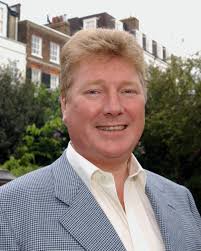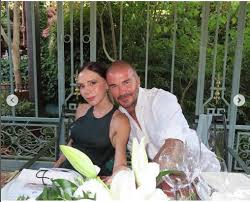
While the tabloids focus on the past, Skaiaa is busy shaping the future of emergency medicine in extreme environments. He is not just a doctor; he is a Helicopter Emergency Medical Service (HEMS) physician with the Royal Norwegian Air Force, a researcher pushing the boundaries of survival science, and a family man who has built a tranquil life in the Norwegian countryside. This is the story of the man behind the headlines—a story of resuscitation science, avalanche survival, and a life redefined.
Table of Contents
ToggleFrom Reality TV to Real Life: A Love Story Forged in the Cold
To understand the man Sven Christjar Skaiaa is today, one must first understand how he met his wife, Rebecca Loos. Their meeting was as unconventional as their life would become. In 2008, Skaiaa, a Norwegian doctor with a taste for adventure, was a contestant on the Dutch reality TV show 71° North (71 Grader Nord). The show’s premise was brutal: drop celebrities and everyday people into the wild, forcing them to survive the harsh Norwegian climate and race across the country.
Rebecca Loos, a Dutch-British model and former personal assistant to David Beckham, was also on the show. At the time, Loos was one of the most tabloid-famous women in the UK, having been at the center of a media firestorm over alleged affairs. She was seeking an escape from the relentless paparazzi and a chance to reconnect with her Dutch roots and a simpler life. The Norwegian wilderness, with its freezing rivers and treacherous glaciers, was an unlikely place for a romance to blossom, but it was precisely that environment that forged their bond .
On the show, the contestants are pushed to their absolute limits. In that setting, Skaiaa’s competence, calm demeanor, and deep connection to the natural world were on full display. Far from the glitz of Madrid or London, he represented a world of authenticity and resilience. The couple connected deeply, and by 2009, Rebecca was pregnant. She made the life-altering decision to leave her past behind and move to Norway to be with him .
They married in 2012 and settled into a life of “hygge” before the world knew what to call it. They live in a charming house in the hills outside Oslo with their two sons, Magnus and Liam, and their dogs. Rebecca has described their dynamic as a true partnership: she manages the home and the boys’ lunchboxes, while Sven handles the distinctly Norwegian tasks of snow-ploughing and tending to the barn . It is a portrait of domestic bliss that stands in stark contrast to the chaos they both left behind.
A Mind for Rescue: The Physician-Scientist
While his home life is a picture of peace, Sven Christjar Skaiaa’s professional life is defined by controlled chaos. He is a senior consultant in anaesthesiology, but his specialty lies far outside the quiet confines of a hospital operating room. Skaiaa is a physician with the Royal Norwegian Air Force’s Search and Rescue (SAR) service, specifically within the 330 Squadron . Based at various stations along Norway’s rugged coast, he is part of an elite team that scrambles in helicopters to pluck sailors from sinking ships in the North Sea, climbers from icy crevasses, and skiers from avalanche debris.
This job requires more than just medical knowledge; it requires the ability to perform complex medical procedures while hanging from a helicopter winch, in zero visibility, with rotors thundering overhead. Skaiaa doesn’t just perform these heroic acts; he studies them. He is a dedicated clinical researcher, and his academic work, often published in high-impact journals like Resuscitation and the Scandinavian Journal of Trauma, Resuscitation and Emergency Medicine, is changing how rescue teams operate worldwide .
His research focuses on the intersection of extreme environments and human physiology. He investigates the questions that arise when everything goes wrong in the wilderness. How do you perform perfect CPR on a moving stretcher being pulled behind a snowmobile? What happens to the body during “suspension syndrome” when a climber is left hanging motionless in a harness? And most importantly, how can we buy back precious minutes for someone buried alive in an avalanche?
The Science of Survival: Skaiaa’s Key Contributions
Sven Christjar Skaiaa’s research portfolio reads like a manual for survival in the Anthropocene. Here are three key areas where his work is making a tangible difference.
1. The Avalanche Breakthrough: The Power of Supplemental Air
For anyone caught in an avalanche, time is the enemy. Asphyxiation is the leading cause of death, as victims rebreathe their own carbon dioxide (CO2) within the small air pocket that forms around their face. The survival curve drops precipitously after just 15 to 20 minutes. Rescue services, even the best in the world, often cannot reach a victim in that window.
Skaiaa was the lead author on a groundbreaking randomized trial published in Resuscitation in 2022 that explored a simple but revolutionary concept: providing a small amount of supplemental air to the victim’s face immediately upon burial .
The study, conducted in the snowy environs of Hemsedal, Norway, involved healthy volunteers buried in a simulated avalanche. They were given a flow of just two liters per minute of air into their air pocket. The results were staggering. Subjects who received the supplemental air could maintain normal physiological parameters for a significantly longer period. Their end-tidal CO2 (the amount of carbon dioxide exhaled) remained stable, and their study completion rate was nearly three times higher than those without air (74% vs. 26%) .
This research provides a powerful, evidence-based argument for developing personal avalanche air supply systems. If a skier carries a small, lightweight device that activates upon burial, it could theoretically double or triple the “survival time,” giving rescue teams a fighting chance to arrive and extract a living person. This work moves avalanche rescue from a reactive to a potentially proactive stance.
2. Rethinking CPR in the Mountains
Performing high-quality cardiopulmonary resuscitation (CPR) is difficult enough in the back of a stationary ambulance. Doing it while strapped to a stretcher being towed by a snowmobile across bumpy terrain seems nearly impossible. Yet, for patients suffering from severe hypothermia-induced cardiac arrest, continuous CPR during evacuation to a hospital with extracorporeal life support (ECLS) is their only hope.
In a 2017 study published in the Emergency Medicine Journal, Skaiaa and his colleagues put this exact scenario to the test . They compared manual CPR against two different mechanical chest compression devices during transport on a snowmobile sledge. The findings were crucial for mountain rescue teams worldwide.
While manual CPR quality suffered significantly during the rough ride, the mechanical devices delivered consistent, high-quality compressions. The study concluded that while manual CPR is adequate for short-term, stable situations, mechanical devices are superior for prolonged evacuations over difficult terrain, ensuring that the patient’s brain and heart receive crucial blood flow until they can be rewarmed and resuscitated at a hospital.
3. Defining “Suspension Syndrome”
Rock climbers, industrial window washers, and rescue workers know the danger of being suspended motionless in a harness. After a period of immobility, they can suddenly lose consciousness, a phenomenon often loosely termed “harness hang syndrome.” But what is the actual mechanism? Without understanding the cause, effective treatment is impossible.
In 2023, as part of the International Commission for Mountain Emergency Medicine (ICAR MEDCOM), Skaiaa co-authored a definitive scoping review on “Suspension Syndrome” . The paper cut through decades of speculation and myth. It concluded that the syndrome is not simply about blood pooling in the legs (venous pooling), but is likely triggered by a neurocardiogenic reflex. Prolonged passive hanging can trick the body into thinking it is experiencing a massive hemorrhagic shock, triggering a paradoxical response:
instead of a racing heart, the vagus nerve is stimulated, causing a sudden and dangerous drop in heart rate (bradycardia) and blood pressure (hypotension), leading to a faint. This research provides clear guidelines for prevention (using well-fitted harnesses and activating leg muscles) and treatment (immediate extrication and supine positioning) .
The Unlikely Intersection of Tabloid Fame and Medical Innovation
It is this remarkable professional pedigree that makes Sven Christjar Skaiaa such a fascinating figure. The same hands that have authored papers on invasive arterial blood pressure monitoring during helicopter hoist operations are the ones pictured in the tabloids, simply living his life. The juxtaposition is striking.
When the Beckham Netflix documentary Beckham reignited global interest in the scandal of 2004, the press came knocking once more. Rebecca Loos spoke out, criticizing the documentary for dragging her name back into the spotlight and affecting her reputation. Inevitably, the spotlight fell on Sven again. He was once more cast in the role of the “husband,” the stoic Norwegian doctor who “tamed” the tabloid wild child.
But this narrative is a disservice to his achievements. While the media circus focused on a two-decade-old story, Sven Christjar Skaiaa was likely in the middle of a 24-hour shift, analyzing data for a study on intubated patients in hoist operations . The 2024 study he co-authored on this very topic is a perfect metaphor for his life.
It deals with the rarest, most complex, and highest-stakes medical scenarios: intubating a critically injured patient at the scene and then winching them, completely vulnerable, into a helicopter . It requires a cool head, immense skill, and a focus on the task at hand, blocking out all distractions. It’s the same focus he likely applies to his life in Norway.
A Legacy of Quiet Competence
Sven Christjar Skaiaa has built a legacy that extends far beyond his marriage. It is a legacy etched in the cold, hard data of medical journals and in the lives saved by the protocols he helps develop. He represents a new breed of physician—one who is equally comfortable in the operating theater, the scientific symposium, and the cramped cabin of a search and rescue helicopter battling a Force 10 gale.
For his sons, Magnus and Liam, he is simply “pappa”—the man who does the snow-ploughing and maintains the barn. They know their mother has a “naughty side,” but they are growing up in a home defined by stability, nature, and the quiet dedication of a father who spends his free time trying to make the world’s most dangerous places a little safer .
The story of Sven Christjar Skaiaa is a powerful reminder that people are never just one thing. He is not a footnote in a celebrity scandal. He is a dedicated husband, a loving father, and a medical pioneer. He is a man who has mastered the art of living two lives: one in the public eye, dragged there by history, and one in the scientific community, where his contributions are saving lives. In the end, it is the latter, the life of quiet competence and groundbreaking research, that will define his true legacy. He is, without a doubt, one of the most important doctors in extreme medicine that you’ve never heard of—unless you were looking for him
Conclusion.
In the final analysis, Sven Christjar Skaiaa defies easy categorization. To the outside world, he remains tethered to a tabloid past he never sought, forever framed as the husband who rescued Rebecca Loos from the spotlight. But those who look closer discover a far more compelling truth: Skaiaa has spent the last two decades quietly building a legacy that matters in ways celebrity gossip never could.
His is a life defined by meaningful dichotomies—the chaos of rescue missions versus the calm of country living, the precision of academic research versus the unpredictability of avalanche terrain, the public curiosity about his marriage versus the private dedication to his work and family. Through it all, he has remained steadfastly himself: a man more comfortable in a helicopter winch than a press conference, more interested in saving lives than managing perceptions.
As the years pass and the headlines fade, what endures is the science. The avalanche victim who survives because rescue teams understand the critical window for supplemental air. The hypothermic climber who reaches the hospital alive because mechanical CPR sustained them across the frozen terrain. These are Sven Christjar Skaiaa’s true contributions—not to celebrity culture, but to humanity itself.
In the end, the most remarkable thing about him may be this: he never needed the spotlight. He simply needed the mountains, his family, and the quiet satisfaction of a job that genuinely saves lives. And that, perhaps, is the happiest ending of all.