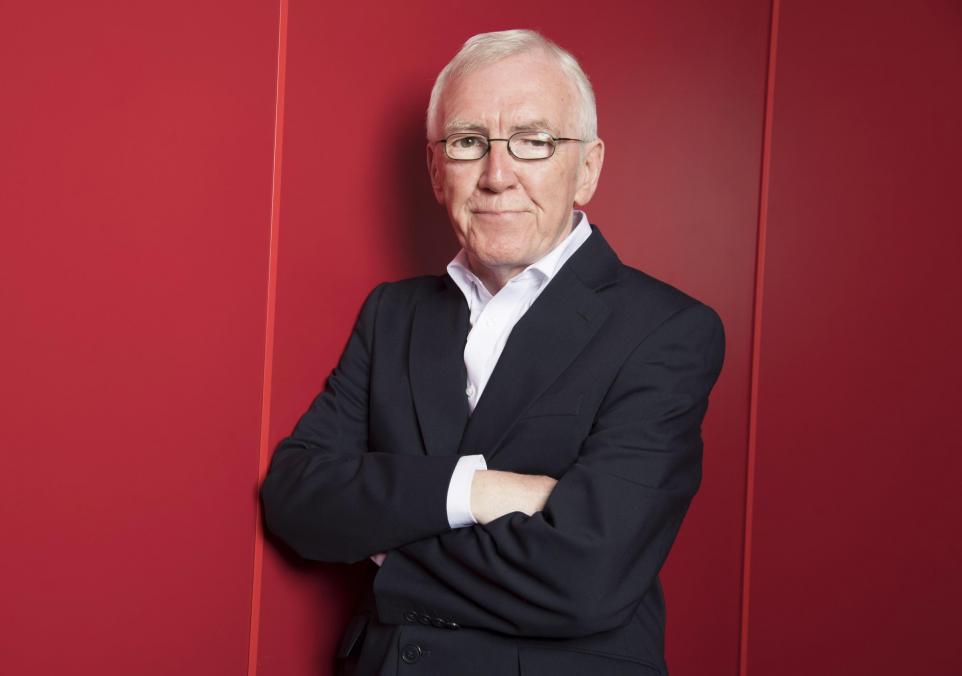
In the sprawling, emotionally-charged ecosystem of Scottish football journalism, few names elicit a reaction as visceral and immediate as Hugh Keevins. To the supporters of Celtic and Rangers—the Old Firm’s sprawling, passionate, and often warring fanbases—he is not merely a journalist. He is a pantomime villain, a controversialist, a lightning rod for criticism, and, paradoxically, an indispensable part of the weekly ritual that surrounds the game.
For decades, Keevins has been a constant presence, first in print and now most prominently on the airwaves of Clyde 1 Superscoreboard and in his columns for the Daily Record. To understand Hugh Keevins is to understand the unique nature of Scottish football media, a landscape where objectivity is often a myth, passion is the currency, and the line between reporting the news and becoming the news is perpetually blurred.
This is the story of Hugh Keevins—a man who has been called everything from a “Hun” by Celtic fans to a “Tim” by Rangers fans, often in the same week, proving that in the binary world of Glasgow football, if you are annoying both sides equally, you are probably doing your job exactly right.
Table of Contents
ToggleThe Making of a Voice: From Newspapers to the Airwaves
Hugh Keevins’ career predates the 24-hour news cycle and the relentless churn of social media. He is from an era where journalists built reputations over decades, forging contacts in the smoky corridors of football grounds and on first-name terms with managers who stayed in the job long enough to have a legacy.
His foundation was in print journalism, writing for national newspapers where the written word was his primary tool. However, it was the move to radio that transformed him from a respected (or respectedly despised) columnist into a true cultural institution. On Clyde 1’s Superscoreboard, Keevins found his perfect medium.
Radio is an intimate theatre of the mind, and Keevins’ voice—gravelly, authoritative, and dripping with Glaswegian inflection—was made for it. Alongside the late, great Stan Collimore, and later with hosts like Peter Martin and Gordon Duncan, Keevins became the anchor of the afternoon broadcast. He is the ringleader in a circus of opinions, tasked with corralling an often chaotic cast of former players and pundits while simultaneously fielding calls from a public that is invariably angrier and more partisan than anyone in the studio.
It is in this environment that the legend of Hugh Keevins was forged. He isn’t just a presenter; he is the perfect foil. He will state an opinion, often in a deliberately provocative manner, and then sit back and let the fireworks begin. He understands that silence on the radio is death, and conflict is drama.
The Pantomime Villain of the Old Firm
To the uninitiated, the hatred directed at Hugh Keevins from both sides of the Old Firm divide can seem bewildering. He is, after all, just a man with a microphone and a laptop. But in the Glasgow goldfish bowl, neutrality is often perceived as hostility.
Celtic fans will accuse him of being a “Rangers man,” poring over his columns for evidence of bias towards Ibrox. They will point to a turn of phrase here, a perceived leniency there, as proof positive of his allegiances. Rangers fans, with equal conviction, will label him a “Celtic man,” highlighting what they see as a chronic inability to be fair to their club. They will remember a critical column, a pointed question on air, and file it away as evidence of lifelong prejudice.
The beautiful irony, and the secret to Keevins’ longevity, is that he has successfully cultivated this ambiguity. He has rarely, if ever, publicly declared a personal allegiance to either club. By keeping his own counsel, he has become a blank canvas onto which fans project their own fears and frustrations. When he criticizes Celtic, he is a biased Rangers man. When he criticizes Rangers, he is a biased Celtic man. When he criticizes both, he is simply “a w*****” (a favorite, all-purpose term of endearment in the Clyde phone-ins).
He leans into this role with the gusto of a seasoned performer. He knows that a caller screaming “Keevins, you know nothing about football!” makes for compelling radio. He often baits them, responding with a dry wit that only serves to escalate their fury. This is the “panto” element—the booing and hissing are part of the show. The fans are the audience, Keevins is the villain they love to hate, and the resulting drama is the reason they tune in.
The Art of the Phone-In: A Masterclass in Provocation and Control
The modern football phone-in is a brutal arena. It is a place where raw emotion, unencumbered by fact-checking or perspective, is broadcast live for thousands to hear. Managing this environment requires a specific skill set—part therapist, part traffic cop, and part entertainer.
Hugh Keevins is a master of this chaotic art. He possesses an uncanny ability to steer the conversation without ever seeming to. He will let a caller vent for just long enough to be entertaining, but will cut them off the second they become repetitive, abusive in a personal (rather than performative) way, or simply boring.
His interjections are legendary. A simple “Aye, okay, thanks for that” delivered in a world-weary tone can be more devastating to a caller’s ego than a full-blown argument. He has a remarkable memory for the calls of regulars, often referring to them by name and recalling their previous rants, creating a sense of ongoing serialized drama. It’s not just a discussion about football; it’s a soap opera with recurring characters.
In an era of sterile, on-message media training, Keevins represents the opposite. He says what he thinks, even if it’s unpopular, even if it’s wrong. He is not afraid to admit he got something wrong, but he will never be browbeaten into changing his mind by a furious caller. This stubbornness, which infuriates his detractors, is also the source of his integrity. He is authentically himself, whether you like that self or not.
“He Knows the Score”: The Value of Institutional Memory
Beyond the bluster and the on-air confrontations, there is a serious journalist underneath. Hugh Keevins has covered Scottish football for over half a century. He has seen the rise and fall of countless managers, the financial implosions, the European nights, and the soul-crushing defeats. This institutional memory gives his commentary a depth that younger, social-media-focused pundits often lack.
When a crisis erupts at Ibrox or Parkhead, Keevins can contextualize it. He can compare it to similar situations from decades past, offering a perspective that calms the immediate hysteria. He has contacts throughout the game—from kitmen to chairmen—built on years of trust and, sometimes, mutually assured destruction. While younger journalists break stories on Twitter, Keevins often has the background and the analysis that gives those stories meaning.
His columns in the Daily Record are a blend of opinion, insight, and the kind of “in the know” gossip that fuels the fan forums. He might not be the first to break a transfer story, but his verdict on that transfer carries weight because of the decades of football literacy behind it. He understands the psychology of the Old Firm—the fear, the expectation, the crippling pressure—in a way that only someone who has watched it from the press box for fifty years can.
The Changing Landscape and The Last of His Kind
Scottish football media is changing. The dominance of traditional print and broadcast is being challenged by podcasts, fan channels, and independent bloggers. The new generation of pundits are often former players who are more polished, more brand-aware, and less likely to cause a stir. They speak in clichés and manage their public image with corporate precision.
Hugh Keevins is the antidote to this. He is the last of a dying breed: the professional controversialist. He understands that his job is not just to report on the drama, but to be a part of it. He is a catalyst. Without the Keevinses of the world, provoking the callers, winding up the fans, and asking the uncomfortable questions, the phone-in would just be a series of polite, forgettable conversations.
He represents a link to a grittier, more unvarnished era of journalism, one where personalities were larger than life and the relationship between the media and the supporters was more direct, more abrasive, and ultimately more honest. The sanitized world of club media channels, where every piece of content is a press release, needs a counterbalance, and Keevins provides it.
The Paradox of Indispensability
So, why is Hugh Keevins indispensable? It is not because he is always right. In fact, his value often lies in his capacity to be spectacularly, hilariously wrong, and then defend his position to the death. It is not because he is universally liked. He is arguably the most disliked man in Scottish football media.
Hugh Keevins is indispensable because he is the ultimate representation of the fan’s internal monologue. He gives voice to the doubts, the anger, the irrational confidence, and the bitter disappointment that every supporter feels. He articulates the arguments you have with your mates in the pub, the ones that go around in circles until last orders.
He is the man in the middle of the storm, refusing to take shelter. For Celtic fans, he is the annoying voice of reason when they want to be irrational, or the irrational voice of doom when they want reassurance. For Rangers fans, he is the same, but in reverse.
In a world of bland consensus, Hugh Keevins is a glorious, infuriating, and utterly compelling outlier. He is the pantomime horse that Scottish football loves to boo, but cannot do without. Because if you took him out of the equation, you wouldn’t just be losing a journalist. You would be losing the straight man in a comedy double act, the villain in the drama, and the voice that, for better or worse, has come to define the sound of Scottish football for a generation.
Whether he is stirring the pot, shutting down a irate caller, or penning a column designed to provoke, Hugh Keevins remains the undisputed king of the chaos. And long may he reign.
Conclusion
In the final analysis, Hugh Keevins is far more than a mere football journalist or radio presenter. He is a genuine Scottish football institution—a man whose career has mirrored the modern evolution of the game’s media coverage while remaining stubbornly, gloriously unchanged in his approach. He represents a vanishing breed: the unapologetic pundit who understands that sport, at its core, is theatre, and that the role of the media is not merely to report the script but to enhance the drama.
Love him or loathe him—and Scottish football fans are united only in their conviction that they do one or the other—his place in the fabric of the game is secure. He has become shorthand for a certain type of discourse: passionate, confrontational, and utterly without filter. When a controversial decision is made or a manager loses his job, a significant portion of the country instinctively wonders, “What will Keevins say about this?”
His legacy is complex. To his critics, he is a relic of a bygone era, a controversialist who thrives on division. To his admirers, he is the last honest voice in an increasingly sanitised industry, a man who says publicly what others only whisper in private. The truth, as with most things concerning Hugh Keevins, lies somewhere in the messy, noisy middle.
As the landscape of sports media continues to fragment into niche podcasts and carefully curated social media presences, the likes of Hugh Keevins may eventually fade from the scene. But while he remains, microphone in hand, stirring the pot and winding up the callers, Scottish football is richer for it. He is the commentator as participant, the journalist as provocateur, and the constant reminder that football, at its best, is never just a game—it is a conversation. And Hugh Keevins intends to have the last word