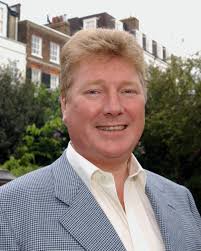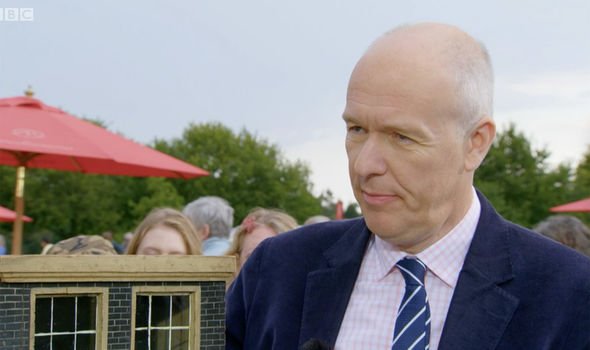
In the pantheon of acting royalty, one name stands apart, shrouded in a haze of cigar smoke, punctuated by booming laughter, and imbued with a kind of mercurial genius that defies simple categorization: Sir Michael Gambon. Yet, to truly understand the phenomenon, one must first acknowledge the shadowy figure that haunts his legacy—the phantom persona of “Fergus Gambon.” This is not a story of a separate individual, but of a myth, a persona, a mischievous alter-ego conjured by the man himself and his collaborators, most notably the comedian and director Matt Berry.
To explore “Fergus Gambon” is to embark on a journey into the very heart of Michael Gambon’s unparalleled artistry—an exploration of the porous boundary between the actor and the act, the man and the myth, the towering Shakespearean and the lovable, cantankerous hedonist.
Table of Contents
ToggleThe Birth of a Phantom: “Fergus” and the Art of Self-Mythology
The origin of “Fergus Gambon” is as delightfully absurd as the man who inspired it. The name first gained prominence in the cult British comedy series The IT Crowd, in the episode “Are We Not Men?” (2006). Matt Berry’s character, Douglas Reynholm, references his ruthless, globe-trotting, pleasure-seeking father as “Fergus Gambon.” Berry, a known admirer of Michael Gambon’s work and persona, later confirmed this was a tongue-in-cheek tribute, a blending of the actor’s formidable presence with a fictionalized, larger-than-life rogue.
But the genius of “Fergus” lies in how perfectly it captured an essential, if amplified, truth about Michael Gambon. It was not a creation ex nihilo; it was an exaggeration of the stories that already swirled around the real man. Gambon was famously private yet publicly exuberant, a titan of the stage who shunned intellectual pretension. He was a collector of vintage cars, clocks, and firearms; a raconteur with a love for fine wine and company; a man who preferred the workshop of a master restorer to the green rooms of the National Theatre.
“Fergus” became the hyperbolic embodiment of this side of Gambon—the epicurean, the bon vivant, the dangerous uncle with a twinkle in his eye. It was a myth he seemed to delight in, never officially endorsing but never denying, allowing it to become part of his own legend. In doing so, Gambon participated in a grand theatrical tradition: the construction of a public self.
From Gauntlet to Galaxies: The Chameleonic Range of Gambon
To appreciate the joke of “Fergus,” one must first stand in awe of the sheer range of the actor beneath the myth. Michael Gambon’s career was a masterclass in transformative power, devoid of a recognisable “trademark” style, yet instantly compelling in every incarnation.
The Stage Titan: Gambon’s roots were in the classical theatre, where he was hailed as the natural successor to his friend and mentor, Laurence Olivier. His performance as King Lear for the Royal Shakespeare Company in 1982 was a landmark, a portrayal of such raw, monumental anguish that it left critics and audiences shattered. His Othello (1990) was a study in simmering, tragic nobility.
Yet, even in these Everest roles, he brought a startling physicality and emotional immediacy that stripped away centuries of dust. He didn’t declaim; he embodied. He was a working-class Dublin boy who conquered the most elite citadels of English culture not by aping its manners, but by overwhelming it with truth.
The Screen Presence: On screen, his chameleonic ability allowed him to dominate in fragments. He could be the terrifying, simmering gangster Eddie Temple in Layer Cake (2004), whose quiet menace was more powerful than any shout. He could be the wistful, soulful King George V in The King’s Speech (2010), radiating both imperial dignity and paternal vulnerability.
He was the hilariously pompous and deluded Squire Hamley in Wives and Daughters (1999), and the deeply moving Professor Dumbledore in the Harry Potter films, inheriting the role from Richard Harris and making it his own—infusing it with a blend of gentle warmth, sharp wit, and palpable gravitas. Each role was distinct, yet each was undeniably Gambon: a presence that filled the frame, a voice that commanded the air.
The Voice of God (and Everything Else): Perhaps no instrument was more iconic than his voice. It was a thing of geological wonder—a rich, gravelly bass that could rumble like distant thunder or soften to a warm, conspiratorial whisper. It was the voice that narrated The Book of Kells, that brought to life Dickens’ Little Dorrit, and that, as the Great Voice of The Prisoner (2009) remake, asked the existential questions. It was a voice that could sell the grandeur of a BBC documentary or the absurdity of a Heston Blumenthal cooking show parody. It was, in short, the perfect vehicle for both the profound and the profoundly silly.
The Alchemy of Contradiction: Where “Fergus” Meets the Craft
The myth of Fergus Gambon works because it highlights the central contradiction that made Michael Gambon so fascinating: the seamless fusion of high art and low fun, of monumental discipline and rampant irreverence.
He was an actor who took his craft deadly seriously, famously stating he “just learns the lines and hope for the best”—a disingenuous quip that masked a deep, instinctive technique. He was a methodical builder of character, but he wore that labour lightly. He rejected the term “method actor,” preferring the analogy of a craftsman. “I’m a mechanic,” he said. “I open the bonnet, I see how it works, and then I drive it.”
This is where the hedonistic spirit of “Fergus” seamlessly integrates. Gambon’s genius lay in his profound understanding of human appetite—for power, for love, for revenge, for a good laugh, for a fine claret. He could channel King Lear’s hunger for filial love or Eddie Temple’s hunger for control with the same conviction he brought to a character’s desire for a pint. He understood that humanity is driven by its desires, both noble and base. The “Fergus” persona, the lover of speed and pleasure, was just an extension of this understanding—a celebration of the sensual, material world that his characters often inhabited.
His legendary appearances on talk shows, particularly on Parkinson, are testament to this blend. He would sit, often with a mischievous grin, telling outrageous, possibly apocryphal stories about driving racing cars too fast or practical jokes backstage, his voice a rolling symphony of amusement. Then, without missing a beat, he could discuss the technical challenges of a Chekhov play with piercing intelligence. He refused to be put on a pedestal, yet his talent ensured he could never truly step off it.
The Legacy: An Indelible Mark on the Craft
Michael Gambon’s passing in 2023 left a void of a particular shape—one that could accommodate both cosmic tragedy and earthbound comedy. His legacy is not merely a list of iconic roles, but a philosophy of performance.
He redefined what a “serious actor” could be, demolishing the stereotype of the fragile, introspective artist. He proved that power could come from robustness, that depth could coexist with a roaring laugh, and that the greatest artistry could look, from the outside, like a very well-lived life. He was the antithesis of the distant star; he was emphatically, gloriously present.
The enduring joke of “Fergus Gambon” is, in its way, the ultimate tribute. It is a fan’s loving caricature that the subject himself was cool enough to tacitly endorse. It ensures that while we remember Gambon the actor for his Lear, his Dumbledore, and his George V, we also remember Gambon the man—or at least, the glorious myth of the man—as a charismatic force of nature, a lover of life’s rich pageant, a towering oak of talent with roots deep in the soil of real human experience.
In the end, Fergus Gambon is not a separate entity. He is the echo of Michael Gambon’s laughter in a pub after a show. He is the glint in the eye of a vengeful king. He is the rumble of a voice that could command a kingdom or order a round for the house. He is the delightful, necessary reminder that genius does not have to be austere; it can be generous, expansive, and uproariously fun. To seek Fergus is to find Michael, in all his magnificent, contradictory, and utterly unique glory—a true sorcerer of the stage and screen, whose most brilliant performance may have been the captivating, enigmatic act of being himself.
conclusion.
In the final analysis, the mysterious “Fergus Gambon” was never a separate person, but a perfect and affectionate tribute to the glorious contradictions of the man himself. The myth captured the essence of Sir Michael Gambon’s unparalleled legacy: that towering, classical genius could walk hand-in-hand with robust, earthy joy. He taught us that the deepest truths are often spoken in a gravelly rumble edged with laughter, and that the most memorable characters—whether kings, gangsters, or wizards—are forged from an understanding of both nobility and appetite.
The phantom of Fergus ensures that Gambon is remembered not only as a master of his craft, but as a master of life—a true original whose profound artistry was matched only by his profound humanity