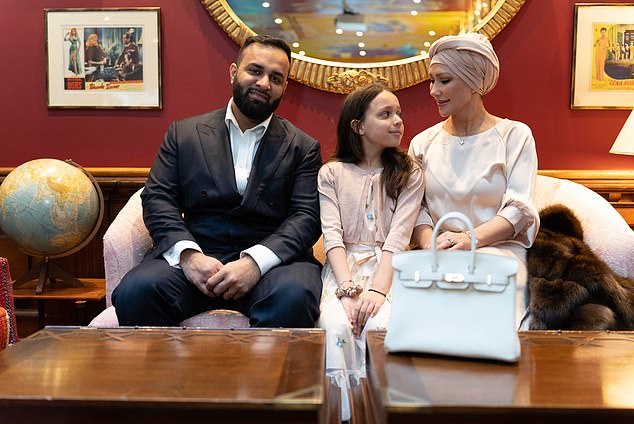
In the sprawling, interconnected tapestry of human stories, certain names resonate not just for individual achievement, but for the profound, echoing legacy they leave in the generations that follow. Emily Abraham is one such name. To search for “Emily Abraham children” is to embark on a quest not for tabloid fodder, but for a deeper understanding of how values, passions, and quiet strength are transmitted. It is to explore a narrative where the children are not merely offspring but living chapters in an ongoing story of artistic vision, social conscience, and profound humanity. Their story is less about celebrity and more about the subtle, powerful ways a parent’s essence shapes the world through their descendants.
Table of Contents
ToggleWho is Emily Abraham? Establishing the Foundation
To understand the children, one must first appreciate the soil from which they grew. Emily Abraham (often known in conjunction with her husband, the renowned artist and sculptor William Abraham) is a figure whose life has been a master class in integrated living. She is not a standalone celebrity, but rather a pivotal force—a muse, a partner, a stabilizer, and an activist in her own right.
For decades, Emily stood beside William, not in his shadow but as part of a collaborative creative nucleus. Their home was not just a dwelling but a sanctuary and a studio, a place where monumental sculptures were conceived and global humanitarian projects were planned. Emily’s role was multifaceted: she was the archivist of William’s vast artistic output, the logistical maestro behind complex international installations, and the emotional anchor for a household pulsating with creative energy. More importantly, she was the moral compass, deeply involved in the philanthropic endeavors that defined their later years, particularly their work with orphanages and art education programs in underserved communities across Asia and Africa.
This environment—steeped in the smells of clay and metal, alive with discussions on form and social justice, and frequented by a global diaspora of artists, thinkers, and humanitarians—was the world Emily and William built. This is the inheritance, far more valuable than any material wealth, that they passed on to their children: Alexander, Chiara, and Mateo Abraham.
The Abraham Children: Individuals Forged in a Unique Crucible
The Abraham children were raised with a paradoxical privilege: the privilege of extraordinary exposure grounded in the imperative of ordinary humility. Their upbringing was a deliberate blend of global citizenship and rooted responsibility.
1. Alexander Abraham: The Engineer of Legacy
The eldest, Alexander, inherited his parents’ formidable sense of duty and systematic mind. Rather than pursuing the spotlight of the art world, he channeled the family’s ethos into the framework of law and nonprofit management. Educated at Stanford and Yale Law, Alexander became the legal and architectural guardian of the Abraham legacy. He is the quiet force behind The Abraham Foundation, the non-profit entity that manages the vast artistic estate, ensures the preservation of public sculptures worldwide, and, most crucially, continues the humanitarian work his parents began.
For Alexander, being “Emily Abraham’s child” meant internalizing her meticulous care and strategic compassion. He oversees scholarship programs for young sculptors from conflict zones and manages the “Art as Sanctuary” initiative, which installs contemplative sculptures in refugee camps and hospitals—a direct extension of his mother’s belief in art’s healing power. His leadership is not flamboyant but profoundly effective, a testament to Emily’s lesson that true service is often administrative and unseen.
2. Chiara Abraham: The Voice of the Narrative
If Alexander is the structure, Chiara is the voice. The middle child and only daughter, Chiara embodies Emily’s intuitive empathy and expressive grace. A writer and documentary filmmaker, she has taken the family’s private narrative and translated it into universal stories. Her acclaimed documentary series, “The Silent Language of Form,” explores how public sculpture shapes community identity, featuring her father’s work not as its centerpiece, but as one thread in a global tapestry.
Chiara’s work is deeply infused with her mother’s spirit. Emily’s role as the family’s historian—the keeper of sketches, letters, and stories—found its ultimate expression in Chiara. She often speaks in interviews of long afternoons with her mother, sorting through archives where Emily would not just name a date, but recount the human story behind each piece: the refugee camp where a sketch was drawn, the local artisan who taught a technique. Chiara’s mission is to tell these human back stories, arguing that “art is not made by icons, but by people in rooms, with loves and worries, who choose to create.” This empathetic lens is pure Emily.
3. Mateo Abraham: The Hands-On Continuation
The youngest, Mateo, represents the most direct artistic continuation. A talented sculptor in his own right, he apprenticed in his father’s studio from childhood. However, his path was uniquely shaped by Emily’s hands-on activism. While he possesses his father’s technical prowess, the soul of his work is often attributed to his mother’s influence. Mateo runs a community workshop in their hometown, focusing on recycled materials and offering free classes to at-risk youth.
Mateo’s project, “Forged from Scraps,” is a living embodiment of Emily’s principles. He takes discarded industrial metal and transforms it into elegant, small-scale sculptures, sold to fund art supplies for schools. He speaks not of isolated genius, but of collective making. “My mother taught me that the studio isn’t a castle,” he said in a recent profile. “It’s a kitchen. Everyone should be able to come in, get their hands dirty, and leave nourished.” This democratization of art is Emily’s most profound lesson, enacted through her son’s skilled hands.
The Unspoken Curriculum: Lessons from Emily
The “education” Emily and William provided was not in formal lectures, but in a lived curriculum:
-
Art as Service: The children learned that artistic talent was not a passport to elitism, but a tool for connection and healing. They traveled with their parents to project sites, seeing firsthand how a sculpture could become a focal point for community pride in a ravaged village.
-
Humility in Action: Despite their parents’ renown, the Abraham children were expected to contribute to the household, engage with visitors from all walks of life as equals, and understand that their famous last name was a responsibility, not a trophy.
-
The Integrity of Silence: In an age of over sharing, Emily modeled a dignified privacy. The family’s intimate life was cherished and protected. This taught the children to differentiate between what is sacred (family, inner life) and what can be shared for public good (their work, their advocacy).
-
Resilience Through Unity: The family faced its trials—critical reviews, the physical demands of large-scale work, the emotional toll of humanitarian projects. Through it, Emily was the constant, showing that resilience is built not on stubbornness, but on the flexible, enduring strength of familial bonds.
The Legacy in Action: A Ripple Effect Across Generations
Today, the question “What happened to Emily Abraham’s children?” finds its answer not in a single location or headline, but in a multiplier effect of positive action. They are not caretakers of a static museum, but cultivators of a living ecosystem.
-
Alexander’s son, a social psychologist, is studying the impact of public art on post-traumatic stress in communities.
-
Chiara’s daughter, inspired by her grandmother’s archives, has started an oral history project, recording the stories of immigrant artisans in her city.
-
Mateo’s workshop has spawned three similar community studios run by his former students.
Emily Abraham’s legacy, therefore, is not confined to her own life or even to her children’s. It is fractal, expanding through her grandchildren and the countless individuals touched by the Foundation’s work. Her “children” are both biological and metaphorical—they are the young artists given a chance, the communities that find solace in a sculpture, the students who see art not as a luxury but as a language.
Conclusion: The Quiet, Unbreakable Thread
In a culture obsessed with fame, fortune, and public drama, the story of Emily Abraham’s children is a necessary corrective. It is a testament to the power of a quiet, principled life. Emily did not seek fame; she sought meaning. And in doing so, she raised children who understand that the most enduring legacy is not a name in lights, but a pattern of kindness etched into the world, a shape of compassion cast in enduring form.
The mystery of “Emily Abraham children” is ultimately no mystery at all. They are the living, breathing manifestations of a love that was both tender and tough, a creativity that was both visionary and practical, and a conscience that was both global and intimately personal. They are her greatest masterpiece—not as copies of their parents, but as original works, created in the studio of her extraordinary heart, continuing to shape the world with the tools she gave them: integrity, empathy, and an unwavering belief that art, at its best, is an act of love for humanity. Their story reminds us that the most powerful inheritance is not an estate, but an ethos; and the most successful parenthood is measured not by the children’s proximity to the parent’s shadow, but by the distance they travel, illuminated by its light.