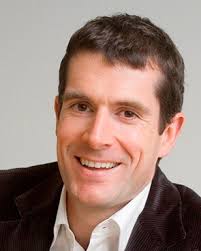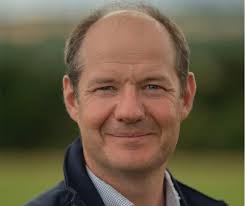
If you have watched Clarkson’s Farm, you know the scene. Jeremy Clarkson, buzzing with the manic energy of a man who has just invented fire, bursts into a barn or an office. He has a plan. It is usually grandiose, frequently illegal under local planning laws, and almost always financially ruinous. Standing opposite him, leaning against a dusty filing cabinet with the patience of a rural saint, is Charlie Ireland.
Clarkson calls him “Cheerful Charlie”—a nickname so dripping with sarcasm it could be used to fertilize a field. In the world of streaming television, Charlie plays the straight man: the agronomist, the land agent, the walking encyclopedia of red tape. He is the man who looks at a £100,000 tractor and sees a tax liability; he is the voice who reminds the audience that farming isn’t just about cute lambs and sunsets, but about single farm payments, nitrates directives, and the heartbreak of a £144 profit for a year’s back-breaking labor .
But to reduce Charlie Ireland to merely the “Bearer of Bad News” is to miss the point of his quiet fame. He has become the most famous agronomist in the world, not because he is loud, but because he is real. Behind the calm exterior of the Clarkson’s Farm star lies a story of profound professional dedication, a tragedy that shaped his character, and a surprisingly radical philosophy about the land.
Table of Contents
ToggleThe Making of a Land Agent
Long before the cameras rolled at Diddly Squat Farm, Charlie Ireland was already a fixture in the British agricultural establishment. Born in June 1977, Charlie didn’t fall into farming by accident; he was bred for it . He studied Agriculture at the University of Nottingham, a choice that laid the scientific groundwork for his later career .
Unlike the romanticized version of farming as a poetic struggle against the rain, Charlie’s specialty is the “dismal science” of rural economics. For two decades, he worked as an agricultural consultant for Strutt & Parker before becoming the Managing Partner of Ceres Rural . He is a registered agricultural valuer and a qualified agronomist. In layman’s terms, he is the person farmers call when they need to know not just how to grow wheat, but whether growing that wheat will bankrupt them.
When Jeremy Clarkson bought the 1,000-acre plot that would become Diddly Squat Farm in 2009, Charlie was the expert brought in to make sense of it . He met the former Top Gear host not as a fan, but as a professional. “My first impression was that he was very welcoming and focused, obviously interested in what the farm was and what it was going to do,” Charlie recalled .
That relationship was strictly business until 2019. When the tenant farmer retired, Clarkson decided to stop being a landowner and start being a farmer. He needed a guide. When the producers of Amazon came calling to film the chaos, Charlie was hesitant. “It didn’t sit right with me,” he admitted. Yet, he relented, and the reluctant star was born .
The Art of Saying “No”
Why do viewers love Charlie? In an era of reality TV defined by screaming matches and manufactured drama, Charlie Ireland offers a masterclass in quiet, professional restraint.
His role on the show is functionally to say “no.” Jeremy wants to store hay with fertiliser? Charlie says no—it’s a fire risk. Jeremy wants to use a specific pesticide? Charlie says no—it’s banned. Jeremy wants to open a restaurant without planning permission? Charlie grimaces and starts talking about legal fees .
In one of the series’ most defining moments, Charlie reveals that he is negotiating the price of grazing rights for Clarkson while simultaneously representing the other party. “I do realise there is a slight conflict,” he deadpans, without a flicker of guilt . It is this intellectual honesty that sets him apart. He is not a “yes man.” In the echo chamber of Clarkson’s ego, Charlie is the soundproofing.
Clarkson himself recognizes the necessity of this friction. Despite the sarcastic nickname, the former broadcaster respects the agronomist’s skill. “Jeremy’s ability to tell a story is absolutely phenomenal,” Charlie once said of his boss. “I use 1,000 words, he uses six, and everybody understands immediately what he’s saying” . It is a reciprocal respect: Charlie provides the facts; Clarkson provides the poetry.
But perhaps the most profound moment of the entire series occurs at the end of Season 1. After a year of chaos, floods, and lambing, Charlie sits Clarkson down at a laptop. The profit for the year is displayed on the screen: £144 . Clarkson is stunned. The audience is stunned. Charlie, however, is not. He delivers the number not with glee, but with a sorrowful dignity that speaks for every farmer in the UK who is working 80-hour weeks just to break even.
The Heartbreak Behind the Clipboard
If you only know Charlie from television, you see a man obsessed with bureaucracy. But in 2025 and 2026, Charlie Ireland revealed a layer of his life that puts his stoic demeanor into sharp focus. It is a story about Motor Neurone Disease (MND), and it explains the deep well of empathy behind his eyes.
In early 2011, Charlie’s father, Christopher, passed away from MND. He was only 67. The tragedy unfolded with a cruel, slow pace. It began at a friend’s wedding in September 2007. Charlie’s father came off the dance floor complaining his foot felt “a bit floppy” .
What followed was a slow disintegration that Charlie witnessed firsthand. He took his father to the Queen’s Medical Centre in Nottingham, where the diagnosis was confirmed . MND is a terrifying condition because it traps the mind inside a failing body. Christopher lost the use of his feet, then his arms, then his legs, eventually becoming wheelchair-bound.
“The psychological impact is immense,” Charlie told The Telegraph. “He raised his voice now and again, which was different to when we were growing up” . The family rallied. The Lincolnshire branch of the MND Association provided respite care and overnight support, allowing the family to sleep. “It gives the family release,” he said .
Christopher died on February 26, 2011, after meeting his first two grandchildren. For years, Charlie grieved privately. But his fame from Clarkson’s Farm gave him a platform he never asked for—and he decided to use it.
He became an ambassador for the Motor Neurone Disease Association . Teaming up with his co-star Kaleb Cooper (who taught him how to use Instagram), Charlie launched a running account called @runcheerfulcharlie . He has since run marathons and grueling distance challenges to fundraise for MND research and care, specifically honoring the legacy of rugby league legend Rob Burrow.
Knowing this history changes how you watch the show. When Charlie looks at Clarkson with that furrowed brow and sighs, it isn’t annoyance. It is the look of a man who has seen real suffering and knows that a failed crop or a broken tractor is not the end of the world.
Farmer, Politician, and the Fight for the Future
As the series has progressed, Charlie’s role has evolved from on-screen advisor to off-screen statesman for agriculture. By Season 3, he wasn’t just telling Jeremy where to plant potatoes; he was accompanying Kaleb Cooper to 10 Downing Street to meet then-Prime Minister Rishi Sunak to discuss getting young people into farming . He also met with Prince William to discuss mental health struggles in the agricultural community .
When the Labour government proposed changes to Inheritance Tax relief for farms—dubbed the “tax grab” by critics—Charlie became an unofficial spokesman. He penned an op-ed in The Times titled “Labour’s tax raid is the worst crisis I’ve seen in farming” . He mobilized his significant social media following to fight the policy.
This transition from background character to industry lobbyist is unique to Charlie. He understands that farming is not a lifestyle choice; it is a strategic industry vital to national security. He uses the platform of the show to tell the public: If you like eating, you need to support your farmers.
Why We Love Cheerful Charlie
In an age of curated perfection, Charlie Ireland is refreshingly analog. He lives in Oxfordshire, not far from Blenheim Palace. His kitchen is the quintessential English village idyll: two Labradors sleeping by an Aga stove, a cricket bat resting against the wall . He jokes that his sons are now faster and stronger than him and that they hit a cricket ball farther .
He is bewildered by his fame. When stopped for selfies, he says, “it only takes 30 seconds, doesn’t it? I’m working on my smile” . On Reddit, a popular thread is simply titled, “Who is Charlie Ireland?” because despite being on television, he remains an enigma .
The answer to that question is complex. Charlie Ireland is the reality check. He is the man who tells the truth. He is the son who watched his father fade away and chose to fight the disease rather than hide from the memory. He is the cricketer, the runner, the family man.
Jeremy Clarkson might call him “Cheerful Charlie” as a joke, but perhaps the joke is on Clarkson. Charlie is cheerful—not because he ignores the problems, but because he faces them head-on. He finds joy in the solving of problems, in the structure of the law, and in the honest toil of the soil.
As Clarkson’s Farm barrels toward its fifth season, the show has many stars. There is the bombast of Clarkson, the ambition of Lisa, and the skill of Kaleb. But at the center, holding the whole fragile enterprise together with a calculator and a kind word, is Charlie Ireland. He is the anchor in the storm—and that is a reason to be cheerful.
About the Author
This article synthesizes biographical data, personal interviews, and public records regarding Charlie Ireland. He remains a working partner at Ceres Rural and an ambassador for the Motor Neurone Disease Association. Season 5 of Clarkson’s Farm is currently available on Amazon Prime Video.
Conclusion
In a television landscape hungry for loud personalities and manufactured conflict, Charlie Ireland stands as a quiet revolution. He is not a farmer by birthright nor a performer by trade, but an agronomist and land agent who stumbled into the spotlight simply by doing his job with integrity. Behind the “Cheerful Charlie” nickname lies a man of profound depth—a grieving son who channeled tragedy into advocacy, a professional who speaks truth to power, and a reluctant star who uses his platform to fight for the future of British farming.
Charlie reminds us that true strength isn’t loud; it is the calm, steady voice that tells you the difficult truth and then helps you figure out what to do next. He is, without question, the conscience of Clarkson’s Farm—and perhaps the most genuinely cheerful pessimist television has ever known