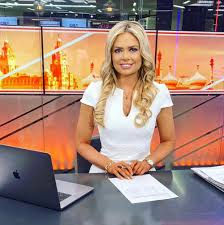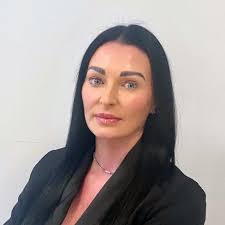
To understand Moshiri fully is to explore a tapestry woven with privilege, immense talent, a legacy of political dissent, and the controversies that arise when these worlds collide. This article delves deep into the life, career, and nuanced identity of Azadeh Moshiri, drawing on her educational background, her rapid rise through the ranks of global media, and the discussions surrounding her path to success.
Table of Contents
ToggleA Foundation of Journalism and Business
Born into a British-Iranian family, Azadeh Moshiri’s identity was shaped by two very distinct forms of influence: media and high finance. She is the daughter of Farhad Moshiri and Nazenin Ansari. Her father, Farhad Moshiri, is a billionaire businessman and the majority shareholder of Everton Football Club. Trained as an accountant, he amassed his fortune, valued at around £2.4 billion by Forbes, through ventures in metallurgy and mining, largely in partnership with Russian oligarch Alisher Usmanov in the 1990s . This background places Azadeh in the upper echelons of British economic privilege.
However, her mother represents the other side of her heritage. Nazenin Ansari is a highly respected broadcast journalist and a prominent commentator on Iranian affairs. She has provided expert analysis for major networks including the BBC, CNN, and Sky News . Growing up with a mother who was a voice for Iranian current affairs likely provided Azadeh with an intimate, behind-the-scenes look at the world of international news gathering. This blend of a high-powered business environment and a passionate journalistic household created a unique foundation for her career.
This duality is further reflected in her linguistic abilities. Moshiri is a polyglot; she is a native or bilingual speaker of English and French, holds professional working proficiency in Farsi (the language of her heritage), and has elementary knowledge of Spanish .
Education and the Duke University Experience
Azadeh Moshiri’s path to journalism began with a strong liberal arts education. She attended Duke University in North Carolina, graduating in 2012 with a degree in English . Her time at Duke was not just about academics; it was also characterized by a deep commitment to volunteer work and community engagement, a theme that runs throughout her professional profile.
While at Duke, Moshiri was actively involved in tutoring and mentorship. She served as a tutor with the America Reads and America Counts program for nearly three years, helping children in Durham, NC, with their literacy and math skills . She also held leadership roles in campus organizations, such as Public Relations Co-Chair for the Duke Culture Initiative. This blend of humanities study and hands-on volunteer work suggests an early inclination toward storytelling and social impact, long before she stepped in front of a camera .
The Road to the BBC: CNN and Professional Training
Before becoming a familiar face on the BBC, Moshiri honed her skills in the fast-paced environment of cable news. She joined CNN International, where she worked as a producer. A significant part of her role involved working on the acclaimed program Amanpour, hosted by the legendary journalist Christiane Amanpour .
This experience was invaluable; it placed her at the center of global political discourse, covering high-profile interviews with world leaders and producing content for an international audience. Her work in broadcast journalism during this period contributed to her earning an Emmy Award and another Emmy nomination, marking her as a journalist of exceptional capability early in her career .
Following her time at CNN, Moshiri also gained experience outside of pure journalism, working as a Senior Consultant at FTI Consulting, which provided her with insight into strategic communications . However, the pull of news was stronger. To solidify her credentials in the British media landscape, she pursued and obtained the NCTJ Diploma in Journalism—often referred to as the “Gold Standard” for journalists in the UK—certifying her proficiency in media law, public affairs, and shorthand .
Her entry into the BBC was through the standard recruitment process as a junior producer. By 2022, she had risen through the ranks to become an on-air reporter and senior journalist for BBC World News . This trajectory—from producer at CNN to senior correspondent at the BBC—demonstrates a clear and merit-based progression within two of the world’s most demanding news organizations. Most recently, she has taken on the prestigious and demanding role of BBC Pakistan Correspondent, covering political turmoil, security issues, and humanitarian stories in the South Asian nation .
The Human Element: Reporting from the Field
Beyond the titles and accolades, Azadeh Moshiri’s work is defined by its human-centered approach. Her reporting goes beyond the political analysis to capture the profound human consequences of global events. A prime example of this is her coverage of the UK government’s data breach involving Afghan interpreters.
In a report for the BBC, Moshiri covered the story of an Afghan man, a member of the elite “Triples” force who worked alongside British troops, whose personal details were accidentally leaked by the UK government. The man and his family were subsequently detained in Pakistan, facing imminent deportation back to Afghanistan. Moshiri’s report gave a voice to the man’s son, who poignantly stated that his family “may be killed if deported” .
This type of reporting is characteristic of her style. Whether covering political changes, natural disasters, or social inequality, she focuses on amplifying the voices of ordinary people caught in extraordinary circumstances . Her ability to speak Farsi and her deep understanding of the region’s culture allow her to access stories and build trust with sources in a way that many Western journalists cannot.
The Philanthropic Thread: A Life of Service
Interwoven with her professional life is a consistent and significant thread of volunteerism. Azadeh Moshiri’s LinkedIn profile reads less like a typical media professional and more like a dedicated community organizer. Her volunteer work spans continents and causes, focusing heavily on children, health, and human rights.
-
Healthcare: She volunteered for nearly two years at the Chelsea and Westminster Hospital NHS Foundation Trust as a nursing assistant, dedicating three hours a week to patient care .
-
Youth Mentorship: She has been a BBC Young Reporter Ambassador for over five years, championing media skills and career advice for children aged 11 to 18 . She also volunteered with Big Brothers Big Sisters, a mentoring organization for youth.
-
Human Rights & Iranian Heritage: Moshiri has volunteered his time to organizations connected to her Iranian heritage, including the Popli Khalatbari Charity Foundation (where she served on the young committee) and the Kahrizak Charity Foundation, which cares for the elderly and disabled in Iran .
This extensive volunteer history paints a picture of a journalist deeply committed to social equity and hands-on service, values that likely inform her compassionate approach to storytelling.
The Mentorship Controversy: A Question of Social Mobility
No profile of Azadeh Moshiri would be complete without addressing the controversy that brought her name into the headlines of British tabloids in late 2022. The controversy centers on her participation in the John Schofield Trust, a charity established in memory of a BBC journalist killed in Croatia.
Moshiri joined the Trust’s mentoring scheme in 2018. At the time, the Trust’s remit was broadly to support the development of talented young broadcast journalists . In 2019, the organization changed its focus to become a “social mobility charity,” specifically aiming to help young people from “less privileged backgrounds” and “under-represented” groups break into the industry .
In April 2022, Moshiri was featured in a charity press release celebrating her new on-air role. She was quoted as saying her career “would never have happened without the mentors I’ve had along the way” . However, given that she had already been working at CNN and the BBC, and given her family’s immense wealth and media connections (her mother being a prominent journalist and her father a billionaire), her inclusion in a social mobility scheme raised eyebrows.
Critics pointed out the apparent irony: the daughter of a billionaire was being highlighted by a charity designed to help the disadvantaged . The Daily Express and other outlets ran stories questioning the optics, noting that her father, Farhad Moshiri, is worth £2.4 billion . David Stenhouse, the chief executive of the John Schofield Trust, defended the organization, stating that the Trust treats all applications as confidential and that its selection process is “rigorous and fair.” He clarified that when Moshiri applied in 2018, the Trust’s remit was different, and it only pivoted to a specific social mobility focus in 2019 .
Moshiri herself addressed the situation with dignity, stating simply to The Daily Telegraph: “I applied to the John Schofield Trust according to the criteria and process at the time, whilst working at CNN” . The controversy highlights a broader debate about class, opportunity, and the definition of “disadvantage” in the journalism industry. While Moshiri’s financial background is one of immense privilege, her participation in the scheme was based on the rules as they existed when she applied. The incident underscores the uncomfortable intersection of wealth, talent, and the systems designed to level the playing field.
Family Legacy: Wealth, Oligarchs, and Iran
The Moshiri family name carries significant weight beyond journalism. Her father, Farhad Moshiri, is a polarizing figure in British sports due to his controversial tenure as owner of Everton Football Club, marked by high spending and frequent managerial changes . Furthermore, his long-standing business relationship with Alisher Usmanov, a Russian oligarch sanctioned by the UK following the invasion of Ukraine, has placed the family under a geopolitical spotlight. Farhad Moshiri publicly severed all business links with Usmanov immediately after the sanctions were imposed in 2022 .
There is also a deeper, more somber layer to the family’s Iranian history. While not a direct relation to Azadeh, public records list an individual named Aziz Moshiri as a political prisoner executed by firing squad in Iran in August 1981 .
Aziz Moshiri was a member of the Peykar Organization, a Marxist-Leninist group opposed to the Islamic Republic, and was killed during the brutal crackdown on dissidents that followed the 1979 revolution . This context adds a poignant dimension to the family’s connection to Iran. For a journalist like Azadeh, who reports on human rights and covers the region, this legacy of political turmoil and sacrifice is part of the unspoken heritage she carries.
A Lasting Influence
Azadeh Moshiri represents a modern archetype of the international correspondent. She is multimedia-savvy, holds professional certifications, and possesses the linguistic skills necessary to navigate complex cultural landscapes . As she continues her tenure as BBC Pakistan Correspondent, her work involves covering one of the most challenging beats in the world—a region beset by political instability, economic crisis, and climate disasters.
Her influence extends beyond her reporting. As a woman of Iranian descent covering South Asia and global affairs for a major Western broadcaster, she helps diversify the perspectives present in international newsrooms. She has spoken about the importance of mentorship, and despite the controversy surrounding her own journey, she encourages aspiring journalists to seek guidance and opportunities .
In conclusion, Azadeh Moshiri is a journalist whose story cannot be reduced to a single headline. She is simultaneously an Emmy-award winning professional with a proven track record of impactful reporting and the daughter of a billionaire whose path has been smoothed by connections and capital.
She is a volunteer dedicated to helping the disadvantaged and a figure who became the face of a debate about charitable intent. Ultimately, her legacy will not be defined by the wealth of her father or the controversy of a mentorship scheme, but by the quality of her work. In the tense borderlands of Pakistan, in the stories of refugees fleeing persecution, and in the pursuit of truth in a turbulent world, Azadeh Moshiri is writing her own story—one report at a time.
Conclusion
Azadeh Moshiri embodies the complexities of modern international journalism. Her career trajectory—from Emmy-winning producer at CNN to senior correspondent for BBC World News and now Pakistan Correspondent—demonstrates undeniable professional merit and a commitment to human-centered storytelling. Her linguistic abilities, extensive volunteer work, and dedication to amplifying marginalized voices reflect the values of compassionate journalism at its best.
Yet her story also serves as a mirror reflecting broader societal tensions around privilege, opportunity, and representation. The mentorship controversy highlighted how even well-intentioned systems can collide uncomfortably with questions of class and access in an industry where connections often matter as much as talent. Similarly, her family’s complex legacy—a billionaire father entangled in geopolitics, a journalist mother steeped in Iranian affairs, and echoes of political tragedy in her ancestral homeland—adds layers of nuance to her public identity.
Ultimately, Moshiri’s legacy will be defined not by the circumstances of her birth but by the stories she chooses to tell and the voices she amplifies. As she navigates one of the world’s most challenging journalistic beats, her work continues to demonstrate that the most meaningful measure of a correspondent is not where they come from, but what they bear witness to—and for whom