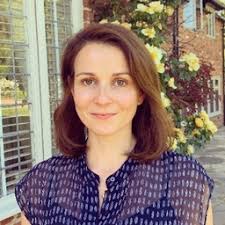
Annabel Denham Wikipedia: The Free-Market Force Reshaping British Journalism
Introduction Table of Contents
In the fast-paced arena of British political journalism, where column inches are often filled with predictable partisan talking points, Annabel Denham has carved out a reputation as a distinctly uncompromising and intellectually rigorous voice. While she may not yet have a dedicated page on Wikipedia as of 2026, her influence across Fleet Street, think tanks, and broadcast media is undeniable. For readers searching for the “annabel denham wikipedia” equivalent, this article serves as the definitive guide to her career, ideology, and impact.
Currently serving as the Deputy Comment Editor at The Telegraph, Denham is a senior political commentator known for her staunch defense of free-market economics, her sharp critiques of state overreach, and her ability to spark national controversy with a single headline. From her early days as a parliamentary researcher to her current role shaping the opinion pages of one of the UK’s most influential newspapers, Denham represents a new generation of journalists who are unafraid to challenge social taboos, particularly regarding welfare, healthcare, and economic productivity.
This article explores her educational background, career trajectory at City A.M., The Entrepreneurs Network, and the Institute of Economic Affairs (IEA), her specific role at The Telegraph, and the major controversies—such as her “mental health con” column—that have defined her public image.
Early Life and Academic Foundation
Unlike many of her peers who followed a straight path from Oxford or Cambridge into journalism, Annabel Denham’s academic background is rooted in history, languages, and international diplomacy. She chose to study History and French at the University of Manchester, where she attended from 2004 to 2008. This grounding in historical analysis and European culture provided her with a nuanced lens through which to view modern British politics.
Following her undergraduate studies, Denham did not immediately rush into a newsroom. Instead, she pursued a Master’s degree in International Studies and Diplomacy at the School of Oriental and African Studies (SOAS), University of London, completing it in 2010. This academic combination—European history followed by global diplomacy—equipped her with the critical thinking skills necessary to deconstruct complex international relations and economic systems. Her fluency in French has also allowed her to engage with European political discourse beyond the Anglosphere, a useful tool when dissecting Brexit and comparative economic policies.
The Westminster Apprenticeship
Before she ever wrote a headline, Annabel Denham learned the mechanics of government from the inside. Her professional career began in the political sphere as a Parliamentary Researcher for Lord Peter Lilley, the former Conservative cabinet minister. This role was crucial. Working for a prominent Eurosceptic and free-market advocate exposed Denham to the legislative process, the drafting of policy, and the art of political messaging.
This experience gave her a distinct advantage when she later transitioned into journalism. Unlike pure academics, Denham understood the political pressures that shape economic decisions. Unlike pure journalists, she had walked the corridors of the Palace of Westminster. This blend of “insider” knowledge and outsider commentary would become the hallmark of her writing style.
Her first major foray into the media industry came when she joined City A.M., London’s business-focused daily newspaper. Starting as a section editor, she quickly rose to Deputy Business Features Editor. It was here that she honed her ability to translate complex financial data into digestible, punchy commentary. She interviewed hundreds of Britain’s leading entrepreneurs, and this exposure fundamentally shaped her worldview. She observed that while politicians often claimed to support small businesses, the regulatory burden placed upon them told a different story.
The Entrepreneurs Network and the Female Founders Forum
Denham’s career took a strategic turn when she moved from pure journalism into the think tank sector. She joined The Entrepreneurs Network (TEN) as Associate Director, a role that saw her acting as a bridge between business owners and policymakers.
Perhaps her most significant legacy from this period is the founding of the Female Founders Forum. While many diversity initiatives in the city focus on corporate boardroom quotas, Denham’s forum targeted a specific, often overlooked area: access to capital for female entrepreneurs. Through this initiative, she authored reports highlighting the barriers women face when seeking venture capital funding and advocated for policy changes to support inclusive economic growth. This work is often cited by her supporters as evidence that her free-market beliefs are compatible with practical measures to support women in business.
Her time at TEN solidified her reputation as a leading voice on entrepreneurship, moving her from a reporter of business news to an advocate for a specific economic ecosystem.
Institute of Economic Affairs (IEA): The Communications Machine
In March 2020, as the world entered the uncertainty of the COVID-19 pandemic, Annabel Denham took on the role of Director of Communications at the Institute of Economic Affairs (IEA). The IEA is the godfather of the Thatcherite free-market movement in Britain. For Denham, this was a homecoming of ideology.
During her tenure at the IEA, she was responsible for shaping the institute’s public messaging. She helped position the IEA as a vocal critic of lockdown policies, high taxation, and the expansion of the state during the pandemic. Her role required her to appear on Sky News and the BBC regularly, defending controversial positions on government intervention.
It was at the IEA that Denham perfected the art of the “provocative headline” as a tool for driving economic debate. She moved fluidly between the roles of spin doctor, economist, and pundit, further blurring the lines between journalism and activism—a style that is distinctly hers.
The Telegraph: Deputy Comment Editor
In 2023, Annabel Denham returned to frontline journalism with a senior role at The Telegraph, one of the UK’s most influential broadsheets. Initially working as an editor, she was eventually promoted to Deputy Comment Editor. In this capacity, she not only writes her own columns but helps shape the overall opinion strategy of the paper.
Her writing at The Telegraph covers a vast array of topics, all filtered through her economic lens. She has written extensively about:
-
The “Motherhood Penalty”: Arguing that workplace flexibility, while well-intentioned, often penalizes women in the long term by limiting their career progression compared to male counterparts.
-
Welfare Reform: Criticizing the rise in worklessness and calling for a “chainsaw to the British civil service” to reduce bureaucratic waste.
-
The NHS: Defending aspects of private provision and criticizing the British Medical Association (BMA) for what she calls self-interested strikes.
-
Productivity: Dismissing the four-day work week as an unrealistic fantasy for a struggling economy.
Beyond the page, Denham is a regular panelist on BBC Radio 4’s Any Questions? and a frequent contributor to The Spectator’s Coffee House blog, where she provides rapid-fire reactions to breaking political news.
The “Mental Health Con” Controversy
No profile of Annabel Denham would be complete without addressing the firestorm surrounding her September 2024 column in The Telegraph, titled: “The mental health con is bankrupting Britain.”
In the piece, Denham argued that the rapid rise in mental health diagnoses, while well-intentioned to reduce stigma, had inadvertently created a dependency culture. She suggested that mild anxiety or sadness were being medicalized to the point where they were keeping people out of the workforce, thereby draining the economy.
The reaction was immediate and ferocious. The British Psychological Society (BPS) issued a formal response accusing Denham of using “dangerous and misleading” language that fails to promote open discussions. The Mental Health Foundation also published a scathing rebuttal, arguing that Denham was blaming doctors for diagnosing illness rather than questioning the social determinants—like poverty and isolation—that cause mental distress in the first place.
For her supporters, the column was a brave and necessary intervention against a “therapy culture” that infantilizes adults. For her critics, it was a cruel, economically reductionist take on a complex medical crisis. Regardless of where one stands, the controversy cemented Denham’s status as a journalist who prioritizes economic output over sentimentality.
Writing Style and Ideology
Annabel Denham is a classic liberal in the economic sense. Her writing is characterized by a deep distrust of government intervention and a reverence for entrepreneurial risk-taking. She often employs a rhetorical style that is direct, sarcastic, and dismissive of “groupthink.”
She frequently takes aim at what she calls the “nanny state,” arguing that regulations designed to protect workers often end up hurting the young, the poor, and the marginalized by pricing them out of the labor market. She is also a harsh critic of public sector inefficiencies, regularly comparing the productivity of the private sector favorably against that of the NHS or the civil service.
Personal Life and Financial Standing
Annabel Denham keeps her private life largely out of the public eye, focusing public attention on her professional arguments. Regarding her financial standing, estimates suggest her net worth is between $500,000 and $1 million, with a salary at The Telegraph estimated in the range of £50,000 to £70,000 annually. These figures, while speculative, are typical for a senior commentator and editor in the British press. Her income is likely supplemented by speaking engagements and her freelance work for The Spectator.
Conclusion
As of 2026, the absence of a formal “annabel denham wikipedia” entry feels like an anomaly given her outsize influence on the British political conversation. From the IEA to The Telegraph, she has become the go-to voice for a specific, unapologetic brand of Thatcherite economics.
She is a polarizing figure: to her detractors, she is a polemicist who oversimplifies complex social issues (like mental health) into balance sheets. To her admirers, she is a truth-teller willing to ask the questions that the polite consensus refuses to address.
Whether she is sparring on BBC panels, editing the comments section of a major newspaper, or sparking outrage with a provocative column, Annabel Denham has ensured that her voice is central to the debate on Britain’s future. For now, this article serves as the most comprehensive Wikipedia-style biography available, tracking the rise of a woman who is determined to reshape how Britain talks about money, work, and the state.