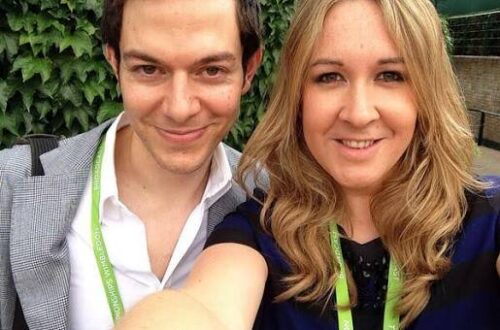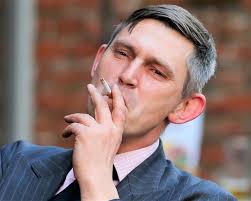
But in the autumn of 2024, the ravens left the tower. Towler was fired .
This isn’t just a story about a staffer getting the sack. It is a eulogy for a dying breed of political operator. It is a story about authenticity, the death of the spin doctor, and the peculiar genius of the man who helped break Britain out of Europe—only to be discarded by the machine he helped build.
Table of Contents
ToggleThe Dirty Trickster of the “Nasty Party”
To understand Gawain Towler, you have to forget everything you know about modern press officers. Today’s comms directors are usually young, anxious graduates who speak in a slurry of management buzzwords—“optics,” “the narrative,” “deliverables.” Towler, by contrast, was a student of history and a lover of language.
His career breakthrough came in the unglamorous, trench-warfare era of the early 2000s. Back then, UKIP was not the populist juggernaut of today; it was a fringe party of elderly gentlemen in blazers who were furious about fishing quotas. The media ignored them. They were treated as a curiosity, a “single-issue” joke .
Towler’s genius was recognizing that anger alone doesn’t sell newspapers; entertainment does. He was the architect of the “bloody difficult woman” era of politics. While other parties agonized over focus groups, Towler let Nigel Farage be Nigel Farage. He encouraged rudeness. He advocated for “off-colour” comments .
In a 2020 lecture at Queen Mary University, Towler revealed the grubby secret of the Brexit revolution: the media wouldn’t touch UKIP until they became dangerous and vulgar . Politeness didn’t sell. So, he orchestrated a strategy of calculated disruption. He used the media’s thirst for outrage to give oxygen to Euroscepticism.
He wasn’t just a spinner; he was a tactical genius of the “Overton window.” He understood that you couldn’t debate the intricacies of the Maastricht Treaty on the evening news, but you could debate whether Nigel Farage was being rude to Herman Van Rompuy. By debating the rudeness, you were airing the Euroscepticism. The medium was the message, and Towler was the station master.
The Psychodrama of the £350 Million Lie
One of the most revealing moments of Towler’s career came not in a victory speech, but in a moment of retrospective candor. During the 2016 referendum, the Vote Leave campaign’s infamous battle bus promised to send £350 million a week to the NHS instead of to Brussels.
It was a lie. It was a brilliant, devastating, effective lie.
And Gawain Towler hated it.
In a stunning admission of regret, Towler later revealed that the £350 million figure was “signed off by Boris Johnson”—and that he, Towler, would never have gone with it as a message . This is a remarkable confession for a spin doctor. Most would double down. Towler, however, is a rare breed of operative who values intellectual honesty over tactical victory (provided the tactical victory has already been achieved).
He admitted that the specific pledge was nonsense. But he maintains that the sentiment—that the EU was a drain on British resources—was true.
This dichotomy is the key to Towler’s character. He was the professional cynic who needed to believe he was fighting for a noble cause (sovereignty). Yet, he was cynical enough to know that the public doesn’t vote for white papers; they vote for slogans on the side of a bus, even the dodgy ones.
How to Win a Conference and Lose Your Job
Fast forward to 2024-2025. The Brexit war is won. The battlefield has shifted. UKIP is dead. The Brexit Party is gone. In their ashes rises Reform UK.
Towler, the loyal soldier, followed Farage into the new entity. He became the party’s Director of Communications and a board member. And he was absolutely insufferable to his opponents in the best possible way. At the 2025 Reform Party Conference in Birmingham, Towler was in his element. When asked what makes a great political fringe event, he didn’t talk about policy papers. He talked about “decent snackery and drinkery, and of course tote bags” .
He was funny. He was human. He was effective.
But “effective” in a startup insurgency is different from “effective” in a party aiming for government. In September 2024, the axe fell. The Spectator broke the news with a brutal headline: “Reform exodus continues in professionalisation drive… Gawain Towler – the last great amateur – has been fired” .
The party wanted “grown-ups.” They wanted to swap the fag ash and bluster for crisp PowerPoint presentations and forensic accounting. They wanted to stop scaring the horses and start winning seats.
Towler was sacrificed on the altar of “professionalisation.” He was replaced by Ed Sumner . The era of the character was over. The era of the consultancy class had begun.
The Philosopher of the Pub
But this is where the story gets interesting. Losing the job might be the best thing that ever happened to Towler’s legacy. Unshackled from the daily grind of putting out fires for Farage, Towler has emerged as one of the most interesting political commentators in the UK.
He has leaned into his role as the “elder statesman of the awkward squad.” On podcasts like The Peter McCormack Show and Shaun Attwood’s True Crime Podcast, Towler is unleashed . He doesn’t sound like a politician. He sounds like the bloke at the end of the bar who has actually read the 2,000-page report.
When asked why the establishment fears Reform, he doesn’t cite polling data. He talks about the collapse of the “Red Wall,” the failure of Labour’s “net zero” agenda to address the cost of living, and the hollowing out of the Conservative brand . In fact, when challenged by former Lib Dem leader Jo Swinson on net zero hypocrisy, Towler held his ground not by yelling, but by questioning the material reality of green policies for struggling families .
He is a populist intellectual, a rare species that prioritizes the vibe of the argument over the syntax.
The Archetype of the Anti-Spin Doctor
To understand the political media landscape of 2025, one must look at the carcasses of those who tried to copy Towler—and failed.
The “Amateur” label was a double-edged sword. In an era where Keir Starmer’s Labour party is run like a risk-averse law firm, and the Conservatives are engaged in civil war over process rather than principle, Towler represented something dangerous: chaos.
But the chaos was manufactured. Towler’s genius lay in “authentic inauthenticity.” He presented himself as a rumpled amateur, but he spent 16 years meticulously plotting the road to Brexit . He was a bridge between the old guard of the European Research Group and the new wave of social media populists.
He understood the psychology of the British voter: they don’t trust people in expensive suits who apologize for everything. They might trust a man who looks like he just spilled his pint, shrugs, and says, “Yeah, the system is broken, let’s fix it.”
Conflict with the New Regime
Towler’s departure from Reform signals a pivotal shift in right-wing British politics. The party is no longer a protest movement; it is attempting to become a government-in-waiting. To do that, you need boring people. You need compliance officers. You need people who can do spreadsheets.
Towler cannot (and likely would not want to) do a spreadsheet.
His firing was the political equivalent of a band firing their lead guitarist because he smokes too much weed, right before they go into a clean, corporate studio to record a “safe” album. The album might sell, but the soul is gone.
Towler has hinted at this tension publicly. While he remains loyal to Farage—stating plainly that without Farage, “we would not be where we are” —there is a detectable weariness. He knows that the machine he helped build is now eating its own. He has seen the cycle before: outsiders become insiders; insiders become the establishment; the establishment needs a new outsider to tear it down.
Legacy of the Bloviator
As Gawain Towler moves into his next act—consultancy, podcasting, and perhaps the occasional ghost-written column—his legacy is secure. He is arguably the most successful political communicator of the 21st century that the general public has never heard of.
He achieved the primary objective: the UK left the European Union.
He destroyed the political careers of several Conservative Prime Ministers (Cameron, May) not through brute force, but through relentless media pressure.
And he defined the playbook for every populist movement that followed. “Get a sense of humor,” he advised the Remain campaign after they lost. “They were miserable. It was project fear” .
That is the Towler philosophy. Don’t be boring. Don’t be scared. And above all, if you are going to lose, at least make sure you had a decent tote bag and a pint waiting for you at the finish line.
Conclusion: The Need for Amateurs
In the sterile, AI-generated political landscape of 2026, we have a desperate need for more Gawain Towlers. We have too many focus groups and not enough convictions. We have too many press releases and not enough personality. We have too many “professional” politicians who have never had a real job and too few “amateurs” who are willing to say something interesting even if it costs them their job.
The fact that a political party fired its Director of Communications for being too colorful tells you everything you need to know about the state of Westminster. They have sanitized the very thing that made them electable.
Gawain Towler might be gone from the front lines, but his ghost will haunt the green benches for years to come. Every time a Reform MP says something that makes the pundits choke on their granola, Towler will be there—laughing, lighting a cigarette, and ordering another round.
He was the last great amateur. And British politics is far duller without him.
Key Sources for this Analysis:
The Spectator report on his firing as “The Last Great Amateur” .
Queen Mary University lecture wherein he detailed the “rudeness” strategy and the £350 million regret .
Dods Political Intelligence interview regarding conference strategy and “snackery” .
Shaun Attwood and Peter McCormack podcast interviews detailing his current role as strategist .
Historical BBC report on his role in the EU Parliament formation in 2009 .
The London Economic coverage of his climate debate with Jo Swinson