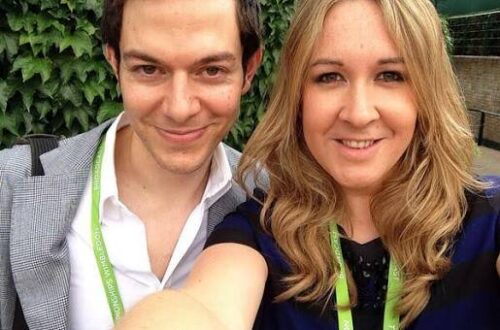
However, to view Mehreen Khan merely through the lens of her CV—Oxford University, The Daily Telegraph, The Financial Times, The Times—is to miss the deeper narrative. Her rise coincides with a push to democratize economics, to bridge the gap between the “dismal science” and the kitchen table. This article explores the unique trajectory, philosophy, and impact of a journalist who is redefining what it means to cover money and power in the 21st century.
Table of Contents
ToggleThe Anchor of Experience: From Brussels to London
To understand Mehreen Khan’s current authority, one must look at her five-year tenure in Brussels (2017–2022). This period was arguably the most turbulent for the European Union since the Eurozone crisis. Stationed in the heart of EU power, Khan broke exclusive, agenda-setting news on the “Brexit talks, budget negotiations, environmental regulation, pandemic policy response, and foreign policy” .
It was here that she honed her signature style. While many journalists focused solely on the political theater of Boris Johnson or Ursula von der Leyen, Khan focused on the plumbing of the economy. She understood that Brexit wasn’t just a story about sovereignty; it was a story about supply chains, currency volatility, and the sudden friction of trade. As the author of the Financial Times’ daily Brussels Briefing newsletter, she synthesized thousands of pages of technical negotiations into digestible, often gripping, analysis .
Now, as the Economics Editor for The Times, her scope has widened to the global stage. Her recent coverage focuses on “de-globalization, international monetary policy, and financial markets” . In a world where the US Federal Reserve’s interest rate decisions impact mortgage rates in Manchester, and where Chinese demand affects German factory output, Khan’s ability to connect these dots is her primary value proposition.
Breaking the Mold: Identity and Perspective
One of the most striking aspects of Mehreen Khan’s public persona is her identity as a “young Muslim woman” occupying the highest echelons of British financial journalism. In a field often critiqued for being dominated by a specific demographic, Khan represents a significant shift.
A podcast episode titled “Bridging Divides as a Muslim and First Female Economic Editor of the Times London” highlights how her presence challenges the status quo . She has spoken openly about navigating the professional world while wearing her identity authentically. This perspective is not just about diversity for the sake of optics; it brings a necessary lens to economic reporting.
For example, discussions on “financial literacy for women and underserved communities” are central to her public engagements . She recognizes that economics is not neutral. High interest rates, austerity measures, and tax policies hit different demographics in vastly different ways. By advocating for financial literacy, Khan is moving beyond reporting on the economy to actively trying to make it less intimidating. As she discussed on the Fuse podcast, breaking “age stereotypes in journalism” and bridging “socio-economic gaps in the media sector” are professional missions that run parallel to her daily reporting .
The Oxford Intellectual: History, Politics, and the MPhil
Khan’s analytical rigor is rooted in her academic background. She holds a Bachelor of Arts in History and Politics and a Master of Philosophy (MPhil) in European Politics from the University of Oxford . This foundation in history is crucial to her economic analysis.
Many economic reporters are math-first; Khan is narrative-first. By studying history and politics, she understands that economic data is the residue of human decisions—decisions made by politicians swayed by populism, by central bankers fighting inflation, or by technocrats drafting climate policy. She doesn’t just look at the chart of GDP growth; she looks at the political economy driving that chart. This ability to weave the political context into the fiscal reality makes her a sought-after keynote speaker on “populist politics and political economy” .
The Public Intellectual: Radio, Podcasts, and Speaking
Mehreen Khan is not confined to the printed page. She is a “regular contributor to the BBC, Al Jazeera, In Our Time, and Times Radio” . In the modern media landscape, the journalist who succeeds is the one who can adapt their message across platforms. Khan does this fluidly.
On radio, she debates the Bank of England’s next move. On podcasts like EUScream, she likely adopts a more conversational tone to dissect European affairs. As a keynote speaker, she addresses corporate audiences on the “challenges facing the global economy” . This omnipresence solidifies her role not just as a reporter, but as a public intellectual—someone who helps shape the vocabulary we use to understand the world.
Beyond Journalism: A Coincidental Namesake and the Value of Expertise
It is worth noting that a search for “Mehreen Khan” yields a fascinating tapestry of talent. There is a Corporate Grants Manager at CARE with extensive experience in international development . There is an MBA candidate at Harvard Business School who grew up in Pakistan and writes movingly about surviving political violence and fighting for equal opportunity—stating, “I intend to spend my life fighting to make luck matter less and talent matter more” .
Additionally, there is a Head of Wholesale Banking Credit Risk at RAKBANK in the UAE , and even a skilled Ecommerce Developer on Fiverr .
However, the Mehreen Khan of The Times distinguishes herself through the trust economy. In an age of “fake news” and algorithmic rage-bait, her value lies in verification. She represents the old-school virtues of journalism (accuracy, sourcing, balance) applied to the new-school realities of a fragmented world.
Why She Matters Right Now
As of 2025, the global economy is navigating a “soft landing” from historic inflation, yet geopolitical risks are exploding. We are living through an age of industrial policy (the US Inflation Reduction Act, European Green Deal) that hasn’t been seen since the post-war era.
This is Mehreen Khan’s moment. Her expertise in “taxation policy, government budgets, and central banking” allows The Times reader to look beneath the headline . When the Chancellor of the Exchequer announces a budget, Khan is not just listing the tax changes; she is tracing the intellectual lineage of those policies, predicting the market reaction, and explaining the European reaction to British fiscal policy.
She is a bridge—between the City of London and the EU, between the macro-data and the micro-reality, between the old guard of journalism and a more inclusive generation.
Conclusion
The story of Mehreen Khan is one of a quiet revolution. She did not scream for attention; she earned a byline. She navigated the treacherous waters of Brexit coverage in Brussels, mastered the complexity of central banking, and now holds one of the most influential chairs in British journalism.
She represents the “new economist”—one who is as comfortable discussing the writings of Mary Oliver (as the HBS student did) as they are discussing the liquidity ratios of the European Central Bank . For anyone trying to understand the silent forces of inflation, the shifting sands of the labor market, or the future of Europe, following the work of Mehreen Khan is not just advisable; it is essential. She proves that the best journalism doesn’t just inform you about the economy; it equips you to navigate it.