Table of Contents
ToggleJean Johansson: A Story of Two Continents, One Family, and the Parents Who Shaped Her
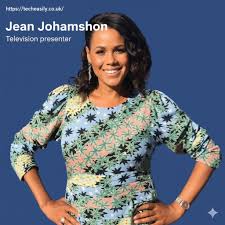
When you watch Jean Johansson confidently helping house hunters find their dream properties on Channel 4’s A Place in the Sun, or see her light up the screen on Animal Park and The One Show, it’s easy to appreciate her as one of British television’s most engaging presenters. But beneath the on-screen charisma lies a fascinating personal history that spans three continents—a story that begins not in Scotland, where she rose to fame, but in Kenya, with parents whose unlikely love story would shape everything about the woman she would become.
The Kenyan Birth That Defines Her
Born in 1980 in Kisii, Kenya, Jean Johansson (née Anderson) entered the world as the second youngest of seven children. While she is often described as a Scottish presenter—and proudly so—her East African birthplace has remained a defining thread throughout her life, one she continues to honor in her home and her identity today.
Her arrival in Kenya wasn’t accidental. It was the result of a remarkable journey undertaken by her father, John Anderson, a working-class boy from Fife whose academic brilliance and sense of adventure would lead him across the African continent and into the arms of a Ugandan woman named Edinasi, known to family and friends as Winnie.
John Anderson: The Fife Scholar Who Found His Path in Africa
Jean’s father, John Anderson, was born in Kirkcaldy, Fife—a historic town on Scotland’s east coast known for its linen industry and as the childhood home of economist Adam Smith. Coming from a working-class background, John’s intellectual promise was evident early on. He attended Dunfermline High School, where he distinguished himself academically before winning a scholarship to Scotland’s ancient University of St Andrews.
At St Andrews, John earned his degree, but his education didn’t stop there. He went on to complete teacher training at the University of Aberdeen, preparing for a career in education. But the late 1960s were a time of change and opportunity, and John’s ambitions stretched far beyond the Scottish borders.
In the late 1960s, he made the journey to East Africa, where he would earn another degree before beginning to teach in African schools. It was a bold move for a young man from Fife—leaving behind the grey North Sea coast for the vibrant landscapes of East Africa. But it was in these African classrooms that John would find both his calling and his life partner.
Winnie: From Kampala to a Life Between Cultures
Jean’s mother, Edinasi “Winnie” Anderson, came from Kampala, the bustling capital of Uganda. Growing up in the heart of East Africa, Winnie’s background was a world away from the Scottish industrial towns where John had been raised. Yet when their paths crossed—likely through John’s work in African schools—something clicked between the Scottish teacher and the Ugandan woman.
Their meeting represented a union of two continents, two cultures, and two very different histories. It was a marriage that, in the late 1960s and early 1970s, took courage—an interracial relationship that would face its own challenges, particularly when they eventually returned to Scotland as a family.
Winnie became a housewife and the matriarch of a large, bustling family. Together, she and John raised seven children, with Jean coming along as the second youngest in 1980. For the Anderson children, growing up meant navigating between their father’s Scottish roots, their mother’s Ugandan heritage, and their own Kenyan birthplace—a multicultural foundation that would prove invaluable throughout Jean’s life and career.
The Family’s Scottish Homecoming
Shortly after Jean’s birth in Kenya, the Anderson family made the journey back to Scotland, settling in Port Glasgow, a town on the south bank of the River Clyde. The relocation marked the beginning of Jean’s Scottish upbringing, though her parents ensured that the family’s East African connections were never forgotten.
Port Glasgow—often affectionately shortened to “Port” by locals—became home. Jean attended the local high school, living what appeared on the surface to be a typical Scottish childhood. But at home, the Anderson household was anything but typical. With seven children, a Scottish father, a Ugandan mother, and stories of Kenya woven into family lore, Jean grew up immersed in a rich tapestry of cultural influences.
Her father, John, had built his career as an English teacher, a profession that would perhaps influence Jean’s own way with words and her ability to connect with people from all walks of life. Her mother, Winnie, ran the household and raised the children, creating the warm, supportive environment that Jean would later credit with helping her navigate the complexities of a career in television.
Growing Up Mixed-Race in 1980s Scotland
While the Anderson household was a haven of multicultural acceptance, the Scotland of Jean’s childhood was not always so welcoming. Growing up as a mixed-race girl in Port Glasgow in the 1980s and 1990s meant facing challenges that many of her peers didn’t have to contend with.
In 2022, Jean confronted these experiences directly when she fronted the BBC Disclosure documentary The Truth About Scotland and Racism. In the documentary, she opened up about the racist abuse she had endured, including being spat at as a 17-year-old—a painful memory that speaks to the hostility she sometimes faced.
Reflecting on her experience of making the documentary, Jean revealed how her perspective had shifted: “I’ve had my eyes opened. If I compare the present day to my upbringing in the 80s and 90s, it really feels to me like things are getting worse”. It was a stark admission from a woman who had long pushed forward in her career without dwelling on past hurts.
Yet despite these challenges, Jean’s upbringing in Port Glasgow also gave her roots she remains proud of. She speaks warmly of her family’s working-class background and the resilience her parents instilled in her—lessons that would prove invaluable as she navigated the competitive world of television.
A Father’s Legacy
John Anderson passed away in February 2023, a loss that Jean felt deeply. His death marked the end of an era for the Anderson family—the passing of the man who had traveled from Kirkcaldy to Kenya and back, who had built a life across continents, and who had instilled in his children the value of education, hard work, and embracing the world beyond their doorstep.
Throughout her career, Jean has spoken about her parents with obvious affection. Her father’s journey from working-class Fife to St Andrews University, and then to teaching in Africa, demonstrated the transformative power of education—a lesson she carried into her own life. Her mother’s strength in raising seven children while navigating life in a country far from her Ugandan homeland spoke to a resilience that Jean has clearly inherited.
The Multicultural Home She Built
The influence of Jean’s parents and her multicultural upbringing is perhaps most visible in the home she has built with her own family. In 2009, Jean and her husband purchased a stunning 19th-century property in Ayrshire—a five-bedroom mansion originally built for a Scottish whisky baron. The home, with its grand entrance hall, roaring fireplace, and red-carpeted staircase, might seem a world away from her childhood in Port Glasgow, but within its walls, Jean has created a space that honors both her Scottish roots and her East African heritage.
The living room, which Jean affectionately calls her “African room,” is decorated with artwork and artifacts she collected in Uganda. A painting purchased from someone at the side of a road—showing African women working with babies on their backs—holds pride of place. “It’s really beautiful,” Jean has said, explaining why she treasures it. “I loved it because it shows what African women are all about—working, babies on their back, and getting it done”.
This blending of worlds—Scottish baronial architecture with Ugandan art—perfectly captures Jean’s identity. She is not one thing or another, but both, and she has created a home that reflects that complexity.
Passing Heritage to the Next Generation
For Jean and her Finnish husband, Jonatan Johansson, raising their son Junior has meant navigating yet another layer of multicultural identity. Jean has been open about her commitment to ensuring her son understands his full heritage—both the Scottish and African sides of his family.
In an interview with OK! Magazine during Black History Month, Jean explained what this means to her: “Every day is Black History Month in this house. I live every day as a Black woman in a multicultural house. It’s important for my son to know Black history and also Scottish history”.
She has taken on the responsibility of teaching her son about figures like Josephine Baker, the African American performer and activist, because she feels the school curriculum doesn’t provide enough of this education. It’s a role she inherited from her own parents, who ensured their children understood their mixed heritage even as they grew up in Scotland.
The Role of Parents in Her Career
Jean’s parents’ influence extends beyond her personal identity to her professional success as well. The values they instilled—education, hard work, resilience—have served her throughout her career. Her father’s career as an English teacher may have nurtured her way with words, while her mother’s strength in navigating life far from home gave Jean the confidence to take risks in her own life.
When Jean won a nationwide talent competition that launched her television career at age 18, she had the foundation of a family that believed in her. When she went on to study broadcast journalism at Paisley University (now the University of the West of Scotland), she was building on the educational values her father had championed.
Her career has been remarkably diverse—from presenting children’s shows on CBBC and the Disney Channel, to forecasting weather on STV, to reporting for The One Show, to her current role on A Place in the Sun. Through it all, the resilience she learned from watching her parents navigate life between cultures has kept her grounded.
A Partnership That Crosses Borders
The multicultural theme of Jean’s life extends to her marriage as well. In 2008, she married Jonatan Johansson, a Finnish former professional footballer who played for Rangers and Charlton Athletic. Their love story began when Jean was just 17, working part-time at a golf club in Langbank, where she met the 22-year-old Finnish footballer who frequented the course.
At the time, Jean had no interest in settling down—she was preparing to finish school and travel. But the connection was strong, and two decades later, they renewed their wedding vows in Majorca. Their son, Junior, has grown up in a household where Scottish, Finnish, African, and British cultures all intersect—the latest chapter in a family story that has always crossed borders.
The Ugandan-Scottish Connection
In understanding Jean Johansson’s parents’ nationalities, we see a story that defies simple categorization. Her father, John, was Scottish through and through—born in Fife, educated at St Andrews, shaped by the industrial landscapes of mid-20th-century Scotland. Her mother, Winnie, was Ugandan—born in Kampala, raised in the heart of East Africa, bringing a completely different set of traditions and experiences to the family.
Together, they created something new. Their children—Jean included—grew up not as one nationality or the other, but as both, with a Kenyan birthplace adding yet another layer to their complex identity. Jean’s nationality is often described as Scottish, and she certainly identifies strongly with her Scottish upbringing. But to understand Jean Johansson fully is to understand that her identity is richer and more complicated than any single label can capture.
Reflections on Heritage
As Jean has grown older, she has become more outspoken about what it means to be a woman of mixed heritage in the public eye. In her interview with OK! Magazine, she spoke about the need for greater diversity in television, noting that while progress has been made, there’s still work to do. She praised trailblazers like Alison Hammond, Judi Love, and Maya Jama, and reflected on her own role models growing up—the few Black and brown faces she saw on television, like Moira Stuart and Floella Benjamin.
“I’ve faced constant struggles in the TV industry, but I’m the type of person who doesn’t dwell,” she said. “I’m happy where I am now and it’s all about pushing forward for me, never looking back.”
This forward-looking attitude—the refusal to dwell on obstacles—reflects the resilience her parents modeled. John Anderson didn’t let his working-class background limit his ambitions; he pursued education and adventure across continents. Winnie didn’t let being far from her Ugandan home hold her back; she built a family and a life in Scotland. Their daughter has followed their example, building a successful career in an industry that hasn’t always been welcoming to people who look like her.
Conclusion: The Parents Who Made Her
When we ask about Jean Johansson’s parents’ nationalities, we’re really asking about the roots of a woman who has become a beloved figure on British television. The answer—Scottish father, Ugandan mother—only begins to tell the story. What makes Jean Johansson unique is not just where her parents came from, but the journey they took to find each other, the family they built across continents, and the values they passed down to their seven children.
Her father’s journey from working-class Kirkcaldy to the classrooms of East Africa speaks to a spirit of adventure and a belief in education that shaped Jean’s own path. Her mother’s strength in building a life far from her Ugandan homeland gave Jean the resilience to navigate challenges throughout her career. Together, they created a multicultural household in 1980s Scotland that, while not always easy, prepared Jean for a life in the public eye where she would draw on all parts of her heritage.
Today, Jean Johansson carries her parents’ legacy with her in everything she does. In the “African room” of her Ayrshire mansion, where Ugandan art hangs in a Scottish baronial home. In the way she teaches her son about both Black history and Scottish history. In the pride she takes in her working-class roots and her international perspective. In her refusal to dwell on past hurts while pushing forward for greater representation in television.
John and Winnie Anderson—a teacher from Fife and a woman from Kampala—never set out to raise a television star. But they gave their daughter something perhaps more valuable: the confidence to be herself in all her complexity, the resilience to navigate challenges, and the understanding that identity isn’t about choosing one heritage over another, but about embracing all the threads that make a person who they are. In a world that often tries to put people in boxes, Jean Johansson stands as a testament to the richness that comes from a truly multicultural upbringing—a gift from parents whose love story spanned continents and whose legacy continues to shape British television today