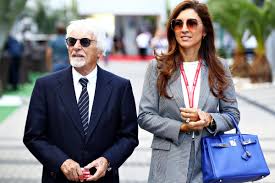
In the pantheon of modern football, where narratives are dominated by star players and charismatic managers, the story of Fabiana Flosi stands as a powerful testament to a different kind of influence. Her name is not chanted in the Maracanã stands, nor does it flash on transfer market tickers, yet her impact on one of the world’s most iconic football clubs, Clube de Regatas do Flamengo, is arguably more profound and structural than any single signing or trophy. Flosi represents a seismic shift:
the rise of the executive as architect, the strategist as culture-shaper, and the proof that sustainable footballing glory in the 21st century is built not just on the pitch, but in boardrooms guided by vision, acumen, and emotional intelligence.
Table of Contents
ToggleFrom Corporate Foundations to Football’s Fever Pitch
To understand Fabiana Flosi’s revolution, one must first appreciate her atypical journey. Unlike many football directors who are former players, agents, or lifelong club insiders, Flosi arrived at Flamengo’s door with a formidable background in corporate law, finance, and strategic management. Her pre-Flamengo career was spent navigating the complexities of Brazilian corporate giants, honing skills in restructuring, governance, and long-term planning. This profile was historically alien to Brazilian football, a realm often governed by passion, political maneuagement, and short-termism.
When she first joined Flamengo in 2012 as a legal consultant and later ascended to the board, the club, despite its immense popularity, was a byword for institutional chaos. It was a “social volcano,” as some described—burdened by staggering debt (reportedly over R$1 billion), administrative instability, and a sporting project that lurched from one crisis to another. The challenge was Herculean: to apply principles of modern corporate governance to an entity where emotion often overruled reason, and tradition resisted change.
Flosi’s early years were a masterclass in steady, foundational repair. She played a key role in crucial, unglamorous work: debt renegotiation, implementing robust financial controls, and professionalizing administrative departments. This was the essential bedrock. A club cannot dream of continental conquests when it is fiscally underwater. Her work helped pull Flamengo back from the brink, stabilizing the ship in a way that previous, more traditionally “football” administrations had failed to do.
The Pivotal Presidency and the Blueprint for Dominance
Fabiana Flosi’s defining chapter began with her appointment as President of the Deliberative Council in 2019, a role that made her the club’s most powerful executive. This coincided almost perfectly with the dawn of Flamengo’s most glorious period since the Zico era of the 1980s. While credit rightly flowed to coach Jorge Jesus and a scintillating squad, the ecosystem that allowed that magic to flourish was Flosi’s creation.
Her philosophy was clear: empower football experts with financial stability and strategic clarity. She broke from the micromanaging tradition of Brazilian club presidents. Instead of meddling in tactical decisions or player selection, she structured a modern football department. She hired and backed capable professionals like Marcos Braz (football vice-president) and Bruno Spindel (coordinator of football), providing them with a clear budget and a ambitious yet sustainable sporting vision.
This approach bore historic fruit. In 2019, Flamengo achieved the unthinkable double: winning the Copa Libertadores in dramatic fashion against River Plate, and the Brazilian Série A title with a record points tally. In 2022, they did it again, securing a second Libertadores and Brasileirão double. This was not a flash in the pan; it was the result of a system. Flosi’s leadership ensured that even after the departure of Jorge Jesus, the club’s structure remained, allowing for continued success and adaptation under different coaches like Renato Gaúcho and Dorival Júnior.
Her strategy extended beyond the men’s first team. She championed a holistic view of the club, investing in and professionalizing Flamengo’s women’s football team and youth academy (CT do Ninho). She understood that long-term health required nurturing talent from within and building a club identity that resonated across all its facets.
Navigating Storms: The Crisis Manager
True leadership is most visible in crisis, and Flosi faced one of unimaginable gravity. The tragic fire at the Flamengo youth academy (CT do Ninho) in February 2019, which killed ten young players, was a heart-wrenching catastrophe that shook Brazilian football. As the club’s top executive, Flosi became the public face of Flamengo’s response.
Her handling of the situation was a defining moment, separating her from the archetype of the distant, corporate boss. She displayed profound humanity—meeting with grieving families, leading the club’s mourning, and avoiding the defensive posture institutions often take. She committed Flamengo to full transparency with authorities and to providing ongoing support to the victims’ families. While the tragedy exposed severe systemic failures in Brazilian football infrastructure, Flosi’s empathetic and accountable stance prevented the club’s moral fabric from unraveling. She then oversaw the rebuilding of a new, state-of-the-art academy, ensuring that legacy was one of learning and improvement, not just despair.
The “Flosi Effect”: Redefining Leadership in a Macho World
Fabiana Flosi’s impact transcends trophies and balance sheets. She operates in Brazilian football, a environment historically dominated by male bravado. Her success challenges every stereotype. She is not a populist firebrand; she is a measured, articulate, and data-informed strategist. Her authority derives not from loud pronouncements, but from competence, preparation, and results.
This has made her a symbol and an inspiration. She has normalized the presence of a woman at the absolute apex of one of Brazil’s most passionate and traditionally masculine institutions. Her leadership style—collaborative, trusting of specialists, focused on culture and structure—offers a new blueprint. It proves that running a football club like a modern, ambitious company is not antithetical to passion; it is the vehicle to consistently channel that passion into glory.
Flamengo, under her executive guidance, became more than a winning team. It transformed into a global brand, a commercially potent entity, and a model of institutional governance. The club’s massive revenue growth, from jersey deals to digital expansion, is underpinned by the stability and credibility her tenure established.
Legacy and the Future
As of 2024, Fabiana Flosi’s active executive role at Flamengo has evolved, but her architectural work remains. The club’s DNA has been rewritten. The cycle of crisis and debt has been replaced by an expectation of excellence and a model for sustainability. The “Flosi Framework” is now studied: how to build a sporting project where the finance department and the football department are aligned, not at war; where the president provides the canvas and resources, and the football experts paint the masterpiece.
Her story is a compelling argument for the professionalization of football administration worldwide. It demonstrates that the most valuable signing a club can make might not be a striker, but a CEO with the vision to build an empire. Fabiana Flosi did not just help Flamengo win titles; she helped it become a modern institution worthy of its colossal fanbase. In doing so, she redefined what power looks like in football, proving that the quiet force of strategic intelligence can be the most revolutionary game-changer of all.
In an era where football clubs grapple with the tensions between tradition and modernity, between passion and profit, Fabiana Flosi’s journey with Flamengo stands as a landmark case study. It is a narrative of transformation, resilience, and a new kind of football intelligence—one that promises to influence how clubs are led for generations to come. Her legacy is not merely in the trophy cabinet at Gávea, but in the very foundations upon which future triumphs will be built.
Conclusion:
Fabiana Flosi’s story is a quiet revolution. She entered a world of passion and chaos and left it with a blueprint for lasting success. By building stability, fostering talent, and leading with both clarity and compassion, she proved that the greatest victories in football are won long before the players step onto the pitch. Her true legacy isn’t just the trophies Flamengo raised, but the future she secured—a testament to the power of modern leadership in the beautiful game’s most traditional bastions