Finding time to exercise isn’t always easy. Between work, family commitments and everything else that needs doing, getting to the gym can feel like another job on your to-do list. Even when you have the motivation, travelling to a leisure centre and fitting around swimming timetables can be inconvenient.
For people who enjoy swimming but would rather exercise at home, installing a pool might sound appealing. However, not everyone has the garden space for a traditional swimming pool. That’s where exercise pools come in, offering an alternative for those who want to make swimming part of their daily routine.
What Exactly Is an Exercise Pool?
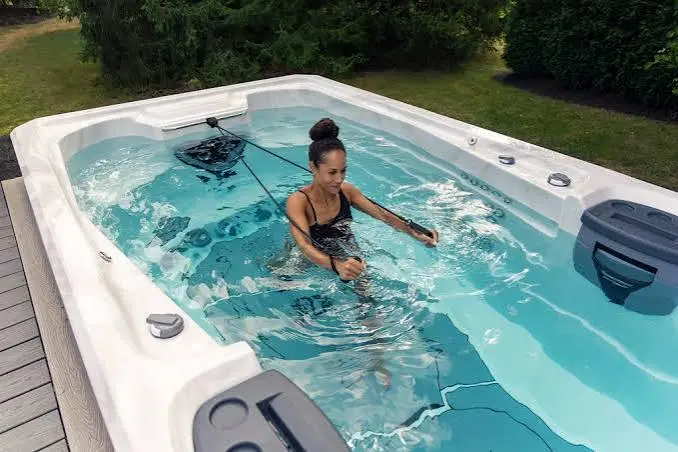
An exercise pool is designed specifically for swimming and water-based workouts. Unlike a traditional swimming pool, which usually requires enough length to swim laps, some exercise pools use a counter-current system. This creates a steady flow of water that you swim against, allowing you to remain in roughly the same position while exercising. Think of it as the swimming equivalent of a treadmill. Because you don’t need to swim from one end to the other, these pools can be considerably smaller than conventional swimming pools.
Swimming Without Leaving the House
One of the biggest advantages of having a pool at home is convenience. You can exercise whenever it suits you, without worrying about opening hours, crowded changing rooms or booking a swimming lane. For anyone trying to establish a consistent fitness routine, removing the need to travel can make a difference.
An exercise pool with an integrated swim jet allows users to swim continuously against the current, making it possible to enjoy a proper swimming workout in a relatively compact space. Some models can also be installed indoors or outdoors, depending on the available space and property layout.
A Different Approach to Fitness
Swimming provides a full-body workout without the repeated impact associated with activities such as running. The water supports your body weight, making swimming an appealing option for people who prefer lower-impact exercise. It can also provide variety for those who are getting bored with their usual fitness routine.
Exercise pools aren’t limited to swimming, either. Depending on their size and depth, they can be used for water-based exercises such as gentle walking, stretching and resistance movements. Anyone recovering from an injury should seek professional advice before starting a new exercise programme.
Is Your Home Suitable for One?
Before getting carried away with the idea, you’ll need to consider the practicalities. Start by looking at how much space you have available. You’ll need room for the pool itself, along with safe access and any necessary equipment.
Installation requirements will vary depending on whether you choose an indoor, outdoor, above-ground or in-ground pool. It’s also important to budget for heating, filtration, cleaning and maintenance. An exercise pool is a significant investment, so understanding the ongoing costs is just as important as the installation price.
Will You Use It Enough?
Having a swimming pool at home sounds wonderful, but it’s worth being realistic about how frequently you’ll use it. If swimming is already an activity you enjoy, having somewhere to exercise whenever you like could be a valuable addition to your home. However, if you rarely swim, consider trying a regular swimming routine at your local leisure centre before committing to a purchase.
Making Home Fitness Work for You
An exercise pool won’t be the right choice for every household, particularly when space and budget are limited. For keen swimmers, though, it could offer a convenient alternative to regular trips to the gym or leisure centre. The key is choosing something that fits your lifestyle rather than investing in equipment you hope will motivate you. If swimming is something you genuinely enjoy, having your own pool could make staying active much easier.